
Norfolk Audio Tour: Echoes of Faith, Fortunes & Founders
A cannonball is still lodged in the wall of Saint Paul’s Episcopal Church—a silent witness to Norfolk’s explosive past and survival. This self-guided audio tour invites you to wander beyond the obvious, unlocking centuries-old stories hidden behind ivy walls and stately columns. Why did fire and rebellion sweep through these streets, forcing entire congregations to choose sides in midnight showdowns? Who was bold enough to bring Greek Revival flair to a quiet colonial neighborhood—and what strange secrets echo inside its parlors? And just how many dares have ended atop the dizzying belfry of Freemason Street Baptist Church? Move from battle-scarred sanctuaries to elegant merchant homes, tracing scandals, mysteries, and forgotten moments with every step. Expect chills, awe, and laughter as the layers of Norfolk reveal themselves beneath your feet. Ready to discover the secrets even cannonballs couldn’t bury? Press play and step into Norfolk’s true story.
Tour preview
About this tour
- scheduleDuration 60–80 minsGo at your own pace
- straighten2.6 km walking routeFollow the guided path
- location_onLocationNorfolk, United States
- wifi_offWorks offlineDownload once, use anywhere
- all_inclusiveLifetime accessReplay anytime, forever
- location_onStarts at Saint Paul's Episcopal Church
Stops on this tour
lock_open 3 free previews · 5 unlock with purchase
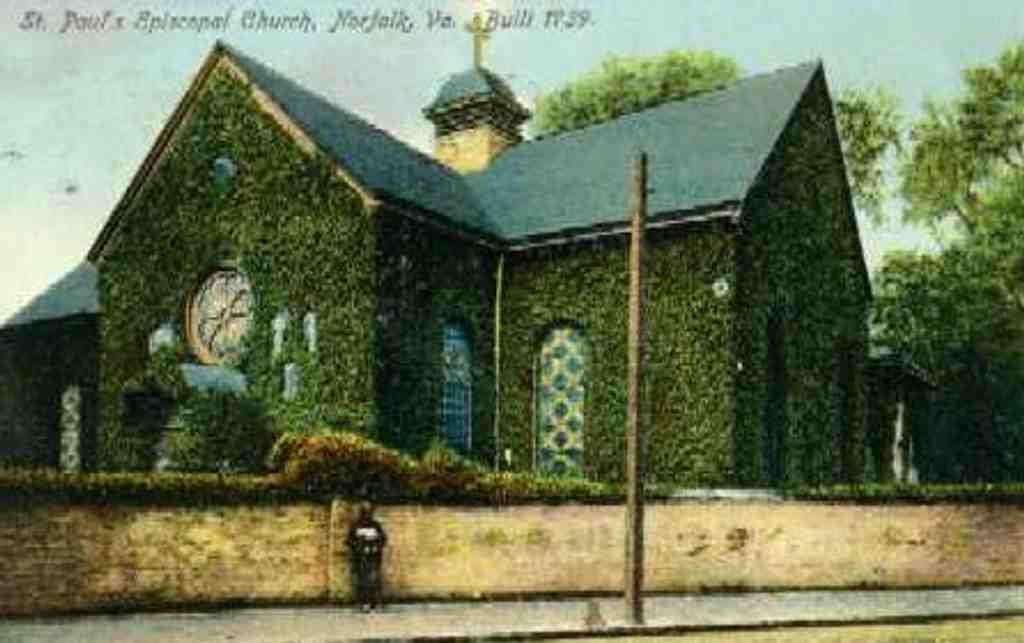
To spot Saint Paul’s Episcopal Church, just look for a charming brick building covered in ivy with tall windows and a sturdy stone wall surrounding it-standing out like a…Read moreShow less
To spot Saint Paul’s Episcopal Church, just look for a charming brick building covered in ivy with tall windows and a sturdy stone wall surrounding it-standing out like a storybook picture on the corner. Now that you’re standing here, close your eyes for a moment and listen-can you hear echoes of the past? This peaceful place has seen more drama than a season of your favorite TV series! Built back in 1739, it’s the only colonial building in Norfolk to survive all-out war, rebellion, fires, and even the odd cannonball. Imagine you’re here in the cold days of 1776, when Lord Dunmore, the last Royal Governor of Virginia, lost his patience (and maybe some tea) and sailed his British ships into Norfolk’s harbor. Suddenly, the sky is thick with smoke and panic, as flames sweep across the town-almost everything turns to ash except, miraculously, this very church. And about that cannonball-locals say it came whizzing from the HMS Liverpool, as if the British were trying to score a direct hit right through the nave! But like a stubborn old uncle at a family reunion, Saint Paul’s just shrugged it off. The cannonball stuck itself right into the wall. Years later, someone found it in the churchyard, dusted it off, and popped it back in-so keep your eyes peeled, it’s still there! Over the centuries, this spot has played musical chairs with denominations-from Church of England to Baptists, to Episcopalians, and back again. At one point, two feuding congregations split over…well, let’s just call it “different tastes in hymns.” The building switched hands, survived Civil War chaplains, and even, rumor has it, amused visiting royalty. During World War II, Lord Louis Mountbatten joked that Dunmore's cannonball “damn near missed” the church altogether. You can almost hear him laughing over the centuries. Perhaps most moving was when the church hosted the funeral of General Douglas MacArthur. Picture the hush, the respectful shuffling of feet, and the weight of history as he was honored here before his journey to his final resting place nearby. Standing here, you can almost feel those layers of history-fire, faith, feuds, and a little bit of British firepower-woven into the ivy on these walls. And remember, in Norfolk, it seems, even the cannonballs want to stick around for the stories!
Open dedicated page →To spot the Willoughby-Baylor House, just look for a handsome two-story red brick home on your right, with a pointed gable roof and a stately porch held up by four white columns…Read moreShow less
To spot the Willoughby-Baylor House, just look for a handsome two-story red brick home on your right, with a pointed gable roof and a stately porch held up by four white columns right near the sidewalk. Now, imagine yourself standing here in Norfolk in the late 1700s-the streets would be dusty, the sound of horse hooves mixing with laughter from the market close by. Right where you stand, a man named William Willoughby, a sharp merchant and builder with a keen eye for detail, decided to put down bricks and raise up this very home around 1794. Picture him, coat tails flapping, calling out to workers as this house took shape. Unlike today’s cookie-cutter homes, Willoughby wanted his family’s house to make a statement-which explains the strong lines, the elegant proportions, and the air of quiet confidence it still carries. But fast forward to the 1820s and-whoosh!-in comes a breeze of Greek Revival style, with those iconic white columns and the porch that practically dares you not to strike a dramatic pose for your next portrait. Over centuries, this place has seen everything from elegant candlelit dinners to the clatter of Union boots. Today, thanks to the Chrysler Museum of Art, you can actually step inside and feel the echo of its history. So if you ever wanted to time travel, this is one of Norfolk’s best portals-without needing a flux capacitor!
Open dedicated page →Look ahead for a tall, sand-colored church with dramatic pointed arches and an octagonal spire shooting into the sky-that’s your Freemason Street Baptist Church right in front of…Read moreShow less
Look ahead for a tall, sand-colored church with dramatic pointed arches and an octagonal spire shooting into the sky-that’s your Freemason Street Baptist Church right in front of you. Now, imagine this-it's the year 1850. Virginia’s summer air is thick, but Norfolk is alive with excitement. Right where you’re standing, master architect Thomas Ustick Walter-yes, the same fellow who worked on the US Capitol dome-unveils his newest creation to the crowd: a striking church, all dramatic angles and soaring lines. The church looks like it was plucked out of a medieval storybook, with its Gothic spire stretching up, daring lightning to try its luck. The townsfolk must have gathered at the big arched doors, craning their necks not to miss a detail-wondering how something so grand could possibly arrive in their neighborhood. Think about weddings, bell tolls, joyful choirs, and whispered secrets that these walls have heard for well over a century and a half. Oh, and the belfry up there? Legend has it a few nervous choir boys have had to climb those winding stairs-maybe after a dare or two! No wonder this church made it onto the National Register of Historic Places. It’s not just a landmark; it’s a keeper of Norfolk’s stories, a brick-and-mortar time machine. So take a deep breath, maybe listen for an echo of old hymns, and soak in a spot where history stands tall-literally!
Open dedicated page →


Show 5 more stopsShow fewer stopsexpand_moreexpand_less
To spot Nauticus, look ahead for a sleek, modern building right on the edge of the waterfront, with large glass panels gleaming in the sunlight-it’s hard to miss the vibrant…Read moreShow less
To spot Nauticus, look ahead for a sleek, modern building right on the edge of the waterfront, with large glass panels gleaming in the sunlight-it’s hard to miss the vibrant atmosphere and the grand shape of the USS Wisconsin beside it! Alright, take a big breath of that salty river air-you’re standing outside Nauticus, Norfolk’s own palace of maritime mystery and adventure! Imagine: you’re right where dragons from the deep (okay, fine-battleships and curious kids) have gathered for decades, all drawn to this spot on the city’s bustling waterfront. But let’s turn back the tides: in the late 1980s, Norfolk wanted to build more than just a museum. Under the guidance of Rear Admiral Jackson Knowles Parker, they dreamed up Nauticus, with a mission to make maritime science as lively as a sailor after shore leave. By June 1994, doors slid open to crowds excited to explore, with exhibits that make you want to touch, play, and even get splashed. Nauticus isn’t just a museum; it’s a waterfront wonderland crafted on what used to be known as Banana Pier-yes, imagine the sweet smell of cargo bananas in the air, before those aromas were replaced by the salty stories of the deep. With a view out over the Elizabeth River, the campus quickly became a gem in Norfolk’s downtown, conveniently near the Virginia Zoo and Harbor Park, home to the crack of a baseball and the cheers for the Norfolk Tides. Step a little to your right and take in the Half Moone Cruise and Celebration Center-80,000 square feet crafted for visitors and cruise ships alike. The name “Half Moone” comes from a fort once shaped precisely like, you guessed it, a half moon, built here in 1673 to guard Norfolk’s booming port. Cruises embark from this very dock, with a terrazzo floor that seems to ripple like the river itself, a VIP lounge for the high seas’ high rollers, and event spaces filled with artifacts linking Virginia to Bermuda, salty tales, and enough ship-lore to fill a sailor’s logbook. And talk about a hub of excitement: after a tragic bridge collapse in 2024, Carnival Legend herself docked here, proof that Nauticus is always ready to welcome a new chapter. Now, if you’re hearing a low rumble and feel like the air just got a little heavier, that’s because right next door sits the mighty USS Wisconsin. One of the largest battleships ever built, she arrived here on December 7, 2000-fittingly, the anniversary of her very own launch during World War II. You might even imagine the crowd’s sharp intake of breath as this steel giant slid in, ribbons of history curling behind her. During WWII, she earned five battle stars, fought in the Korean War, and even led the US Navy’s attack in the Persian Gulf, firing the first Tomahawk missile of Operation Desert Storm. After retiring from her naval battles, the city of Norfolk took over, ceremoniously accepting the long glass from the Navy-making the mayor the official “keeper of the watch.” More than two million visitors from every corner of the country and the world have paced her staggering teak decks. But wait-a maritime fantasy isn’t complete without a crew eager to set sail! That’s where Sail Nauticus comes in, a nonprofit created in 2013. Picture the flurry of middle-schoolers, wind whipping through their hair, learning to command real sailboats after school, their laughter echoing over the water as they discover STEM lessons hidden in every splash and gust. Adults get in on the fun too, learning to hoist sails and steer by the stars. If you’re more of a landlubber but still crave those sea stories, you can cruise on the Victory Rover. Feel the engine vibrate under your feet as you weave through the harbor and past the world’s largest naval base, peeking at great gray ships and submarines, or maybe spotting dolphins leaping beside you. Sometimes, once the chill of winter settles, you might even join a cruise to watch whales breach and blow. Of course, inside Nauticus there’s no end of hands-on adventures-giant aquariums teeming with fish, interactive exhibits where you can try everything from piloting a ship to exploring depths that’d give even old Captain Nemo chills. There’s a play space for the little ones called Aquaticus, and in 2023, they unveiled “Norfolk in Time,” an exhibit that feels a bit like magic: stories of challenge and resilience, woven from the city’s centuries of storm and sunshine. Nauticus, at the heart of Norfolk’s waterfront, isn’t just a museum-it’s a voyage through time, thunder, laughter, and the lure of the open sea. Now, ready to step inside and launch your own adventure?
Open dedicated page →Straight ahead, you’ll spot a big, modern building with a glassy, angular top section and large teal letters that say “NAUTICUS”-the Hampton Roads Naval Museum is tucked inside,…Read moreShow less
Straight ahead, you’ll spot a big, modern building with a glassy, angular top section and large teal letters that say “NAUTICUS”-the Hampton Roads Naval Museum is tucked inside, so just head toward that grand entrance! Alright adventurer, if you listen closely, you might almost hear the clanging of a ship’s bell or the distant call of a boatswain’s whistle as you stand in front of the Hampton Roads Naval Museum. This place is a true treasure chest of naval stories-one of just ten Navy museums across the whole country, right here in Norfolk, sharing walls and stories with its neighbor, Nauticus. And trust me, it’s not every day you find a museum that’s gone through as many adventures as the ships it celebrates! Let’s set the scene: the year is 1979. The museum first opened in the Pennsylvania House-a building that’s actually a replica of Philadelphia’s Independence Hall, built for a world’s fair. So you see, even the museum’s first home knows something about making history! Back then, visitors could wander through exhibits on the Civil War, right in a building that seemed lifted from America’s own birth certificate. But like any good naval story, change was always on the horizon. In the 1990s, the City of Norfolk invited the Navy to bring the museum downtown. And in 1994, it docked right here, gaining a whole lot more space for its ship models, underwater archaeology finds, and stories about the wild and daring tales from the waves-such as the epic 1781 Battle of the Chesapeake, or the proud (and maybe slightly rowdy) adventures of the Great White Fleet. Cold War secrets, World War II heroics, and Civil War shipwrecks like USS Cumberland and CSS Florida-if only these walls could talk, right? Actually, step inside, and you’ll find they practically do. Oh, and brace yourself for this: in 2000, the museum took charge of the mighty battleship USS Wisconsin, which now rests just outside. For years, the museum shared the job of caring for one of the Navy’s grandest ladies. Now the ship belongs to the city, but the tales linger-echoing every time a school tour giggles past a cannon, or a veteran stands quietly remembering. Whether you’re here for guided tours, quirky exhibits about Navy animals, or just to be swept away by the salty air of history, this museum delivers. You’ll find mysteries from the depths, legends from the decks, and maybe-if you squint-a ghost or two from the glory days of American sea power. Anchors aweigh, history lover!
Open dedicated page →To spot the Owen B. Pickett U.S. Custom House, just look for the grand gray granite building on the corner with sweeping front steps and six huge, fluted columns holding up a…Read moreShow less
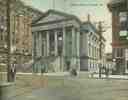
To spot the Owen B. Pickett U.S. Custom House, just look for the grand gray granite building on the corner with sweeping front steps and six huge, fluted columns holding up a classic triangular roof-its stately presence makes it hard to miss right on East Main Street! Now, let’s step back in time-imagine standing where bustling merchants, sailors, and postmen once hurried across these very cobblestones. The year is 1858, and the newly finished U.S. Custom House towers over Main and Granby Streets, practically shouting, “Welcome to the gateway of Norfolk’s world trade!” Back then, this wasn’t just any building-it was the pride of the city. Built almost entirely out of granite from Blue Hill, Maine, those six massive columns out front must have left quite a first impression on anyone walking by, even the pigeons. If you had strolled up these steps in the late 1850s, you’d have heard the echoes of boots striking the stone and the distant clang of ship bells wafting in from the busy waterfront. Inside, government officials hustled through wide, marble-floored corridors. The main entrance led to a grand ten-foot-wide hallway that ran the length of the building-all lined with offices where inspectors, customs officers, and post office clerks bustled in a sometimes-chaotic symphony of paperwork and chatter. But here’s where it gets interesting: this iconic building was designed by Ammi B. Young, the big cheese of the Treasury Department, who wanted it to look like something straight out of ancient Rome. Sure enough, the high pediment, fluted columns, and ornamented windows give it that distinct temple feel-but look closer and you’ll find a uniquely Virginian twist. The capitals atop the columns inside? They’re decorated with special leaves that aren’t just any old foliage-they’re Virginia tobacco leaves, a nod to one of the state’s most famous crops. Even when the winds of history turned stormy, the Custom House stood firm. In 1861, Norfolk fell under Confederate occupation for a tense year, and these doors watched new flags and anxious faces come and go. When Union forces returned, the Customs Service picked up right where it left off, making sure every crate, barrel, and bundle coming through the port was properly declared and taxed. If you listened carefully back then, you might have heard the clink of coins changing hands or the scratch of quill pens filling out customs paperwork. Of course, the building’s job was never boring-the post office moved in before the building was completely finished, eager to start delivering the city’s mail. Originally, there were separate doors for men and women, which might sound a bit old-fashioned today, but it shows just how much the world has changed since those early days. Fast-forward to the 20th century, and the Custom House has a few makeovers. New windows, a tasteful rear addition, and a major renovation in the late 1990s keep it looking sharp. By now, this place has seen it all, from Civil War soldiers to city postmasters-and it still manages to keep its majestic air. In 2001, Norfolk decided to tip its hat to a local hero by renaming the building after Representative Owen B. Pickett. The design even won an award that same year-a reminder that good taste never goes out of style. Now, if you squint a bit and use your imagination, you can almost see the ghostly outlines of 19th-century merchants and customs officers, their voices echoing off the plastered vaults and arched ceilings. Inside, fireplaces offered a little warmth (and occasional smoke-filled drama in the winter), while architects and builders over the years worked diligently to preserve the superior workmanship everyone raved about back in 1858. So, next time you see those grand steps-don’t just pass by. Take a moment to picture centuries of booming trade, wartime suspense, and civic pride echoing through the granite walls. And hey, if you felt a puff of wind just now, maybe it’s the breath of history reminding you to pay your customs duty… or at least snap a good photo.
Open dedicated page →To spot the Old Norfolk City Hall, just look ahead for a strong, boxy building made of yellow brick and stone, three stories tall, with grand columns and a dramatic triangle above…Read moreShow less
To spot the Old Norfolk City Hall, just look ahead for a strong, boxy building made of yellow brick and stone, three stories tall, with grand columns and a dramatic triangle above its front entrance-right where the sidewalk meets the street corner. Isn’t this a building that looks like it should house important secrets-or maybe a superhero’s headquarters? Picture it: the year is somewhere around 1900, horses clip-clop by while Norfolk bustles into the new century. This grand structure rises with its sturdy stone and sun-bright bricks, bursting with activity inside as mail arrives and court cases unfold. The entrance, guarded by bold Corinthian columns, almost dares you to step forward and deliver your own important message! Fast forward, and you’d stumble over stacks of mail sacks or perhaps a nervous lawyer whispering outside the courtroom. But suspense struck in the 1930s when Norfolk’s federal courts and post office moved out, leaving this proud building wondering, “What’s next?” Don’t worry, our story gets a plot twist: in 1937, it gained a new life serving as city hall-decisions and debates echoing through those marble corridors. Then, just when you think retirement’s on the way, in 2009 it became Norfolk’s central library, and in 2014, it got a modern glassy neighbor. Now, the old city hall is a palace of books and stories, named for Mayor Slover, still at the heart of Norfolk’s adventures. Not bad for a building with more costume changes than a Broadway star!
Open dedicated page →



Frequently asked questions
How do I start the tour?
After purchase, download the AudaTours app and enter your redemption code. The tour will be ready to start immediately - just tap play and follow the GPS-guided route.
Do I need internet during the tour?
No! Download the tour before you start and enjoy it fully offline. Only the chat feature requires internet. We recommend downloading on WiFi to save mobile data.
Is this a guided group tour?
No - this is a self-guided audio tour. You explore independently at your own pace, with audio narration playing through your phone. No tour guide, no group, no schedule.
How long does the tour take?
Most tours take 60–90 minutes to complete, but you control the pace entirely. Pause, skip stops, or take breaks whenever you want.
What if I can't finish the tour today?
No problem! Tours have lifetime access. Pause and resume whenever you like - tomorrow, next week, or next year. Your progress is saved.
What languages are available?
All tours are available in 50+ languages. Select your preferred language when redeeming your code. Note: language cannot be changed after tour generation.
Where do I access the tour after purchase?
Download the free AudaTours app from the App Store or Google Play. Enter your redemption code (sent via email) and the tour will appear in your library, ready to download and start.
If you don't enjoy the tour, we'll refund your purchase. Contact us at [email protected]
Checkout securely with 




