
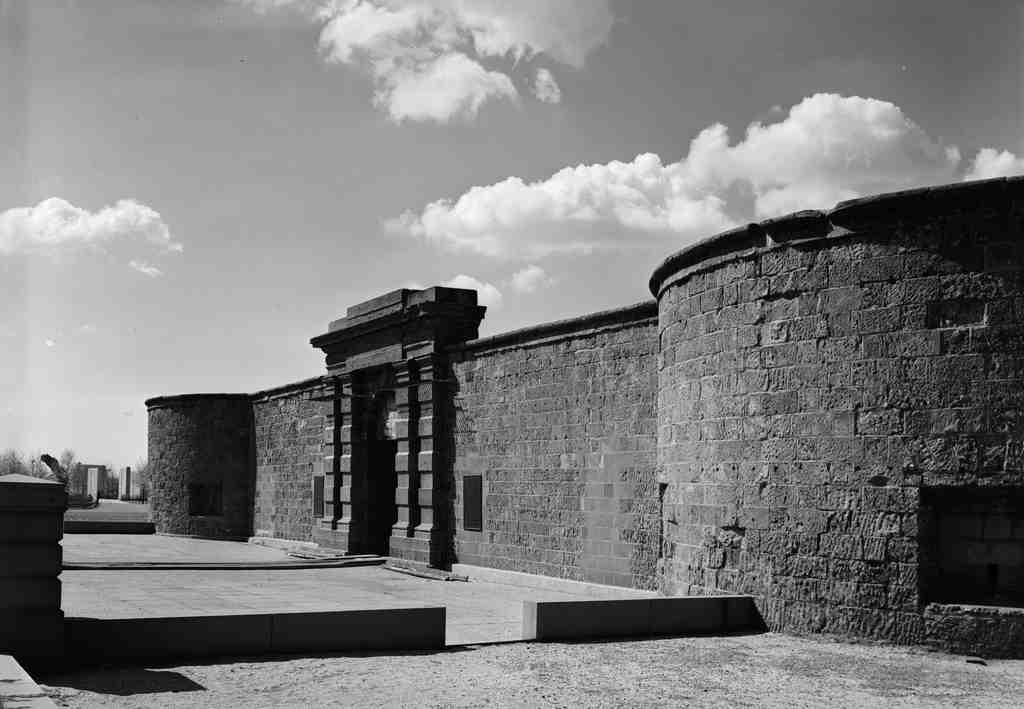
Look right in front of you for the imposing, circular fortress built of heavy sandstone blocks, instantly recognizable by the prominent, squared-off stone entranceway that interrupts its sweeping curved walls. Welcome to Castle Clinton, the ultimate survivor of Lower Manhattan! This incredible structure stands just west of where Fort Amsterdam was built way back in 1626, bringing our journey through history beautifully full circle. Built just before the War of 1812 on an artificial island, this fort was meant to defend New York Harbor, but it actually never fired a single shot in warfare. Instead, it became the city's premier playground. In the 1820s, it was transformed into a massive entertainment venue called Castle Garden. Imagine an awe-inspiring crowd of one hundred thousand people rushing here in 1833 just to catch a glimpse of President Andrew Jackson. Or picture the hysteria in 1850 when P.T. Barnum brought Swedish opera star Jenny Lind here, auctioning off the very first ticket for an exorbitant sum of two hundred and twenty-five dollars, which would be thousands of dollars in today's money! But this building's true legacy is written in the millions of footsteps that passed through its gates. From 1855 to 1890, long before Ellis Island opened, Castle Garden was America's very first immigration depot. Over seven and a half million people took their first steps in the United States right here. The sheer babble of different languages and the wild confusion of the registration desks led Yiddish-speaking Eastern European Jews to pronounce the name as Kesselgarten, a word that actually became a slang term for any chaotic, noisy situation. As if that wasn't enough lives for one building, in 1896 it was completely gutted and turned into the New York Aquarium! It was massively popular, though they had quite a learning curve. They initially installed a greenhouse-style skylight over the tanks that made the water so hot and bright it actually blinded some of the poor fish, before the director finally ordered the glass altered and the tanks painted a darker shade to protect them. Now, here is where our story reaches its boiling point. In 1941, the powerful Parks Commissioner Robert Moses decided he wanted to build the nearby Brooklyn-Battery Tunnel and re-landscape the park. He viewed the aging structure as a nuisance and ordered it completely demolished. But civic reformers and preservationists fought back relentlessly, sparking one of the fiercest preservation battles in the history of New York. And you know what saved it? When Moses's demolition crews started tearing away the upper aquarium additions, they found that the original 1811 red sandstone walls were so incredibly thick and stubbornly robust that knocking them down was physically and financially impractical. The massive effort literally drained their demolition budget dry, inadvertently saving the historic masonry shell just long enough for the federal government to step in and protect it as a National Monument. Castle Clinton stands today as the ultimate testament to a city that refuses to be erased, constantly adapting and surviving against all odds. It is open every day from eight in the morning until five in the evening if you want to explore the inner courtyard. Take a deep breath, soak in the weight of these unstoppable stone walls, and get ready as we prepare for our final reflections on this incredible journey.




