
New York City Audio Tour: Resilience and Reflections in the Financial District
In the shadow of Liberty Tower, where glass giants rise from streets older than the nation itself, secrets linger beneath each sidewalk and stone. This self-guided audio tour unlocks the Financial District’s hidden history, revealing side streets and stories overlooked by rushing crowds. Let whispered legends and buried truths transform your journey into an adventure only the city’s insiders know. What catastrophe at the National September 11 Memorial still shapes decisions made in the tallest offices above? Which rebellious act sparked panic in boardrooms and echoes inside ancient alleys? And why did an ordinary lunch break spark a scandal that nearly toppled a fortune? Feel the pulse of New York as footsteps lead from hallowed memorial pools to skyscrapers that survived battles and betrayals. Every turn brings bold discoveries and unforgettable drama. Are you ready to walk where legends never sleep? Start the story beneath the soaring towers.
Tour preview
About this tour
- scheduleDuration 30–50 minsGo at your own pace
- straighten0.5 km walking routeFollow the guided path
- location_onLocationNew York, United States
- wifi_offWorks offlineDownload once, use anywhere
- all_inclusiveLifetime accessReplay anytime, forever
- location_onStarts at Liberty Tower
Stops on this tour
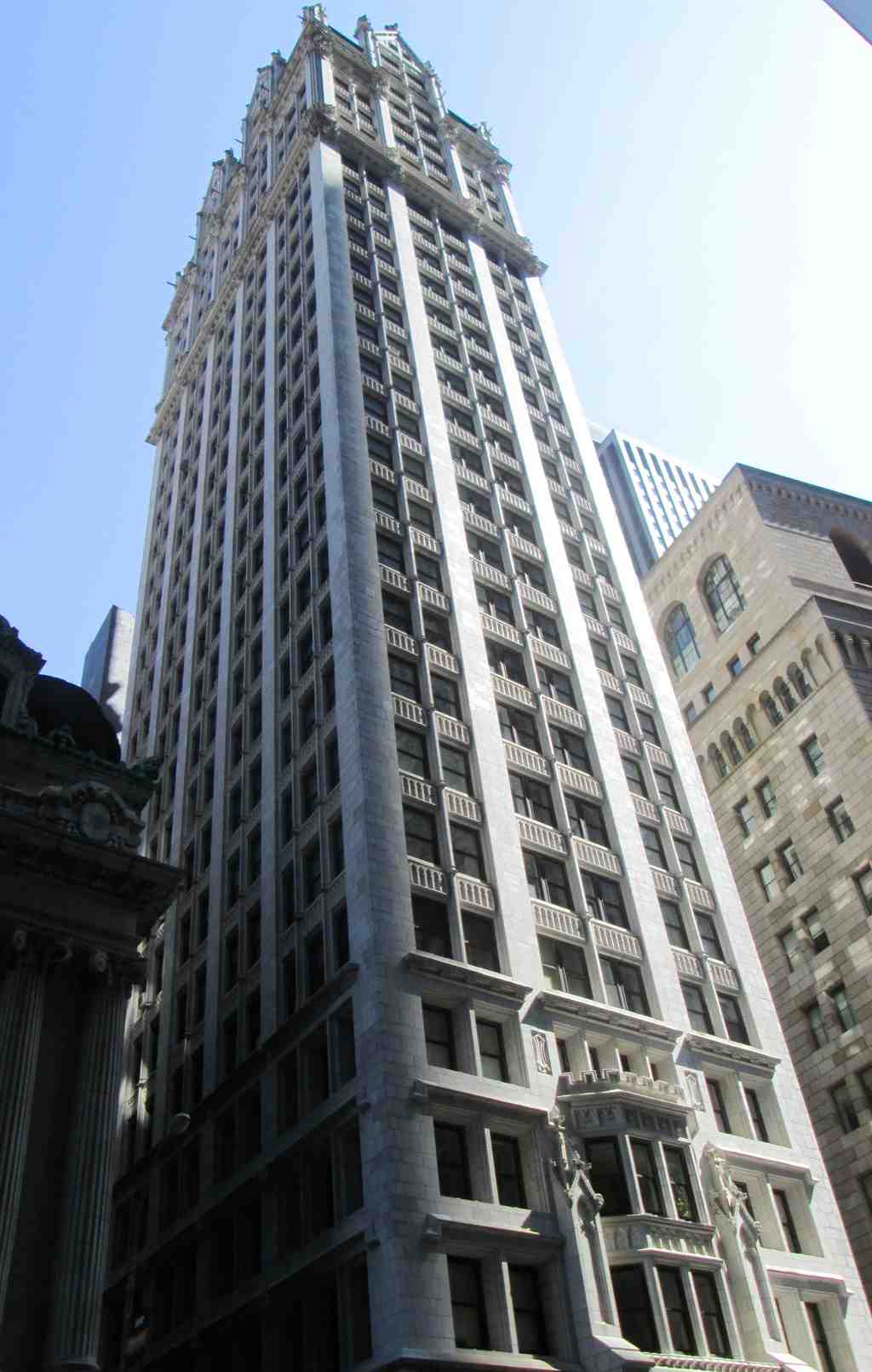
If you look upwards toward Nassau and Liberty Streets, you’ll spot a slender, bright white tower covered in intricate terracotta details-gargoyles, birds, and fanciful creatures…Read moreShow less
If you look upwards toward Nassau and Liberty Streets, you’ll spot a slender, bright white tower covered in intricate terracotta details-gargoyles, birds, and fanciful creatures guarding a Gothic crown high above the clustered Financial District. Here you are, right at the foot of the Liberty Tower. It rises like a storybook castle, squeezed into a tiny plot but stretching a dizzying 33 stories above these bustling streets, its white terracotta gleaming in the sun-no matter how crowded the city feels, this building dares you to look up and catch its ambitious personality. Imagine the year is 1910: suffocating with excitement and the steam of progress, Manhattan is booming. Henry Ives Cobb, an architect with wild ideas from Chicago and Paris, is hired to craft something bold, something that almost pokes the clouds-he chooses English Gothic. Not for a cathedral, but for an unapologetic office tower, clad from foot to rooftop in terracotta. Over 3,000 blocks of it, filled with quirks and characters carved into the walls. You could search for hours spotting alligators and creatures peering down at you! What made the Liberty Tower extraordinary wasn’t just its lacework of ornament but its insane proportions. The floor area ratio was over 30 to 1, making it the slimmest skyscraper in the world when it was finished. The whole thing rises on a plot of land that’s just 5,200 square feet. Its foundations sink down a remarkable 94 feet, built into soggy, treacherous ground with caissons so deep they were second only in the entire city. It was a gamble. The construction even triggered a series of mortgages, defaults, and legal struggles-nearly leaving the building unfinished before tenants even moved in. Inside, the marble lobby was once covered with lively murals-a tribute to the ambitions and fleeting youth of New York, and even the legendary William Cullen Bryant, whose “China Tower” newspaper office stood here before all this steel and terracotta. The tenants of Liberty Tower were fittingly ambitious: one of the first was the law office of Franklin D. Roosevelt, practicing here in his pre-presidential days, along with major insurance companies, brokers, and, rather secretly, German spies during the feverish days leading up to World War I. Then came Sinclair Oil, snapping up the entire building right after WWI. The place was buzzing with negotiations, and even the notorious Teapot Dome scandal was cooked up here-oil deals, bribery-a juicy slice of American history, played out in these narrow offices. When oil moved uptown, so did Sinclair, and the Rockefeller family took over before passing it through a carousel of owners. By the late 1970s, things were gloomy. The neighborhood was half-abandoned, and Liberty Tower stood almost empty-almost ready for a big sleep. Instead, Joseph Pell Lombardi stepped in, betting everything, with just $25,000 down, that New Yorkers would soon crave city living again. He stripped away the dusty cubicles and reimagined the place for homes, making this the Financial District’s first major office-to-residential conversion. It wasn’t easy-moving day for new residents meant raw, unfinished spaces and kitchens and bathrooms yet to be built. Still, the building sparked a trend, inviting life back into this part of the city. Of course, Liberty Tower has endured more than its share of trouble: battered by the collapse of the World Trade Center nearby in 2001, followed by years of costly repairs-residents pitched in to restore thousands of terracotta sculptures on its ornate exterior. But time and again it’s survived, returned, and now stands tall, crowned and proud, as both a city landmark and a symbol of rebirth-one that hides wild stories and wild creatures in plain sight, still keeping watch from its Gothic perch. As the traffic rushes by, pause and let your mind fill those old offices with the ambitions, secrets, and dramas of a century of New Yorkers. Fascinated by the site, architecture or the critical reception? Let's chat about it
Open dedicated page →
Frequently asked questions
How do I start the tour?
After purchase, download the AudaTours app and enter your redemption code. The tour will be ready to start immediately - just tap play and follow the GPS-guided route.
Do I need internet during the tour?
No! Download the tour before you start and enjoy it fully offline. Only the chat feature requires internet. We recommend downloading on WiFi to save mobile data.
Is this a guided group tour?
No - this is a self-guided audio tour. You explore independently at your own pace, with audio narration playing through your phone. No tour guide, no group, no schedule.
How long does the tour take?
Most tours take 60–90 minutes to complete, but you control the pace entirely. Pause, skip stops, or take breaks whenever you want.
What if I can't finish the tour today?
No problem! Tours have lifetime access. Pause and resume whenever you like - tomorrow, next week, or next year. Your progress is saved.
What languages are available?
All tours are available in 50+ languages. Select your preferred language when redeeming your code. Note: language cannot be changed after tour generation.
Where do I access the tour after purchase?
Download the free AudaTours app from the App Store or Google Play. Enter your redemption code (sent via email) and the tour will appear in your library, ready to download and start.
If you don't enjoy the tour, we'll refund your purchase. Contact us at [email protected]
Checkout securely with 


