
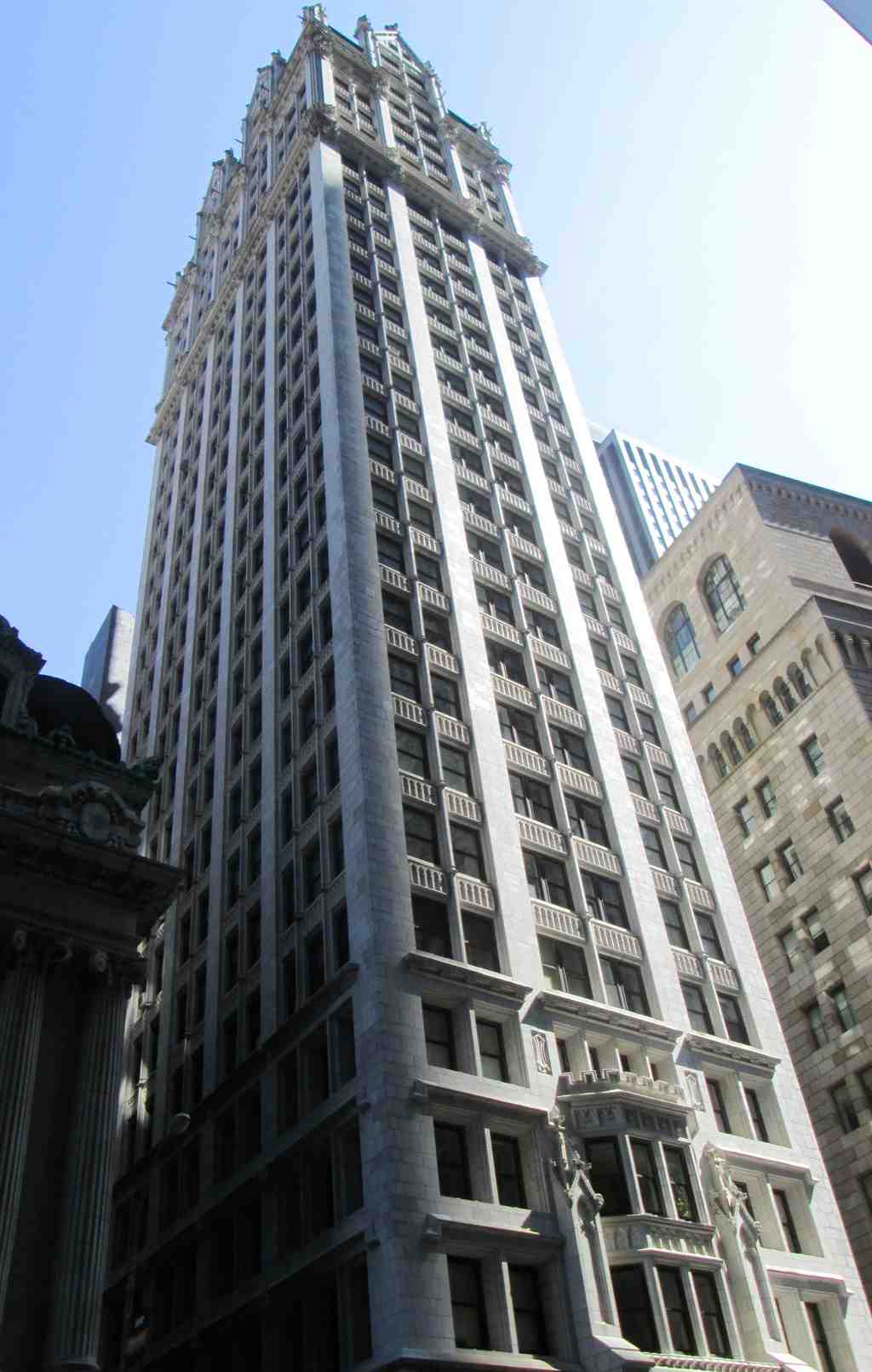
Rising above the narrow streets at 55 Liberty Street, the Liberty Tower is easy to spot by its striking white terracotta facade, completely adorned with whimsical creatures and capped by a soaring, castle-like top-just look up for a narrow, 33-story skyscraper that gleams differently from the neighboring stone buildings.
Standing here, you’re right at the foot of a legend-a tower that, when it first opened its doors in 1910, was declared the world’s tallest building with such a slender footprint, like a sword thrusting into the Manhattan sky. Imagine the early 1900s, noisy with construction all around and the city’s skyline changing before your eyes. This tower, designed by Henry Ives Cobb, was both a feat of engineering and artistry. Not only did it rise with a steel skeleton-the latest modern marvel-but Cobb decided to dress it entirely in white terracotta, giving the building a dazzling, almost fairy-tale appearance, covered in birds, alligators, gargoyles, and fantastical ornament. Even now, if you glance along the upper walls, you can sometimes catch a glint of sunlight off a dragon or an eagle perched in the masonry.
Back when the building was brand new, one of its very first tenants was a young Franklin Delano Roosevelt, whose law office sat on the second floor-before he ever dreamed of the presidency. But behind those storied doors, intrigue simmered. In 1917, as World War I brewed, this building hosted German spies using a rented office as a cover while they plotted to draw the United States into a war with Mexico and Japan. The scheme unraveled with the dramatic revelation of the Zimmermann Telegram, changing the course of world history right from these very corridors.
Within a decade, the entire skyscraper was snapped up by the Sinclair Oil Company. Imagine the flurry of business in the smoky boardrooms, where deals for oil rights made here would echo all the way to Washington D.C. and erupt into the infamous Teapot Dome Scandal-a tale of bribery and political intrigue that rocked the 1920s. And when the financial power shifted Midtown and companies like Sinclair moved north, the Liberty Tower changed hands again and again, sometimes bustling with over a hundred busy tenants.
But by the late 1970s, as Wall Street’s fortunes flickered, the glory days of the Liberty Tower seemed to flicker with them. At one point, the building stood two-thirds empty, abandoned, and hardly anyone believed it could revive. Enter architect Joseph Pell Lombardi, who saw possibility where others saw decay. He bought the tower for under a million dollars, launching one of the city’s first office-to-residential transformations. Picture the dusty, echoing offices ripped out and reborn as New York’s tallest co-ops south of Canal Street-the start of a whole new way to live downtown.
Take a step back and look up-the base, shaft, and castle-like crown rise in perfect columns, each section with its own details. Try to pick out the vertical piers, or the rows of small windows as the stories climb higher. At the very top, green copper roofs recall the turrets of a storybook castle. Below your feet, the tower is anchored with foundations drilled nearly a hundred feet to bedrock, overcoming quicksand and hardpan. Special caissons had to be sunk just to hold this tall, slender marvel aloft in a city eager for height.
Through every transformation, Liberty Tower has clung fiercely to its identity. Its restoration in the 1990s and again after September 11th-a day the tower sustained heavy damage just steps from Ground Zero-became a monumental challenge of its own, as residents worked together to save the storybook creatures clinging to the walls. Now, not only does it look as fantastical as it did over a century ago, it’s officially recognized as a New York City Landmark and part of the Wall Street Historic District.
Here you are, at the crossroads of money, mystery, scandal, and resilience-where a slender, white terracotta tower once crowned the skyline, and still stands guard over Liberty Street, whispering stories through every gargoyle and bird set in stone.
Yearning to grasp further insights on the site, architecture or the critical reception? Dive into the chat section below and ask away.


