

New York City Audio Tour: Broadway Beats and Skyline Streets
A city of glass towers and invisible dramas, Manhattan hides more secrets per square block than most entire nations. Slip on your headphones and set out on a self-guided audio tour through the heart of Midtown, where hidden scandals and lost legends simmer beneath the roar of yellow cabs. This is your invitation to step beyond familiar skylines and uncover stories few tourists ever hear. Who tried to erase a billion-dollar mistake at the foot of Trump International Hotel and Tower? Why has Circle in the Square Theatre echoed with ghost stories even during rehearsals? What peculiar clues still linger around One Worldwide Plaza from a forgotten citywide rebellion? Move from steel giants to storied stages as you layer each block with fresh intrigue and cinematic suspense. See Manhattan’s icons in sharper focus, stitched together by gripping tales and buried truths waiting in plain sight. Unlock the city’s veiled reality. Your journey into Manhattan’s mysteries starts now.
Tour preview
About this tour
- scheduleDuration 40–60 minsGo at your own pace
- straighten4.0 km walking routeFollow the guided path
- location_onLocationUnion City, United States
- wifi_offWorks offlineDownload once, use anywhere
- all_inclusiveLifetime accessReplay anytime, forever
- location_onStarts at Manhattan Plaza
Stops on this tour
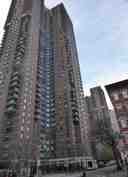
Look up to spot two enormous reddish-brown towers with rows of balconies and a canyon of glass windows rising up from a full city block at the corner of 43rd Street and Ninth…Read moreShow less
Look up to spot two enormous reddish-brown towers with rows of balconies and a canyon of glass windows rising up from a full city block at the corner of 43rd Street and Ninth Avenue-trust me, you can’t miss Manhattan Plaza, it’s one of the tallest buildings around. All right, you’re standing at the gateway to a true showbiz sanctuary-where the drama wasn’t just on stage, but baked right into the walls and hallways! Back in the early 1970s, this very spot in Hell’s Kitchen looked nothing like the shiny theater district you see today. Imagine the city in turmoil: the economy tanking, Times Square was better known for its neon grit than for Broadway glitz, and the neighborhood-still called “Clinton” by some, but “Hell’s Kitchen” by everyone else-was sprinkled with adult stores and tough crowds. Now add a set of towering, hopeful buildings right in the heart of all that chaos, financed with borrowed millions that evaporated almost as fast as city officials could sign the checks. The original plan for these massive towers was for middle- to upper-middle-class renters, with townhouses, shops, and even a health club, but as money dried up, so did any chance of filling those apartments the way they’d dreamed. With the city broke and the neighborhood less than charming, you might think everyone would have just packed it in. But here comes the twist-like any good plot-real estate developer Daniel Rose, looking for a miracle, proposed a wild idea: fill the apartments with artists. Not just any tenants, but actors, musicians, stagehands, and dancers from the performing arts. Imagine a whole skyscraper full of people who knew how to belt out a tune, land a pirouette, or build a Broadway set! It was so unusual, some people thought it was a punchline. “Just wait,” they said, “you’ll end up with more jazz hands than jazz music!” Yet, the city loved the idea. The performing arts unions jumped on board. Even skeptical neighbors came around once it was clear this could help clean up the area and inject a bit of sparkle and stability. By 1977, after much nervous laughter and at least one deep sigh of relief, Manhattan Plaza finally opened. Seventy percent of its 1,689 apartments were for theater folk, fifteen percent reserved for elderly or handicapped locals, and another fifteen percent for people in the area living in less-than-glamorous conditions. It became a kind of vertical village: you could bump into your favorite stage star in the elevator, pick up your groceries alongside a rising playwright, or share a laugh with a neighbor who’d just finished dancing in a Broadway show. Oh-and talk about community spirit-a preschool, playground, basketball and tennis courts sprung up between the towers. There’s even a pie shop and a cafe where, rumor has it, Bruce Willis worked the bar before Yippee-ki-yay became a catchphrase. But life at Manhattan Plaza wasn’t all applause. The AIDS crisis struck hard here in the 1980s, devastating the performing arts community. Rev. Rodney Kirk, the first director, responded by rallying residents and building support programs-some of the earliest AIDS outreach in the city. It’s said the heartbreak and hope found in these towers could fill a theater all on their own. Over the years, the pressing needs of neighbors shifted: now, many are aging performers, determined to live out their days in the place they love, surrounded by fellow artists. Today, Manhattan Plaza stands tall, both literally and as a towering example of how a risky gamble helped revitalize a neighborhood-and kept the spotlight shining bright in Hell’s Kitchen. So, if you hear a shower singer going full “Phantom of the Opera” from a window above, don’t worry, it’s just another day at Manhattan Plaza.
Open dedicated page →
Show 10 more stopsShow fewer stopsexpand_moreexpand_less
 4
4Lena Horne Theatre
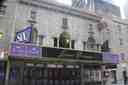
Buy tour to unlock all 17 tracksTo spot the Lena Horne Theatre, look for the wide, three-story yellow-beige brick building with ornate terracotta decorations, large Palladian windows above a purple and gold…Read moreShow less
To spot the Lena Horne Theatre, look for the wide, three-story yellow-beige brick building with ornate terracotta decorations, large Palladian windows above a purple and gold marquee with “Lena Horne” glittering in lights, right here on West 47th Street. Now, take a breath-because you’re standing in front of a real Broadway legend. This theater has been dazzling New York since the Roaring Twenties, back when flapper dresses were the hottest fashion and jazz poured out of every corner. It was 1926-picture the sound of hammers and saws echoing as workers hurried to finish Irwin Chanin’s newest treasure, a Spanish Revival-style palace designed by Herbert Krapp. The walls rising before you now were dreamed into being when Times Square was transforming into the world’s theater capital, right amid a city still shaking off horse-drawn carriages. Its first name? The Mansfield Theatre, tipped in honor of British stage legend Richard Mansfield. But despite Chanin’s grand hopes, the early years were, well, a little cursed-if “the show must go on,” here it kept tripping over its own shoelaces. Some plays barely lasted two weeks! Everyone called it a “jinx house” except the tenacious producers who always hoped for that one lucky break. But don’t feel sorry for our theater-anything with this much character was bound for the spotlight. Its fortunes changed in 1930 with a bold hit, The Green Pastures, featuring an all-Black cast and running an amazing 640 performances. The earth rumbled and the city sat up, realizing the Mansfield had a voice. The theater’s life mirrors New York’s own drama-enduring depressions, changing hands, and even hosting big broadcasting flashes: for a whole decade, CBS took over and the stage became Studio 59. Imagine the tick of cameras, the neon gleam, big names like What’s My Line? firing questions under the grand balcony. When Michael Myerberg brought it back to live theater in 1960, he cheekily named it after Brooks Atkinson, the famous New York Times critic-it was the first Broadway house to honor a critic, which must have made plenty of playwrights worry about their reviews! Through the 60s and 70s, legends played here-Neil Simon’s first hit, a young Dustin Hoffman, and even Lenny Bruce’s life on stage. The façade before you is a star in itself. Those windows above are the theater’s eyes-arched and accented by twisting colonettes and Corinthian capitals. If you squint, you might almost hear echoes from balcony boxes where glittering chandeliers still catch the light. Inside, murals of muses and commedia dell’arte characters keep watch from high above while golden lighting sconces cast a gentle Broadway glow. The 1980s were a whirlwind. Jackie Mason’s comic genius rocked the house, and in 1987, New York City protected both the inside and outside as official landmarks-a smart move, because you can’t put a price on charm like this! The owners even went to court to fight the landmark status, but lucky for us all, the courts said the show must stay just as dazzling. In the 21st century, the theater’s seats have rocked to new musicals like Waitress and Six-a show so popular it’s practically rewritten the record books here. But the biggest twist came in 2022, when the Nederlander Organization rechristened it the Lena Horne Theatre, celebrating the legendary singer, actress, and civil-rights activist. Lena Horne once graced these boards in a Tony-winning show and broke boundaries for Black women on Broadway. Now, her name shines over the doors, letting every single person know that inside, dreams-old and new-have a place to soar. So, as you stand in the hum of city traffic, feel the magic in those golden bricks and marquee lights. You are part of Broadway’s living story, right here where dreams keep opening-eight times a week! Interested in knowing more about the site, design or the notable productions
Open dedicated page →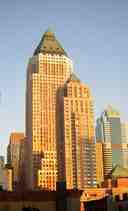 6
6One Worldwide Plaza
Buy tour to unlock all 17 tracksTo spot One Worldwide Plaza, look up and find the tall, tan brick skyscraper topped with a striking green pyramidal copper roof and a matching smaller peak beside it, standing on…Read moreShow less
To spot One Worldwide Plaza, look up and find the tall, tan brick skyscraper topped with a striking green pyramidal copper roof and a matching smaller peak beside it, standing on the east side of the block between Eighth and Ninth Avenues, above a three-story granite base. Alright, welcome to One Worldwide Plaza-where classic style, wild stories, and a fancy copper hat come together in Hell’s Kitchen! Right where you’re standing used to be the legendary third Madison Square Garden. Imagine, instead of a skyscraper, this block was once booming with roars from boxing matches and concerts. Then-poof-the old MSG was demolished and, for nearly twenty years, this spot was just a flat parking lot, dreaming of something bigger and better while pigeons held their exclusive meetings. It wasn’t until the 1980s that developer William Zeckendorf Jr. and his adventurous partners rolled in with a plan so bold, it felt like the neighborhood was getting a makeover and a Broadway debut. Hell’s Kitchen back then was, let’s just say... a bit “gritty.” Picture dusty tenements, neon lights for all the wrong reasons, and bars so cheap the drinks practically paid you to drink them. The idea behind Worldwide Plaza was to create not only a workplace, but a whole mini city-complete with offices, residences, a health club, garages, stores, theaters, and a huge public plaza with fountains and bronze statues of the four seasons. This skyscraper is not your average glass-and-steel giant. Designed by David Childs of Skidmore, Owings & Merrill, it’s a loving throwback to Art Deco classics, divided into three sections-base, shaft, and capital-like a king chess piece designed by a bricklayer with expensive tastes. You’ll spot Renaissance-inspired granite colonnades at the curved entrances and the glowing, eight-sided copper pyramid roof topped by a lantern, which looks like it’s just waiting for someone to turn it into a beacon for lost pizza delivery drones. The construction had its own drama, with ironworker strikes and cost overruns-turns out, Italian marble and brick from Pennsylvania don’t exactly show up in a yellow taxi. When it opened in the late 1980s, the building was nearly full, boasting power tenants like Ogilvy & Mather and Cravath, Swaine & Moore, who both demanded their own private entrances like true Manhattan royalty. Negotiations with the city made the builders improve the subway station beneath your feet, earning them precious extra building rights-because nothing says New York like a real estate deal hinging on a subway escalator. Downstairs, a movie multiplex brought some silver screen magic to the plaza until it became New World Stages, one of the top Off-Broadway houses you’ll find anywhere. And the plaza itself-well, it was so inviting, people sometimes had to wrestle restaurant maitre ds for the best chair, leading to a squabble with the city over who gets to sit where! Ownership of One Worldwide Plaza has changed hands more times than a taxi cab at rush hour, with wild stories of deals, foreclosures, and redemption. In the 2000s, it was so empty you could probably play hide-and-seek in the boardrooms. Then, new investment came in, filling the offices once again, but not without some juicy legal scuffles and billion-dollar wheeling and dealing behind the scenes. Even as recently as 2024, the tower’s fortunes swung up and down-what a ride! So next time you walk by, just remember: this skyscraper has survived boxing matches, bad neighborhoods, the ups and downs of New York real estate, and even a fountain that moonlights as a statue gallery. That copper cap on top? That’s not just a roof-it’s One Worldwide Plaza giving you a cheeky wink and saying, “I’ve seen it all.” Onward to your next stop! Intrigued by the site, architecture or the reception? Make your way to the chat section and I'll be happy to provide further details.
Open dedicated page → 7
7Circle in the Square Theatre
Buy tour to unlock all 17 tracksTo spot the Circle in the Square Theatre, look down and to your right-it's tucked away in the basement of the modern glass Paramount Plaza on 50th Street, its entrance marked by…Read moreShow less
To spot the Circle in the Square Theatre, look down and to your right-it's tucked away in the basement of the modern glass Paramount Plaza on 50th Street, its entrance marked by escalators leading you below the city’s surface. Welcome to the Circle in the Square Theatre! Standing here, imagine the buzz just below your feet-not the noisy horses from old New York, thankfully. Instead, you’re above the only Broadway theater built like an arena, where the stage thrusts boldly into a sea of red seats on three sides. The circle’s design was inspired by advice from a theater critic: the moment you enter, the stage immediately grabs your attention. Sounds dramatic, right? Just wait, the drama runs deep here! The Circle started with a group of dreamers in the early 1950s who had little more than a handful of cash, a lot of passion, and a wish to bring every kind of art onto the stage. Back then, they didn’t have the budget for Broadway, so they set up shop in a converted old nightclub at 5 Sheridan Square in Greenwich Village. The rent was a whopping $1,000 a month-not cheap for a group whose first paycheck was $320! Their first opening was delayed by months, thanks to a far-too-familiar story: bureaucracy and red tape. In the meantime, they could only get a license to run as a cabaret-maybe the actors practiced more on table service than lines. Finally, with a little luck and support, they put on their first play, “Dark of the Moon.” It was a gamble, because Off-Broadway theater was hardly the hot ticket in town. Then came the review that changed everything. With just a few words from the New York Times, suddenly the Circle was the place to see and be seen-even in steamy July, when no sane New Yorker wanted to sit in a theater before air conditioning. As the years passed, the Circle became known as the beating heart of the Off-Broadway scene, producing revivals by legendary playwrights like Tennessee Williams, Eugene O’Neill, and Jean Giraudoux. Out of these intimate, experimental setups came actors whose names echo through Broadway history-Dustin Hoffman, Jason Robards, James Earl Jones, and so many more. But if running a theater was never easy, running the Circle was like juggling on a tightrope. They had a knack for picking sites destined for demolition-when the Sheridan Square spot finally closed in 1960, they migrated to Bleecker Street, building another “in the round” sanctuary out of a former opera house. It wasn’t long before developers had their eyes on this spot, too. The company bounced from venue to venue, from Greenwich Village all the way to Washington, D.C., always keeping one foot on the stage and the other in a financial bear trap. By the 1970s, Broadway itself came knocking. The Circle got its permanent home right here, inside a basement unlike any other, beneath the slick Paramount Plaza. Opening in 1972, the new space thrilled with its thrust stage-one of only two in all of Broadway. Here, the actors are right up close; there are only ten rows, so nobody in the audience can nap unnoticed. It wasn’t always easy for directors or critics to figure out this unusual setup, but the proximity created a kind of electricity between performers and theatergoers that you just don’t find elsewhere. For years, the Circle operated as a nonprofit, scrounging for donations and putting on three or four shows a year. Some years were rough-like the 1990s, when the theater almost drowned in debt, lost staff, and was forced into bankruptcy. But in true showbiz fashion, the curtain never completely fell. The Circle rebounded, shifting to a commercial model and introducing a whole new generation to this unique space-most recently with crowd-pleasers like “Fun Home” and “Once on This Island.” Today, Circle in the Square is the only Broadway theater that isn’t operated by the major theater landlords-it stands apart, fiercely independent, keeping the spirit of its founders alive. <sfx>gentle clapping and stage crew sweeping up<\sfx> So take a bow for discovering a place where every seat is close to the action-Circle in the Square isn’t just a theater, it’s Broadway’s boldest experiment that refuses to follow the script. If you're curious about the design, off-broadway predecessors or the school, the chat section below is the perfect place to seek clarification.
Open dedicated page → 10
10Alvin Ailey American Dance Theater
Buy tour to unlock all 17 tracksLook for a modern building with bold signage that reads “Alvin Ailey American Dance Theater”-hard to miss with those big block letters! Now, as you stand in front of the mighty…Read moreShow less
Look for a modern building with bold signage that reads “Alvin Ailey American Dance Theater”-hard to miss with those big block letters! Now, as you stand in front of the mighty home of the Alvin Ailey American Dance Theater, let me whisk you into a swirl of rhythm and energy. It all began in 1958, a year when jazz was alive, New York City’s pulse was strong, and a young dancer named Alvin Ailey decided it was time for something revolutionary. Imagine a small group of passionate Black dancers squeezing onto the stage of the 92nd Street Y-not exactly the global powerhouse you see behind you today! Alvin Ailey was determined to capture the richness of African American culture and translate it into movement that could speak universally. He not only directed and choreographed but was the principal dancer too. Talk about multitasking! What started as just Alvin Ailey and Company, with seven dancers, quickly barreled into the mainstream. Their first shows featured Ailey’s own works like “Ariette Oubliee,” velvety with emotion, “Blues Suite,” humming with the sound of the South, and “Cinco Latinos,” bursting with personality. But the true game changer was in 1960: Ailey debuted “Revelations,” a masterpiece still performed to this day and often greeted by standing ovations before a single dancer leaps. Through narrow rehearsal spaces, basement studios, and all the usual chaos of creative beginnings, Ailey’s troupe kept growing-sometimes by leaps, sometimes with a stumble. In 1962, they took a bold step and became a multi-racial company, ready to show the world that dance knows no color. They hopped on airplanes, dazzling audiences in Sydney, Paris, London, and even at the White House for President Lyndon B. Johnson. Their 10-country tour across Africa in 1967 turned them into true cultural ambassadors-just imagine how many airport meals that took! Judith Jamison, brought in during the ’60s as a giant of modern dance, later became the company’s first artistic director after Alvin Ailey’s untimely death in 1989. She kept the fire burning through some tough times. There was even a near-catastrophic financial crisis in the 1970s when it seemed the curtain might fall for good. Luckily, resilience was clearly one of their strongest moves. Their headquarters grew along with the company-from church basements to Broadway offices to this current spot, the 87,000 square-foot Joan Weill Center for Dance. The space is more than a theater; it’s a mix of studios, rehearsal rooms, costume shops, and a world-class home for not just the main company, but Ailey II (their “junior varsity,” if you will), The Ailey School, AileyCamp-for aspiring dancers-and Ailey Extension, where mere mortals like you and me can test out a few moves. It’s the largest building dedicated entirely to dance in the country, which means lots of space for leaps, twirls, and, yes, the occasional jazz hand. The company’s story is nothing short of magical: from backyard beginnings to being named a “vital American Cultural Ambassador to the World” by Congress. They performed at presidential inaugurations and for global festivals, left their mark with postage stamps and museum exhibits, and today, almost 300 works from over 100 choreographers belong to their ever-expanding repertoire. Yet, they still honor their roots-regularly performing Ailey’s original masterpieces. If you wander past during a rehearsal, you might spot students perfecting a Horton technique, or catch faculty who’ve been teaching the next generation of dancers since bell-bottoms were in style. So while it may look like a shining modern landmark now, inside this building is a legacy fueled by grit, vision, and decades of tireless dancing feet. I dare you not to tap your toes as you walk away-after all, around here, even the floor seems to want to jump up and dance! Yearning to grasp further insights on the alvin ailey dance foundation, joan weill center for dance or the leadership? Dive into the chat section below and ask away.
Open dedicated page →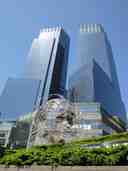 11
11Deutsche Bank Center
Buy tour to unlock all 17 tracksIn front of you, you’ll see two gleaming glass towers-each one soaring boldly into the sky, joined at the base above Columbus Circle, and behind the giant silvery globe sculpture,…Read moreShow less
In front of you, you’ll see two gleaming glass towers-each one soaring boldly into the sky, joined at the base above Columbus Circle, and behind the giant silvery globe sculpture, making this landmark hard to miss, even if you’re not great with directions! So here you are, standing on the border of Hell’s Kitchen and the Upper West Side, where one of Manhattan’s cleverest addresses-Deutsche Bank Center-rises right where the old New York Coliseum once buzzed with crowds and conventions. These twin towers are like Manhattan’s take on superhero sidekicks: the tallest twin buildings in the entire country. Their facades glimmer with so much glass and steel, on sunny days you might want to squint-even the clouds probably admire their own reflection in those windows. But this place didn’t grow up overnight. Back in the 1950s, this was convention central. The New York Coliseum drew people from around the world for trade shows and car exhibitions. By the 1980s, though, the city wanted a fresh new vision for Columbus Circle, and after enough failed plans, lawsuits, heated meetings, and, I imagine, some pretty dramatic New York grumbling, the old coliseum finally came down in 2000. It’s almost poetic: decades of debates, all to make room for something built on glass and, of course, nerves of steel! The development was like a big game of Monopoly for some of New York’s top real estate players. Developers, designers, celebrities-even a mayor or two-all had a say. Plans changed more often than a Broadway musical’s cast list. At various points, there were talks of more theaters, shopping arcades, and even a giant Kmart. It took a brilliant partnership between the Related Companies and Time Warner, a dash of architectural wizardry, and a massive $1.3 billion financing package to carry this sparkling project to the finish line. When the dust finally settled, out came David Childs and Mustafa Kemal Abadan, the architects from Skidmore, Owings & Merrill. Their towers were designed to embrace Broadway’s famous curve, throw glittering shards of blue-tinted glass skywards, and, if you’re standing just right-as you are now-frame Central Park itself. At their core, the towers are filled with secrets: luxury condos, offices, the ultra-fancy Mandarin Oriental hotel, and a shopping mall whose escalators are more glamorous than some people’s apartments. Fun fact: beneath those mirrored walls, you’ll also find the grand home of Jazz at Lincoln Center. If you ever walk by at night when the lights are on, you’ll spot the magical glass-walled Appel Room, where legendary musicians perform with the park as their dazzling backdrop. And somewhere in that glass-tube cable structure by the entrance, there’s a public art piece called Prow Sculpture-giant LED-lit panels that change color, sometimes for special occasions, sometimes just to show off the time, and always because, well, New Yorkers love a good lightshow. The center’s tech is a little bit like James Bond meets The Jetsons: Wi-Fi everywhere (even from the start), power backup systems, fancy elevators, and smart home tech that was considered almost sci-fi when the place opened in 2004. Residents even got their own “digital concierge”-a special notebook just to look up restaurants, stores, or… to order more fancy soap. Even the foundations of this place couldn’t escape a little drama. The builders had to work around an old parking garage, and the whole base is a web of steel beams, hiding dozens of entrances and exit points-like a friendly octopus. If you wander into the mall, you’ll find ultra-chic shops, mouthwatering restaurants (some with Michelin stars), and, if you follow your nose downstairs, a Whole Foods that is arguably the happiest place on earth for New York snack lovers. Today, the towers have traded in the Time Warner name for Deutsche Bank, embracing the future while keeping a toe in the past. Every pane of glass and every echoing chime of jazz reminds us: even in a city of constant change, there’s always a new story rising on the skyline. And who knows? Maybe one day someone will build something even taller, but until then, these twin towers sure know how to stand tall-and shine. Interested in a deeper dive into the site, architecture or the critical reception? Join me in the chat section for an insightful conversation.
Open dedicated page →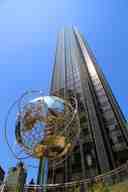 12
12Trump International Hotel and Tower
Buy tour to unlock all 17 tracksLook up and you’ll spot a soaring black-and-gold glass tower reflecting the sky, with a shiny silver globe sculpture spinning out front-welcome to the Trump International Hotel…Read moreShow less
Look up and you’ll spot a soaring black-and-gold glass tower reflecting the sky, with a shiny silver globe sculpture spinning out front-welcome to the Trump International Hotel and Tower, right at the northwest corner of Columbus Circle where Central Park West meets Broadway. Now, picture the year 1970-bell-bottoms, the smell of hot pretzels, and yellow cabs racing by. This very spot was not lined with glitzy glass, but dominated by the Gulf and Western Building, a solid, somewhat chunky office block dressed in aluminum and marble, surrounded by a plaza where movie-goers would slip underground to a swanky theater. It rose as the proud headquarters of Gulf and Western Industries, with rumors that its upper floors would sway so much in a windstorm that workers got a bit seasick-imagine typing a letter while your office gently rocks! The glamour you see today didn’t come easy. The land beneath your feet once played host to horse hooves and laughter at Durland’s Riding Academy, and for a while, a pair of low-rise buildings showed off a gigantic Coca-Cola sign flashing temperature and time to passersby. Even William Randolph Hearst-the newspaper tycoon-dreamt of building his media empire headquarters right here, thinking Columbus Circle was destined for fame. Good call, even if he was a bit ahead of his time. By the late 1980s and early 1990s, the old office tower had seen better days-nobody wanted to touch it, partly because bits of the facade might blow off in a storm and because the structure had so much asbestos, even the bravest insurer winced. The building shifted from one owner to another until finally, in the mid-1990s, a dramatic rescue mission began. Enter a cast of characters: the GE Pension Fund with the money, Galbreath Company with the plan, and Donald Trump… well, with the flair. “Why not turn the creaky office block into Manhattan’s most glamorous hotel and residence?” they asked. Cue a $230 million transformation led by star architects Philip Johnson and Costas Kondylis. Scaffolding wrapped the tower like a birthday present as the old gray marble skin was swapped for dark glass and gold steel. (Trump famously debated just how shiny he could go with all that gold-eventually settling for a matte finish, after a feng shui consultant insisted it should “reflect the clouds.” You can thank feng shui for the globe out front, too: that 30-foot-wide metallic sculpture was inspired by the Unisphere in Queens, not far from where Trump grew up.) For years, this corner grew ever more lively, from the busy movie theater below to the elegant restaurant up top-named, rather literally, “Top of the Park.” After the big makeover, the hotel opened on the lower floors with luxury suites, and up above, the kind of condos that make real estate agents sing with joy. Chef Jean-Georges himself set up shop on the ground floor, serving New French cuisine in a space that’s earned Michelin stars. Try the desserts if you ever decide to book a table-word is they’re almost as sweet as the skyline view. But the drama wasn’t only inside. A few decades back, this building became notorious for its “dizzying effect”-literally swaying in Manhattan gusts. Add in a couple of broken windows thanks to a rogue diner, a bomb scare (no injuries, thankfully), and embarrassing floods in the basement and you’ve got a place with stories to spare. All the while, residents and hotel guests have enjoyed amenities from personal “Trumptaché” concierges to marble-lined penthouses, although the condo owners have debated over the years what name should be out front. Even now, the Trump International catches the afternoon sun, offering reflections of Central Park, the bustle of Broadway, and the ever-rising ambitions of New York City. Not bad for a skyscraper that could have just been another forgotten 1970s office tower. So while you’re here, look up, laugh at the thought of swaying on the 30th floor, and maybe daydream about life in a place designed to sparkle “like a diamond” above Columbus Circle. Fascinated by the site, architecture or the critical reception? Let's chat about it
Open dedicated page →
Frequently asked questions
How do I start the tour?
After purchase, download the AudaTours app and enter your redemption code. The tour will be ready to start immediately - just tap play and follow the GPS-guided route.
Do I need internet during the tour?
No! Download the tour before you start and enjoy it fully offline. Only the chat feature requires internet. We recommend downloading on WiFi to save mobile data.
Is this a guided group tour?
No - this is a self-guided audio tour. You explore independently at your own pace, with audio narration playing through your phone. No tour guide, no group, no schedule.
How long does the tour take?
Most tours take 60–90 minutes to complete, but you control the pace entirely. Pause, skip stops, or take breaks whenever you want.
What if I can't finish the tour today?
No problem! Tours have lifetime access. Pause and resume whenever you like - tomorrow, next week, or next year. Your progress is saved.
What languages are available?
All tours are available in 50+ languages. Select your preferred language when redeeming your code. Note: language cannot be changed after tour generation.
Where do I access the tour after purchase?
Download the free AudaTours app from the App Store or Google Play. Enter your redemption code (sent via email) and the tour will appear in your library, ready to download and start.
If you don't enjoy the tour, we'll refund your purchase. Contact us at [email protected]
Checkout securely with 


