
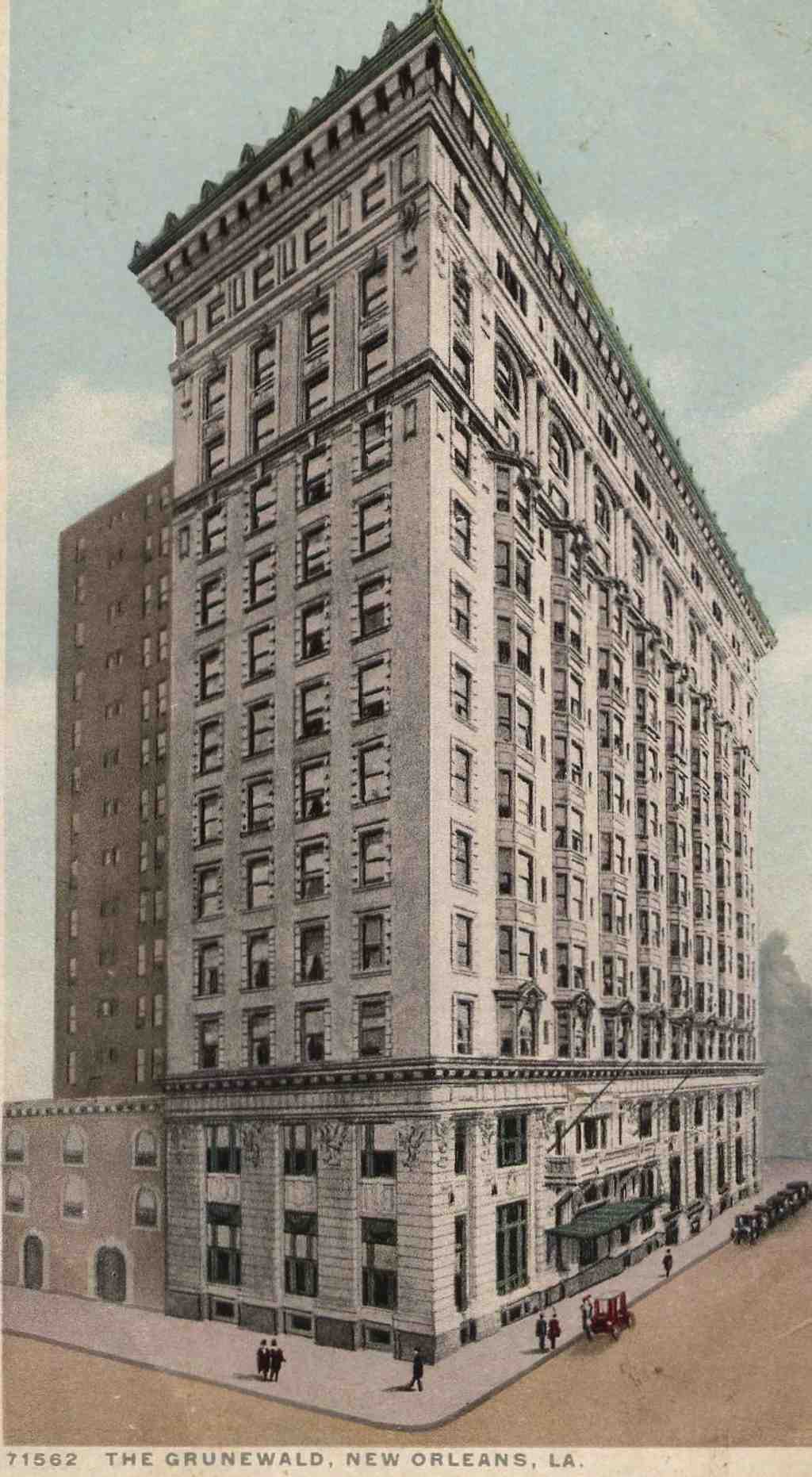
To spot The Roosevelt New Orleans, just look for a massive, ornate white building with tall windows and grand detailing towering up from the corner-it's hard to miss, standing proud like an elegant stone wedding cake on Baronne Street.
Welcome, friend, to one of New Orleans’ legendary stages of history and high spirits! Picture yourself in the late 1800s - horse-drawn carriages rattling past, a whiff of strong coffee in the air, and the promise of Mardi Gras sparkle around every corner. Right here, a German immigrant named Louis Grunewald gazed over the ashes of his burned-down music hall and saw opportunity. Instead of mourning, he began building: by 1893, he opened The Hotel Grunewald, luring Mardi Gras revelers with 200 sumptuous rooms and enough elegance to make the finest top hats tip in envy.
Now, fast forward to 1908. As partygoers clink glasses and jazz floats through the streets, a shimmering new tower rises - the Grunewald Annex. Fourteen grand stories, 400 new rooms, and a lobby with a staircase of Italian marble that looked like something straight out of a Venetian fairytale. But what truly stole the show was “The Cave,” a wild underground bar where you could sip a cocktail beside waterfalls, glowing stalactites, gnomes, and nymph statues. Imagine the sound of laughter echoing from that cavernous hideaway. Some even say it rivaled the Ziegfeld Follies - right here, beneath your feet!
But as time swept on, change was in the air. In 1923, the Vacarro brothers snatched up the hotel and set out to make it bigger and better. Boom! The old hotel was torn down, a new 16-story Baronne Street tower soared into the sky, and the Hotel Grunewald transformed into the Roosevelt Hotel, named in honor of President Theodore Roosevelt. This new era sparkled with the buzz of jazz - the Venetian Room soon became the city’s hottest jazz venue, while the grand lobby began its tradition of lavish Christmas decorations, dazzling locals and visitors year after year.
The 1930s brought a pinch of political intrigue. Seymour Weiss, originally the hotel’s barber shop manager (yes, really!), climbed the ranks to become owner and a confidant of Louisiana’s most colorful governor, Huey Long. Politics, power, and plenty of cocktails swirled around the 12th floor suite, where Long would plot, scheme, and order up his famous Ramos gin fizzes-once even flying his bartender up to New York to keep that signature drink just right. Somewhere in these halls, legend whispers of a secret “Deduct Box” where contributions and secrets were stashed away, never to be found.
The Roosevelt became the city’s playground for stars. The Blue Room, with its swinging bands and sultry singers, welcomed the likes of Glenn Miller and Guy Lombardo. Then, the world-famous Sazerac Bar moved in, making headlines in 1949 as it finally allowed women to join the revelry-an event now known as “Storming the Sazerac.”
Time and hurricanes could batter these walls, but the Roosevelt has always roared back to life. After Hurricane Katrina, the building was brought back from the brink with a $100 million facelift and reopened in 2009, glimmering with all the romance of the 1930s and a modern twist. Today, over 500 plush rooms and grand ballrooms stand ready for the next chapter, while guests float in a rooftop pool high above the humming city.
So as you stand here, sense the blend of marble, music, and mischief swirling around you. This isn’t just a hotel - it’s a living memory palace of New Orleans, where every wall is waiting to share another secret, just as soon as the jazz picks up again.


