
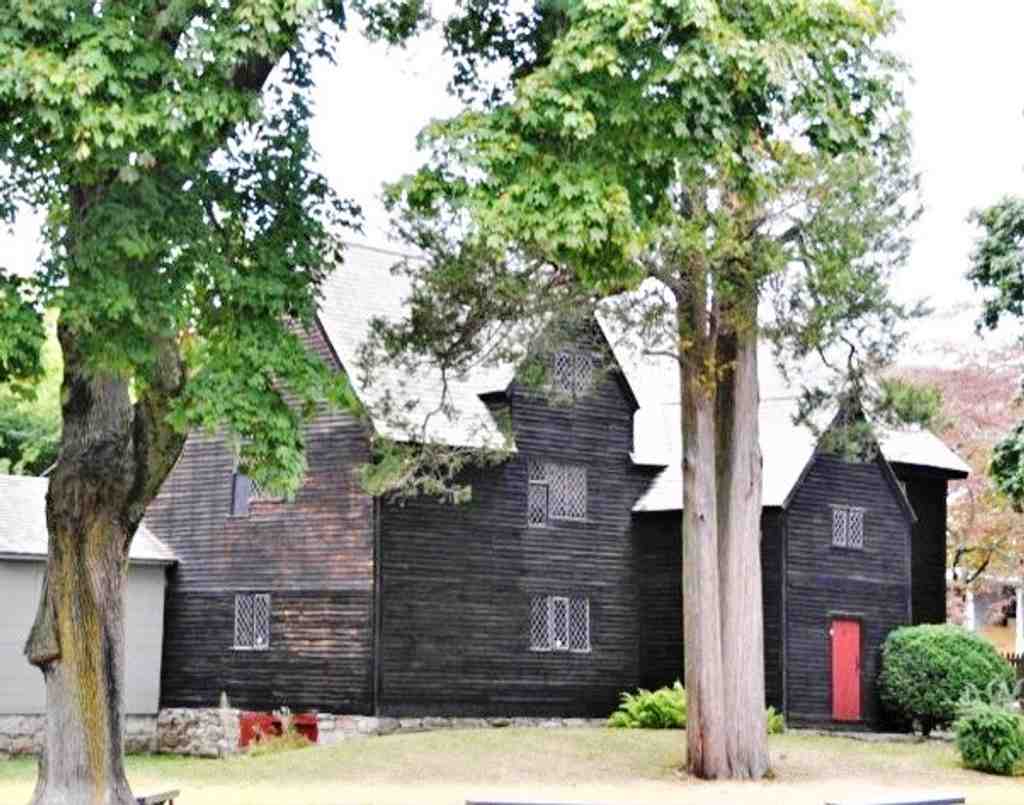
Look right and you’ll spot a sturdy, weathered wooden house with two uneven gables poking out from a simple roof-the Joshua Hempsted House looks like it’s drifted in from another century, with narrow windows made of diamond-shaped panes and a little enclosed entry sticking out front just to keep you guessing.
This house has hung around since about 1678-which around here, makes it nearly ancient. It’s one of Connecticut’s oldest survivors, and calling it “well preserved” is putting it mildly. Through that front vestibule and past the thick, rough beams, you’re stepping into what was originally a basic one-room shelter with a chimney jammed on one end. Families lived simpler-tighter-back then, but the original Joshua Hempstead clearly built the place to last, probably without a single thought of future “open concept” renovations.
You want tension? During the 1780 Battle of Groton Heights, the city went up in smoke all around the Hempsted House… except here. Turns out, the British soldiers pillaged a big family meal the Hempsteads had cooked for a reunion. The invaders got fed, and the house got a pass. Sometimes survival runs on luck-and brisket.
Over the years, this home became a safe haven in the Underground Railroad, quietly sheltering people escaping slavery. Decades later, it dodged the wrecking ball, too. By 1937, it landed in the hands of the people who’d become Connecticut Landmarks-costing them less than a decent new sedan at the time, which in today’s money, would set them back closer to $12,000. Cheap at twice the price for this much history.
When you’re ready, Hempstead Historic District is just a 6-minute stroll southwest.


