
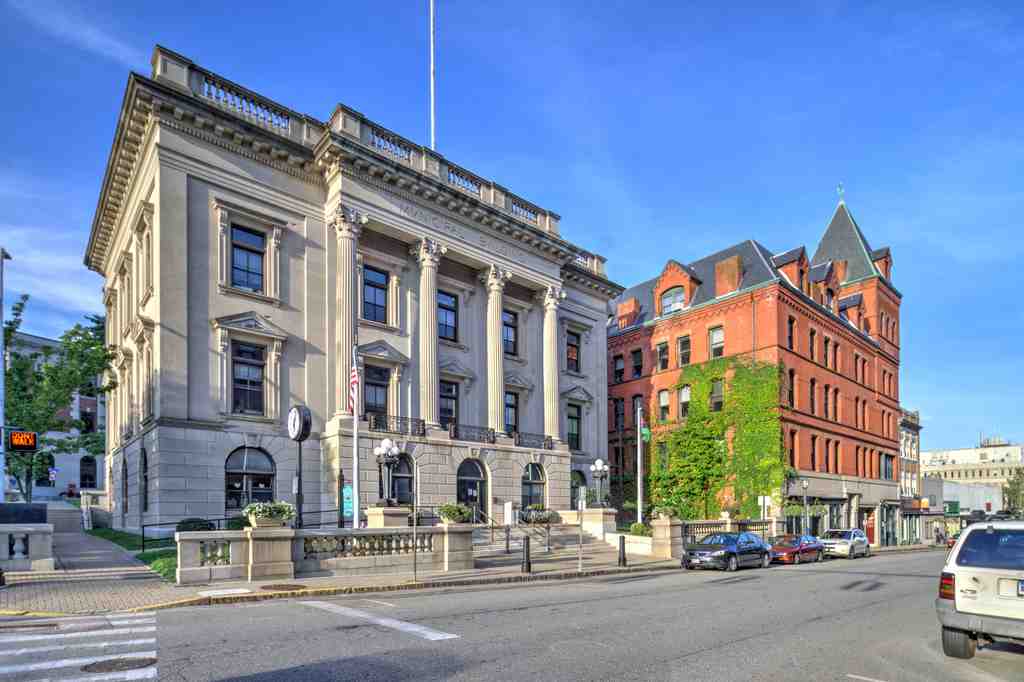
Look to your right-you’ll spot the Downtown New London Historic District in all its quirky, layered glory: an eclectic blend of 18th-century brick, 19th-century stone facades, and 20th-century shopfronts, all running down toward the Thames River, with signs for cafes, boutiques, and a surprising patchwork of old painted woodwork peeking between modern awnings.
Alright, welcome to the heart of old New London-where nearly every building has a story to tell and, quite frankly, a few would probably argue about the details. This area covers a whopping seventy-eight acres-think of about sixty football fields, but swap out the end zones for wharves and waterfront instead of wide receivers.
Folks here call it “the Waterfront,” and it’s easy to see why: the district sits right on the bank of the Thames River (named after the one in London, but pronounced locally to rhyme with “James,” not “Thames” like in England… don’t let any Brit hear you say otherwise). Three main streets anchor the area. Bank Street was once lined with tall ships creaking at anchor and the smell of fresh-caught fish-less glamorous than brunch today, but probably just as lively. This street owes its name both to its riverside perch and, let’s be honest, the early banking families who realized sailing ships and trade made for a pretty good paycheck.
Let’s talk drama-back in 1781, British troops led by Benedict Arnold, America’s most famous turncoat, stormed through New London and burned much of it straight to the ground. Yes, the whole “traitor” thing was literal here. Arnold’s rampage torched the waterfront; what you see now was painstakingly rebuilt, brick by stubborn brick. Imagine the costs back then-rebuilding a city after an invasion could run you twenty thousand dollars in 1781; that’s more like half a million dollars today. And that’s not counting the emotional cost of watching your entire town go up in smoke.
Today, the district is a patchwork quilt of different centuries: the Shaw Mansion, home to the Connecticut Navy during the American Revolution-yes, there WAS a Connecticut Navy; the New London Customhouse, oldest continuously operated in the country; lively Victorian shopfronts where Gilded Age clerks and modern baristas now cross paths; and more than a few locations whispered about for their Amistad connections and haunted corners.
If you stroll up State Street, take in the mix: stone churches (what’s left of them), old department stores turned apartments, and a few relics that genuinely survived Arnold’s torch. The terrain isn’t just history-it’s living proof that New London has a habit of picking itself up and starting over, no matter what comes rolling up the harbor.
Soak it in for a minute-maybe pop into a café, channeling Eugene O’Neill’s fondness for a good drink and a better story. When you’re ready to move on, New London Public Library is about five minutes north from here.


