
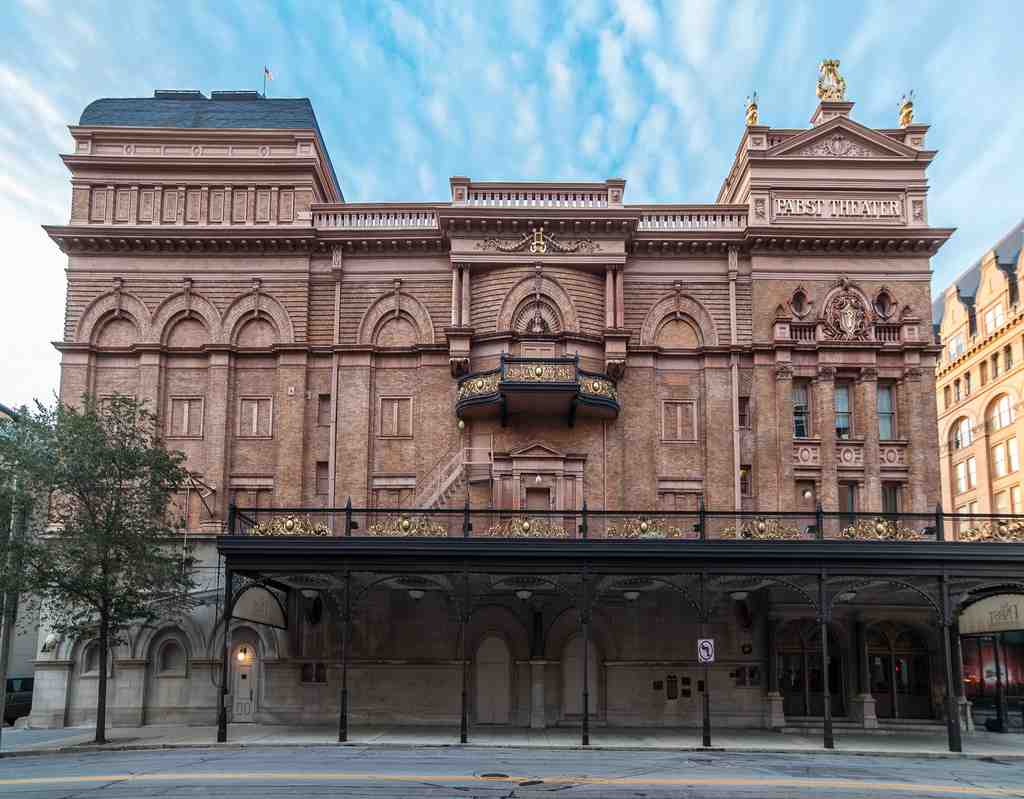
To spot the Pabst Theater, just look for a grand, ornate brick building with arched windows, intricate gold detailing, and a bold sign reading "PABST THEATER" high above the black and gold ironwork canopy right in front of you.
Welcome to the Pabst Theater, Milwaukee’s own “Grande Olde Lady”-but trust me, she’s not here to hand out cookies, she’s here to dazzle! Picture yourself standing in 1895: horses clop down the cobbled street, the lights of Milwaukee shimmer against Lake Michigan, and excitement buzzes in the air as crowds spill through these very doors for opening night. The original opera house here was destroyed by fire-twice, if you can believe it. That’s right, Frederick Pabst, the famous beer baron, said, “Enough!” and rebuilt his dream theater stronger, sparklier, and as close to fireproof as 1890s technology could manage.
The Pabst was born for grandeur-giant marble staircases, plush cherry-red seats, and a chandelier heavy enough that you’ll look up and be glad you remembered your lucky rabbit’s foot.
Inside, the theater holds about 1,300 people with two elegant balconies wrapping around a drum-shaped auditorium-perfect for catching whispers, laughter, and, occasionally, an actor forgetting his lines. Its gold leaf proscenium arch frames everything from thundering orchestras to slapstick comedies and cutting-edge documentaries. Even Sergei Rachmaninoff, Laurence Olivier, and ballerina Anna Pavlova graced this stage. If those walls could talk, they’d be trilingual in music, laughter, and applause.
Now, the Pabst Theater not only looks like something out of a European fairy tale-thanks to architect Otto Strack’s eye for German Renaissance glory-but was packed with innovations: electric organ, ice-powered air conditioning, and one of America’s first fire curtains. And get this: a massive hydraulic orchestra pit rises up like magic for the musicians, so no trombone player gets left behind.
As you gaze at the building, picture the names of Aristotle, Beethoven, and Shakespeare inscribed high above, keeping a watchful eye on all the drama below-not to mention the gigantic Austrian crystal chandelier that has lit up Milwaukee’s finest nights for over a century.
Milwaukee’s German roots ran deep here-the city once nicknamed “German Athens”-and the Pabst kept those traditions alive through years of schnitzel, opera, and eventually, the switch to English as the world changed outside. The result? One of the best-sounding, most opulent theaters in America, still bustling today with over 100 events a year. So, as you stand before these golden doors, take a bow-this is a place where legends are born and every night feels like opening night!




