
Milwaukee Audio Tour: Timeless Tales of Towers, Art, and Icons
Stained glass glows in the heart of Milwaukee, where gilded history lurks behind each gilded door and marble step. This is a city shaped by riot, reinvention, and a touch of gilded mystery. Wander Milwaukee at your own pace with this self-guided audio tour. Unlock stories hiding in church vaults, mansions poised above Lake Michigan, and palatial movie houses few ever notice. Which secret scandal forced a reckoning in the Archdiocese’s shadowy corridors? Who vanished behind the sun-dappled walls of Villa Terrace Decorative Arts Museum, their story lost to time? Why does the Oriental Theatre’s tapestry hold an oddly personal tribute that guests step over every day? Move through Milwaukee’s winding streets with new eyes, feeling the electric charge of intrigue and discovery. Hear echoes of past battles and whispered secrets in spaces crowded with art and ambition. The doors are waiting. Take the first step and uncover Milwaukee’s hidden stories for yourself.
Tour preview
About this tour
- scheduleDuration 40–60 minsGo at your own pace
- straighten3.8 km walking routeFollow the guided path
- location_onLocationMilwaukee, United States
- wifi_offWorks offlineDownload once, use anywhere
- all_inclusiveLifetime accessReplay anytime, forever
- location_onStarts at Archdiocese of Milwaukee
Stops on this tour
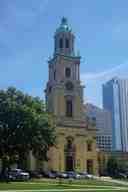
To spot the Archdiocese of Milwaukee, look for the tall yellow brick building with a grand clock tower topped by a greenish copper dome and a golden cross shining overhead,…Read moreShow less
To spot the Archdiocese of Milwaukee, look for the tall yellow brick building with a grand clock tower topped by a greenish copper dome and a golden cross shining overhead, standing just across from the trees and modern glass skyscrapers. Alright, take in the view of this commanding church tower reaching skyward, its elegant copper dome sparkling in the sun-this is the heart of Catholic life in Milwaukee, and the spiritual headquarters of an archdiocese that’s weathered centuries of change, drama, and even a little scandal. Now, let’s rewind to the early 1600s, when Wisconsin was nothing but wild forests, rivers, and the footsteps of French missionaries drifting through the trees. Imagine the crisp December air biting at French priest Claude-Jean Allouez as he huddled near a blazing fire to celebrate Mass with Native Americans. Those missionaries faced burned missions, crashes with British soldiers, and the slow spread of Catholic worship across a frontier that was often more mud than marble. When Milwaukee itself was only a patchwork of dirt paths and trading posts, a priest named Patrick Kelly arrived in the 1830s, lugging his vestments through the muddy streets. The first Mass in Milwaukee? It wasn’t held here, but in a courthouse! By 1843, the rising tide of immigrants-Germans, Irish, and French Canadians-prompted the Pope to carve out the Diocese of Milwaukee, handing this patch of land to a new bishop, John Henni. Henni was a man of big dreams but an even bigger church debt. He housed seminarians in his own home and prayed the bills would sort themselves out-a little divine intervention never hurts, right? As the city boomed, the diocese kept pace, erecting churches to serve wave after wave of newcomers. The tower in front of you sits atop the Cathedral of St. John the Evangelist, built with local “Cream City” bricks, a material so nicknamed for its yellowish hue. Inside, there’s even an altar gifted by a Bavarian king. No word on whether he threw in his bratwurst recipe. The 1870s brought a promotion: the diocese became an archdiocese, taking charge of all surrounding Catholic regions from Green Bay to Superior. In true Milwaukee fashion, fierce German, Polish, Irish, and Norwegian communities all fought-sometimes over language, sometimes over the very soul of their schools. When the state tried to force them to teach in English with the infamous Bennett Law, church bells rang out in angry defiance, a racket that probably startled more than a few local cows. The law was eventually repealed, and everyone went back to arguing about whose potluck was best. By the early 20th century, the Archdiocese had grown into a sprawling network of parishes, schools, and aid groups. It launched newspapers, universities, even orphanages-sometimes needing to rebuild them after disasters like fire. The city’s shifting tides brought thorny topics, from the Civil Rights movement (when a priest-turned-activist marched for open housing) to the controversy over church lands sold to help the poor. One archbishop even sold the mansion and moved into the rectory, hoping simpler living might calm the critics. Of course, the story isn’t all stained glass and incense. In the 21st century, the archdiocese was rocked by revelations of clerical sexual abuse and eventually filed for bankruptcy in 2011. Leaders had to face painful truths, settle hundreds of claims, and rename buildings to reckon with their past. Yet, as of January 2025, a new archbishop-Jeffrey Grob-has stepped forward, eager to shepherd a Catholic community that spans more than half a million souls across ten counties. So as you stand beneath this grand, copper-capped tower, you’re standing at the crossroads of countless stories-saints and sinners, builders and believers, immigrants and locals, all woven together by faith, controversy, hope, and the relentless cheese curd debates of Wisconsin. Welcome to the very beating heart of Catholic Milwaukee. Want to explore the demographics, bishops or the churches in more depth? Join me in the chat section for a detailed discussion.
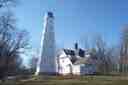
Open dedicated page →Right ahead, you’ll spot a tall, white, octagonal lighthouse stretching into the sky, next to a charming old keeper’s house with a steep roof-just look for the tallest thing in…Read moreShow less
Right ahead, you’ll spot a tall, white, octagonal lighthouse stretching into the sky, next to a charming old keeper’s house with a steep roof-just look for the tallest thing in sight! Imagine it’s the late 1800s and you’re standing on a chilly bluff overlooking Lake Michigan. Sailors depended on a beacon to guide them safely home, and that’s where the North Point Light came in. Built in 1888, this lighthouse wasn’t the first-there was a brick lighthouse here all the way back in 1855, but the bluff began to crumble and threaten its safety. So, engineers thought “let’s play lighthouse Jenga” and rebuilt it 100 feet back, using sturdy cast iron for the new tower and keeping the original lantern room on top. At first, the light burned mineral oil, which probably made for some seriously sooty evenings for the keepers. But nature had more surprises: eventually, the trees in the park started to block the view for ships! In 1912, they raised the lighthouse even higher by adding a new steel section underneath, making the tower look like a giant lighthouse sandwich-so today’s tower is made from three different lighthouses stacked together. Talk about recycling! By 1929, the beam was electric, its mighty light visible for 25 miles, cutting through fog and snow like a superhero’s spotlight. The Coast Guard retired her in 1994; after years of quiet, Milwaukee rallied to save this maritime giant. In 2007, North Point reopened as a museum, packed with stories and relics of sailors, storms, and the stubborn spirit of lighthouse keepers. The lighthouse you see in front of you is a living patchwork of 19th-century hope, stubborn engineering, and a community’s determination to keep its light shining.
Open dedicated page →
Show 9 more stopsShow fewer stopsexpand_moreexpand_less
 4
4Jessie and John F. Kern House
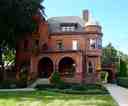
Buy tour to unlock all 16 tracksRight in front of you, there’s a grand red-brick mansion with large, arched stone porches and a striking octagonal turret rising above its right side-just scan ahead for the big…Read moreShow less
Right in front of you, there’s a grand red-brick mansion with large, arched stone porches and a striking octagonal turret rising above its right side-just scan ahead for the big house with lots of ornate brickwork and a round turret, and you won’t miss it! Now, let me take you back to 1900: imagine the excitement in Milwaukee’s North Point North Historic District as whispers spread about a lavish new home rising on Park Avenue. This wasn’t just any house, oh no-this was the ride of Wisconsin’s industrial wave, brought to you by John Kern, a man who decided in 1899 that he needed a place grand enough to match his ambition…and maybe store all his fancy hats. He paid a jaw-dropping $20,000 to $25,000 for the plot, which was a fortune back then-enough to fill your pockets to bursting today! Kern hired architects Crane & Barkhausen, and soon, stone and brick began to stack up like a Bavarian castle growing in the Midwest. Get a look at that brick façade: the archways with arcaded corbelling are classic German Renaissance Revival, a style loved by Milwaukee’s wealthy in those days. If you spot ironwork, that’s the handiwork of Cyril Colnik, a master craftsman who could probably turn a leftover nail into art. And speaking of being ahead of its time, this mansion was one of Milwaukee’s very first to have a zoned air conditioning system-fancy a cool breeze in every room! Inside, there were 16 rooms-imagine the echoes of laughter at evening parties (and maybe a grumpy teenager sulking in one of the five bedrooms). Honduran mahogany gleamed in the parlor while stained glass sparkled in every room. Over time, the house changed hands and roles-it even became a duplex in the 1950s-but it’s still standing, richly preserved and showing off its historic charm. Not bad for a home that’s seen a century’s worth of dreams, dinners, and day-to-day life!
Open dedicated page →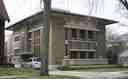 5
5Frederick C. Bogk House
Buy tour to unlock all 16 tracksTo spot the Frederick C. Bogk House, look for a solid, blocky building wrapped in buff-colored bricks, framed by wide eaves and strong geometric lines right ahead of you, set a…Read moreShow less
To spot the Frederick C. Bogk House, look for a solid, blocky building wrapped in buff-colored bricks, framed by wide eaves and strong geometric lines right ahead of you, set a little back from the curb on your right. Welcome to what might be Milwaukee’s most mysterious cube: the Frederick C. Bogk House! Now, try picturing 1917-horses clip-clopping by, Milwaukee alderman Frederick Bogk standing proudly as his new house takes shape while the air buzzes with the sound of hammers and saws. Designed by Frank Lloyd Wright, this “prairie fortress” looks like it could withstand a stampede or two. Wright was channeling a lot of emotion after the tragic events at his own home, and you can almost feel that intense, resolute energy in these window columns and solid stacks of brick. Imagine Frank Lloyd Wright, America’s favorite architectural rebel, sketching the plans just after the Imperial Hotel in Tokyo-he fused strong Japanese influences right onto Lake Drive! Those tall, leaded glass windows filter sunlight just right, and the decorative concrete bands seem to hug the house under the sweeping, low-pitched roof. Here’s a secret: the front door hides sneakily on the side by the driveway, almost as if saying, “You have to know me to find me.” Inside, the living room unfurls across the front, goldfish pond sparkling by the wall, with light streaming through art glass designed by Wright himself. Up a few steps, the dining room waits for you to imagine clinking glasses from a past era. Four bedrooms, a maid’s nook over the garage, and built-in nooks and furniture fill this not-so-ordinary home. Robert and Barbara Elsner cherished it from 1955 and even got Wright’s stamp of approval in a letter. Today, the carpet is a faithful reproduction of Wright’s original design-yes, even the floors are a masterpiece. If you start humming in awe, don’t worry-the Bogk House is used to inspiring a chorus or two!
Open dedicated page →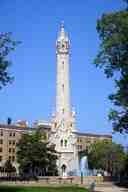 6
6North Point Water Tower by Milwaukee Water Works
Buy tour to unlock all 16 tracksLook up ahead for a tall, stone tower with a pointed top-it stands proudly among the trees, its light gray limestone shining against the sky. You’re now standing in front of the…Read moreShow less
Look up ahead for a tall, stone tower with a pointed top-it stands proudly among the trees, its light gray limestone shining against the sky. You’re now standing in front of the North Point Water Tower, a real show-off in the world of utility buildings! Back in 1873, when most water towers looked like something out of a hardware store, Milwaukee decided to build this Victorian Gothic beauty, designed by Charles A. Gombert and carved from local Wauwatosa limestone. Imagine the clank and clatter of hammers echoing in the chilly Wisconsin air as workers stacked heavy stones to create this 120-foot marvel. The tower was meant to hide a massive iron standpipe, which-if left on its own-would have frozen like a popsicle during winter. The pipe wasn’t just tall; it was four feet across and kept Milwaukee’s water flowing smoothly by absorbing the jolts of the powerful pumps below, which drew water straight from Lake Michigan. Now, here’s a detail that’ll make you chuckle: the city’s first estimate for all this splendor was just $8,000, but by the time those last stones were hoisted, the bill had grown to over $50,000! Talk about sticker shock. Still, this was Milwaukee’s very first public waterworks, and it worked so well-and looked so good-that in 1973, the North Point Water Tower was added to the National Register of Historic Places. Imagine the pride of 19th-century Milwaukeeans seeing their everyday water tower become a local legend.
Open dedicated page →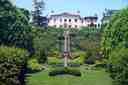 7
7Villa Terrace Museum & Gardens
Buy tour to unlock all 16 tracksLook straight ahead to spot a grand, white-painted villa with a red-tiled roof perched atop a bluff, overlooking a lush, terraced garden and an elegant water stairway running down…Read moreShow less
Look straight ahead to spot a grand, white-painted villa with a red-tiled roof perched atop a bluff, overlooking a lush, terraced garden and an elegant water stairway running down the hill. Standing here, you might feel as though you’ve just stumbled out of Milwaukee and right into the rolling hills of northern Italy. In 1924, after a dreamy Italian vacation, Lloyd R. Smith-yes, of the A.O. Smith family-decided Milwaukee could use a little Mediterranean sparkle. He hired architect David Adler to bring a piece of Lombardy home, and the result was this Italian Renaissance-style masterpiece, anchored by a show-stealing water stairway inspired by Villa Cicogna Mozzoni. Not only does the house gleam with white brick and terracotta tiles, but inside, the details are a feast for the eyes: imagine ornate fireplaces, beamed cypress ceilings, and ironwork by the famous Austrian-born blacksmith Cyril Colnik, whose creations have a way of making doorknobs look jealous. As you look down the garden, you’ll see terraces, fishponds, and, if you're lucky, maybe even a secret garden or two-originally designed by Rose Standish Nichols. Although, in true mysterious-gardener fashion, no one has ever found her plans. In 1966, the Smith family handed over the keys to Milwaukee County, and Villa Terrace became a museum, keeping most of the magic intact. The gardens you see were carefully restored after years of effort, culminating in their lush rebirth in 2002. Today, this place isn’t just for art lovers-those breathtaking Lake Michigan views and storybook terraces have made more than a few couples say “I do.” Sometimes, a visit to Villa Terrace is all you need to feel a little bit closer to Italy…no passport required!
Open dedicated page →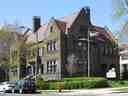 10
10Charles Allis Art Museum
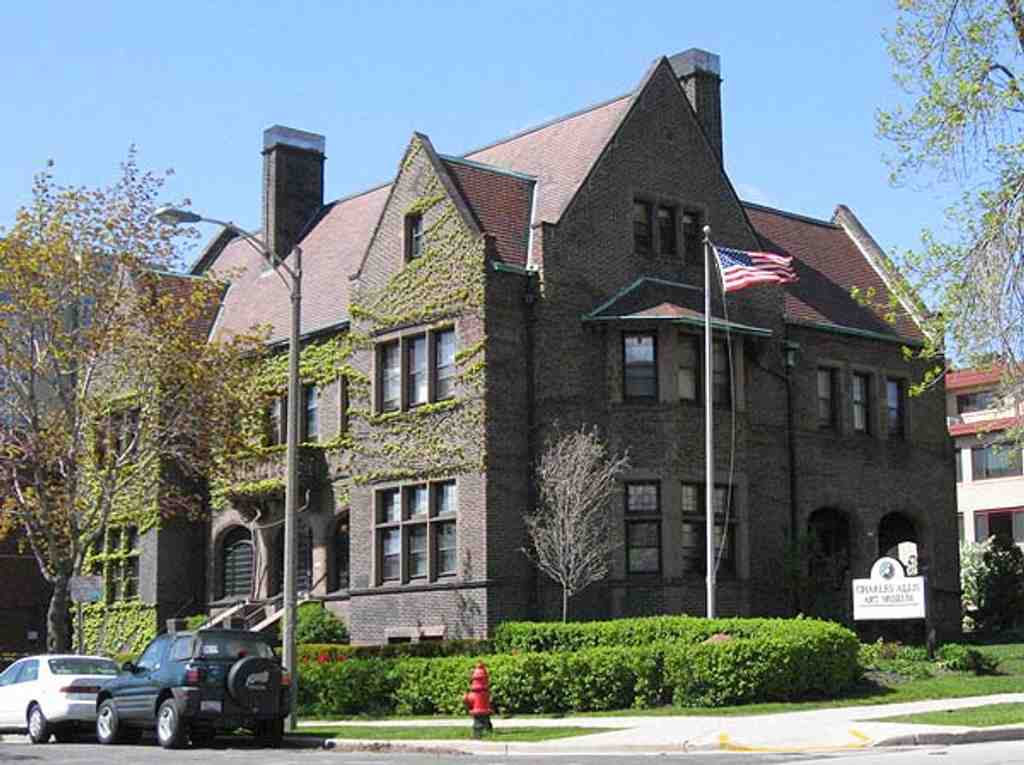
Buy tour to unlock all 16 tracksTo spot the Charles Allis Art Museum, just glance to your left for a grand, mauve brick mansion covered in ivy, with tall gabled roofs and an American flag waving proudly out…Read moreShow less
To spot the Charles Allis Art Museum, just glance to your left for a grand, mauve brick mansion covered in ivy, with tall gabled roofs and an American flag waving proudly out front. Here you are, standing before one of Milwaukee’s true treasures! Picture yourself back in 1911, when Charles Allis-industrial legend, art lover, and a man with some seriously fancy taste-decided to build a Tudor-style mansion right here. Charles, the first president of Allis-Chalmers, didn’t just want a house; he wanted a masterpiece. This place was one of Milwaukee’s first private homes with electricity-try imagining Charles flicking on the lights for the first time, probably feeling like a magician. The massive walls are made of concrete, not just for style points but to keep his precious art collection safe from fire. Talk about art insurance, 1911-style. Walk a little closer and take in that Lake Superior sandstone trim along the mauve Ohio brick-very posh! Inside, it gets even fancier, with original furniture, marble fireplaces in nearly every room, and luxurious Circassian walnut in the French Parlor. If you think the house is impressive now, imagine it in its heyday, ringing with the laughter of Milwaukee’s elite at art society galas and local business meetings. Charles and his wife Sarah, who were married way back in 1877, made this mansion a true home for art and charity. They gathered paintings, sculptures, ancient glass, ceramics-basically, if it was beautiful and intriguing, it probably found a place in their collection. When Charles passed away in 1918, he was serving as chairman of the Milwaukee County Council of Defense-this guy just didn’t know how to slow down. Not long after, the couple’s wish to inspire the public came true. Their home became a public art library, then an official museum in 1979 under Milwaukee County. Walk inside today and you’ll see their collection nearly as they left it, with treasures as old as ancient Rome and new as Allis’ own time. Each year, the museum hosts vibrant exhibitions featuring Wisconsin artists and, if you visit on the third Thursday, you can catch the echo of a jazz saxophone drifting from the garden at Allis After Hours. The museum stands as a lively cornerstone of Milwaukee’s art scene-come for the history, stay for the music, and don’t blame me if you start wishing you lived here!
Open dedicated page →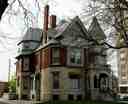 11
11Emanuel D. Adler House
Buy tour to unlock all 16 tracksLook for a striking Victorian mansion right in front of you, with a stone base and red brick upper walls, topped by pointy, castle-like towers-impossible to miss with its dramatic…Read moreShow less
Look for a striking Victorian mansion right in front of you, with a stone base and red brick upper walls, topped by pointy, castle-like towers-impossible to miss with its dramatic corner entrance and rounded turret peeking through the trees. Now, picture Milwaukee in 1888-a city buzzing with new ideas, fancy mustaches, and more brickwork than you could shake a top hat at. It was here that Emanuel D. Adler, a successful clothing manufacturer with an eye for style and comfort, decided to let his imagination run wild. He hired Alfred Charles Clas, whose designs had more flair than a Saturday night ball, and said, “Give me a house everyone will talk about!” And talk they did-just two years later, Clas teamed up with George Bowman Ferry, becoming one of the city’s dream architect duos, Ferry & Clas. Imagine their rivalry with other builders, racing to set new trends while fog drifted through Milwaukee’s streets, and old carriages rattled by. This house was more than a home; it was a statement-bold, a bit dramatic, and always well-dressed (like Adler himself, I bet). Its blend of stone and brick, the rounded turret, and those fancy arched windows made it a local celebrity way before reality TV! Fast-forward to 1991, this beauty finally got the recognition it deserved, landing on both the State and National Register of Historic Places. So as you stand here, you’re not just in front of a house-you’re meeting Milwaukee’s original fashion icon.
Open dedicated page →
Frequently asked questions
How do I start the tour?
After purchase, download the AudaTours app and enter your redemption code. The tour will be ready to start immediately - just tap play and follow the GPS-guided route.
Do I need internet during the tour?
No! Download the tour before you start and enjoy it fully offline. Only the chat feature requires internet. We recommend downloading on WiFi to save mobile data.
Is this a guided group tour?
No - this is a self-guided audio tour. You explore independently at your own pace, with audio narration playing through your phone. No tour guide, no group, no schedule.
How long does the tour take?
Most tours take 60–90 minutes to complete, but you control the pace entirely. Pause, skip stops, or take breaks whenever you want.
What if I can't finish the tour today?
No problem! Tours have lifetime access. Pause and resume whenever you like - tomorrow, next week, or next year. Your progress is saved.
What languages are available?
All tours are available in 50+ languages. Select your preferred language when redeeming your code. Note: language cannot be changed after tour generation.
Where do I access the tour after purchase?
Download the free AudaTours app from the App Store or Google Play. Enter your redemption code (sent via email) and the tour will appear in your library, ready to download and start.
If you don't enjoy the tour, we'll refund your purchase. Contact us at [email protected]
Checkout securely with 


