
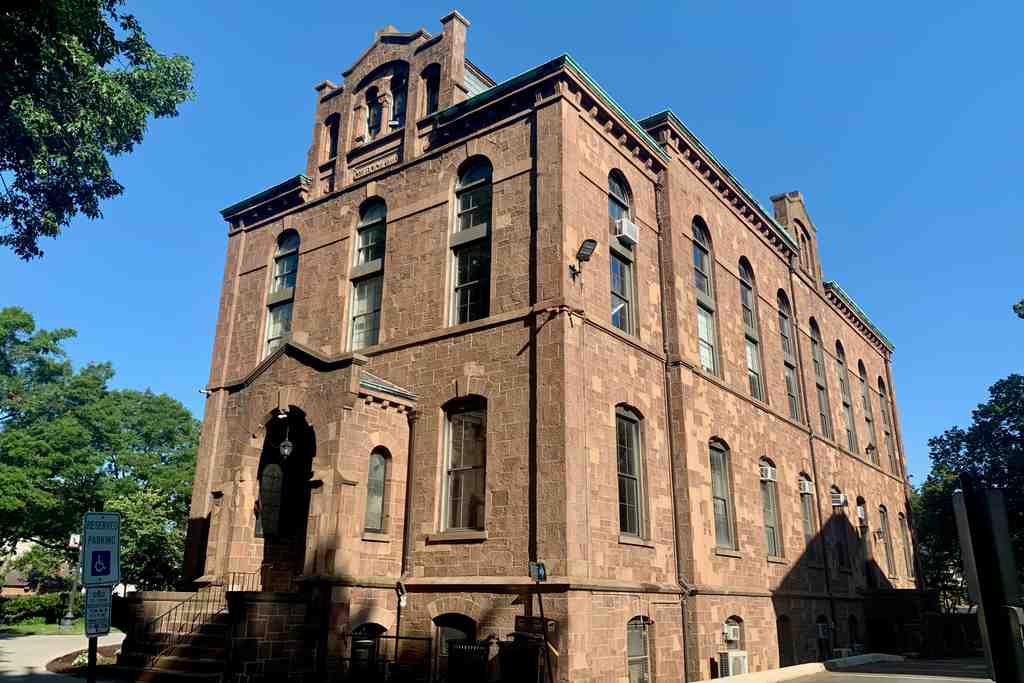
Look for a large, imposing brownstone building with tall, arched windows and an entryway framed by a flight of steps-the Geology Hall sits confidently at the edge of campus, right between Van Nest Hall and Old Queens.
There’s something almost theatrical about Geology Hall, rising up out of the ground like it’s been here since the dawn of time-fitting for a place dedicated to rocks and the deep history of the Earth. But don’t be fooled by all that serious stonework; for a building that looks like it should house a secret society of alchemists, its story is actually as lively as student prank wars and as layered as the sediment in its exhibits.
It all started with a treasure hunt... or rather, one man’s growing obsession with the natural world. Back in the 1830s, Lewis Caleb Beck roamed fields and streambeds, collecting odd rocks, minerals, and even the occasional mastodon bone. When he passed away, Rutgers gladly bought his trove, thinking, naturally, "Sure, nothing says collegiate prestige like a mammoth femur in the hallway."
When George Hammell Cook took over, he convinced the university to wrangle some federal land-grant money-a real windfall that would turn Rutgers from a struggling college into New Jersey’s go-to science school. Suddenly, they needed space for all this learning, and Cook’s expanding fossil collection was practically begging for a home of its own.
Enter Henry Janeway Hardenbergh-a local who’d go on to design the Plaza Hotel and Waldorf Astoria, but here, he’s just a young architect, sketching up plans. The original idea? Red brick. But at the last minute, they went big: solid stone, Gothic flair, chunky columns. In 1871, the governor himself showed up to lay the cornerstone, tucking away a time capsule packed with newspapers and Rutgers lore. I can’t promise it holds buried treasure, but it’s about as close as New Jersey gets.
When the doors opened in 1872, there was a lot more than science bubbling beneath the surface. The basement wasn’t just for rocks-it doubled as an armory because, apparently, college students with muskets was totally fine in the 19th century. And you thought rival schools just prank called each other; in 1875, some Princeton students broke in and stole 25 muskets, settling the score over a stolen cannon.
Over the decades, the labs and classrooms drifted out, and the museum expanded like a curious fungus, swallowing up every floor. Curators wrangled tens of thousands of specimens-fossils, minerals, a mastodon skeleton, even a new chunk of precious minerals swiped from a zinc mine. By the 1970s, Geology Hall was declared historic, bundled up with its neighbors as an official landmark district. In the 2010s, rumors swirled the museum would close its doors, but a flood of passionate letters from alumni and public fans kept it alive-to the relief of everyone who likes their dinosaurs close to home.
So as you stand in the sun, gazing at this stodgy old building, imagine all the discoveries inside, the odd mix of fossils and feuds, and the steady march of curious minds... all under this weathered stone roof.


