
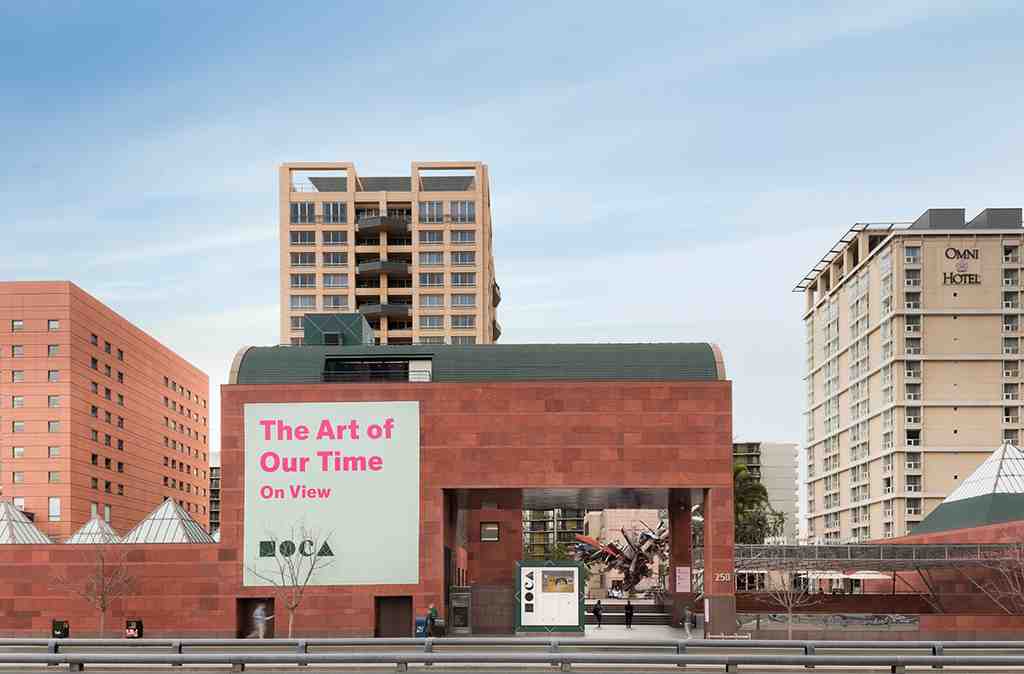
To spot the Museum of Contemporary Art, Los Angeles, look for a blocky red-sandstone building on Grand Avenue with a bold square green sign announcing “The Art of Our Time On View” and a cluster of triangular skylights poking out of the roof-if you’re standing in front of all that, you’re in the right place!
Let’s step back in time, and imagine it’s 1979. At a fancy fundraising dinner in the Beverly Hills Hotel, three strangers-Mayor Tom Bradley, Councilman Joel Wachs, and an art-loving philanthropist named Marcia Simon Weisman-end up at the same table, swapping stories and probably making the waiter a little nervous with how passionately they talk about art. That night, in a burst of good ideas and maybe a bit of creative desperation, Weisman insists that Los Angeles needs its very own museum focused on contemporary art. There’s just one problem: they have no museum, no building, no collection-just this dream and a lot of determination.
So what happens next? The Mayor’s Museum Advisory Committee springs into action, rolling up their sleeves and wrangling up donations, trustees, and promises of art. Within months, six generous collectors sign on the dotted line, offering pieces from their private stashes-imagine unwrapping art worth millions from grandma’s attic and suddenly it’s museum-worthy. The city’s finest philanthropists compete to make the biggest splash. Instead of a grand building, they start out in a humble office on Boyd Street… proving once and for all, you don’t need marble floors to build an international reputation.
By 1986, MOCA lands here on Grand Avenue in dramatic style, thanks to superstar Japanese architect Arata Isozaki, who had never worked in the U.S. before. He crafts this distinctive sandstone structure, with sunlight pouring in from those glass pyramids above-so, you might say, even the ceiling here wants to be a little avant-garde. The first time you walk in, you’ll find most of the artwork displayed below the courtyard level, gently lit from above, almost as if the art is basking in the Los Angeles sun. It’s both cozy and cosmic, a little bit mysterious, and always unexpected.
But MOCA isn’t just about Los Angeles or even the United States; its collection now holds nearly 6,000 works from artists all over the globe-though mostly created after 1940. There are heroes of abstract expressionism, pop art, minimalism, post-minimalism, and more; you’ll spot names like Rothko, Lichtenstein, Rauschenberg, Pollock, and even Basquiat. There’s even Michael Heizer’s earthwork lurking out in the Nevada desert, donated to MOCA when someone must have looked around and said, “Hey, we could use a few more tons of dirt in this collection.” And don’t even get me started on the monumental sculpture just out front-Nancy Rubins’ “Airplane Parts”-which makes you wonder if you accidentally walked onto a sci-fi movie set.
The exhibitions here have always been bold-a wild mix of the mysterious, the provocative, and sometimes downright weird. From surveys on feminist art revolutions to wild explorations of pop culture, themed shows like “A Forest of Signs” or “Helter Skelter” placed MOCA at the beating heart of the international art scene. Rumor has it, even Hollywood celebrities step out of their limos to catch a glimpse of the next big thing-sometimes curating the shows themselves (for better or worse!).
But there’s more: MOCA has never been satisfied with just putting art on a wall. Here, you’ll find programs for local kids, wild monthly workshops, teen gatherings where the next generation of artists get their start, and even roaring biennial media festivals, all led by working artists. The MOCA family is made up of everyone from high school students to collectors to artists whose names you might see in neon lights.
And just think, it all began at that one table among political heavyweights, beneath the chandeliers, with a simple dream. So, as you stand here gazing at this bold, blocky building and its futuristic touches, imagine the hum of city traffic blending with the voices of artists, visionaries, and the laughter of people discovering something new. That’s the story-and the spirit-of MOCA.
Intrigued by the founding, collection or the exhibitions? Explore further by joining me in the chat section below.




