
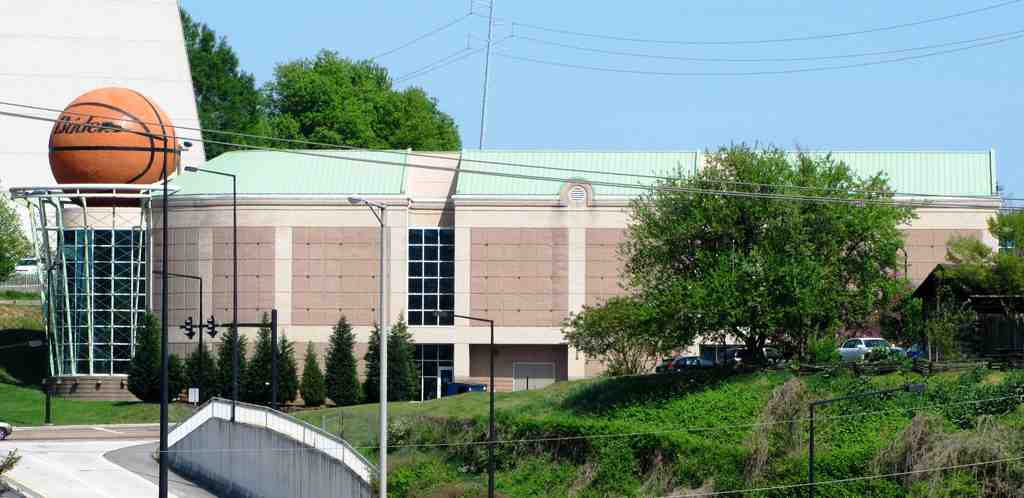
You are looking at a curved, light-brick building topped with a pale green roof, instantly identifiable by the massive, thirty-foot-tall textured basketball perched atop a glass-enclosed rotunda, which is a large circular room designed to let in natural light.
Weighing ten tons, that colossal sphere is affectionately called the Baden Ball. If you are the kind of person who appreciates obsessive attention to detail, you will be pleased to know it features exactly ninety-six thousand dimples to accurately mimic the texture of a real regulation basketball. It is a structural marvel, an engineering puzzle beautifully solved, and a very unsubtle declaration of purpose for this museum.
History is rarely a complete picture; it is heavily edited, often leaving the most pivotal architects of our culture as hidden hands working quietly in the margins. For decades, the women who fundamentally shaped the mechanics and popularity of athletics were systematically erased from the mainstream narrative, dismissed as mere novelties rather than true competitors. This facility is a defiant physical anchor against that erasure, demanding that these hidden hands finally receive their proper due.
The steady expansion of this permanent footprint was heavily guided by Dana Hart, who grew the museum to nearly thirty impressive exhibits over two decades before announcing her retirement. She leaves behind a modernized institution that refuses to let these hard-fought legacies vanish.
Consider the All American Red Heads, a professional exhibition team that played from nineteen thirty-six to nineteen eighty-six. Despite their grueling travel and undeniable talent, they had to navigate hilariously strict gender rules. Players were required to dye their hair red, wear meticulous makeup, and maintain perfectly styled hair while sweating heavily on the court. To make their mostly male audiences comfortable with the terrifying reality of women beating men at a competitive sport, the team deliberately incorporated slapstick comedic routines. A player named Spanky Losier would perform a regular gag where she pretended a man in the crowd had pinched her, wailing dramatically to the referee about a very personal foul. It was a clever, if entirely exhausting, psychological tactic just to survive and compete in a hostile era.
The engineering of preservation takes many forms here. At the entrance stands the Eastman Statue, a massive seventeen-foot-tall bronze figure sculpted by Elizabeth MacQueen. MacQueen was a former dancer who studied human anatomy and kinetic form, translating her deep understanding of muscle movement into rigid, unyielding metal.
Then you have the Wayland Baptist Flying Queens of the nineteen fifties. While other collegiate teams endured miserable bus rides across the country, the Queens secured a revolutionary sponsorship from a local air service. They traveled to away games in a fleet of private planes. That is a logistical flex that fundamentally altered the prestige of women's sports forever.
This entire building is a monument to those who refused to be written out of the record books. But as we reflect on these trailblazers who fought so hard for their rightful recognition, we must acknowledge that Knoxville's landscape holds much darker chapters of deliberate erasure.
Our next destination is just a five-minute walk away. We are heading toward the riverfront to a much older structure, the William Blount Mansion. There, the hidden hands who built the early physical foundations of this city were not celebrated athletes, but enslaved individuals whose stories we are only just beginning to honestly uncover.


