
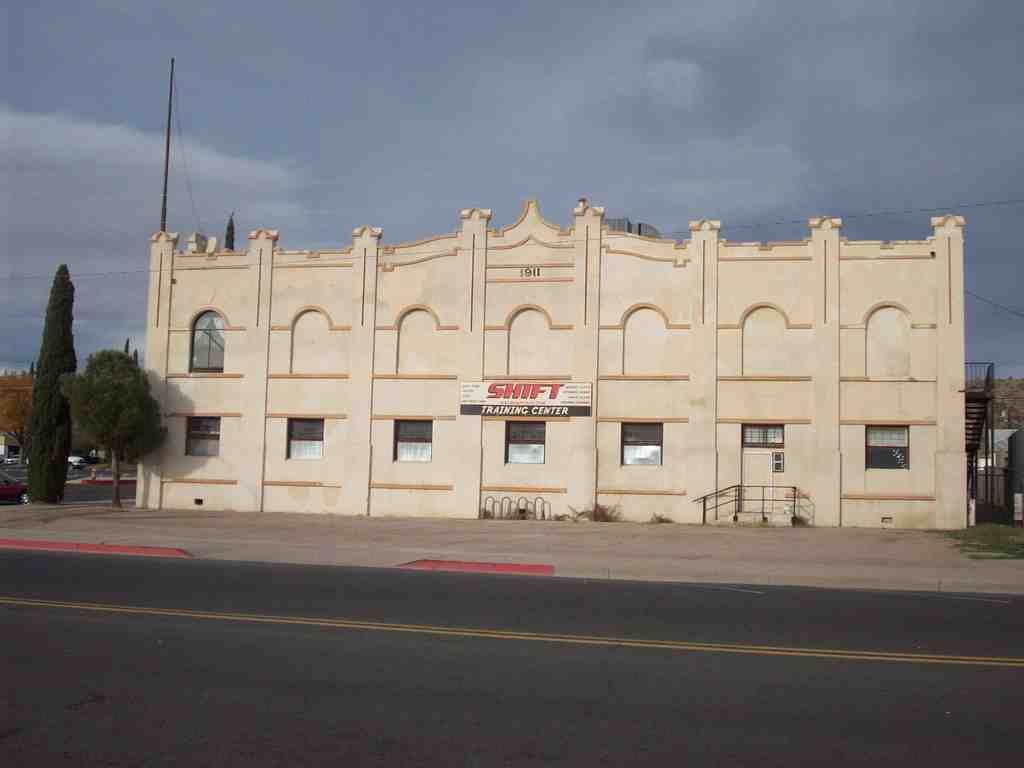
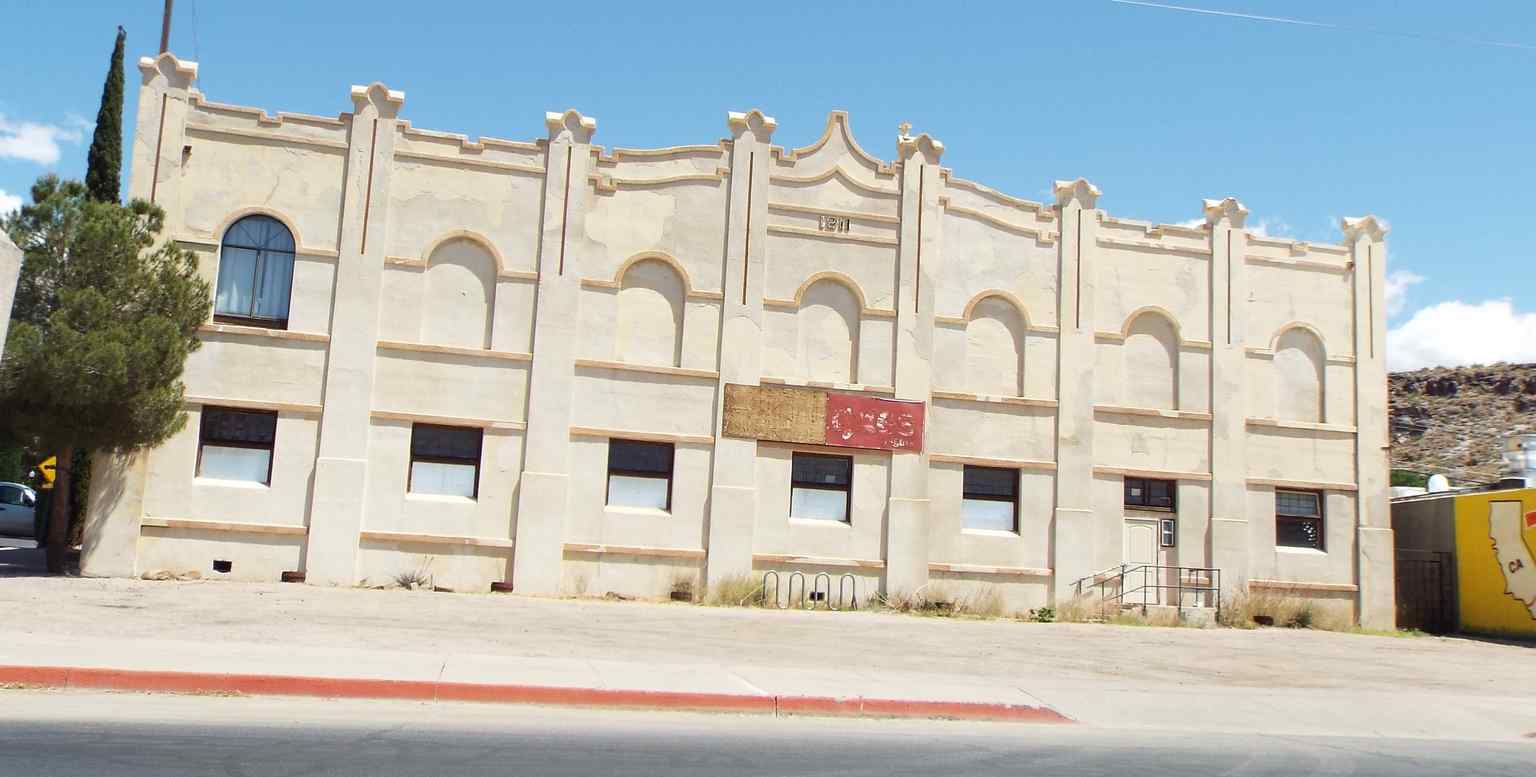
Look to your left for a rectangular stucco building featuring a series of filled-in arches across the second floor and a wavy Mission Revival parapet, which is that decorative wall extending upward along the roofline. Early Kingman was a rough place, prone to spontaneous combustion. Devastating fires routinely swept through town, often thanks to a severe lack of water and miners carelessly smoking opium or tobacco in bed at the local boarding houses. Naturally, rebuilding from ashes gets exhausting. To prevent these disasters, the town began a broad transition to fire-resistant materials like native tufa stone, while the architect of this specific 1912 structure opted for reinforced concrete with thick stucco sheathing. But it took more than fireproof walls to turn a rugged frontier outpost into an organized community. That is where fraternal orders came in. The Independent Order of Odd Fellows, a massive social hub even larger than the Freemasons, built this lodge to help tame the frontier by hosting dances, lectures, and charity events.
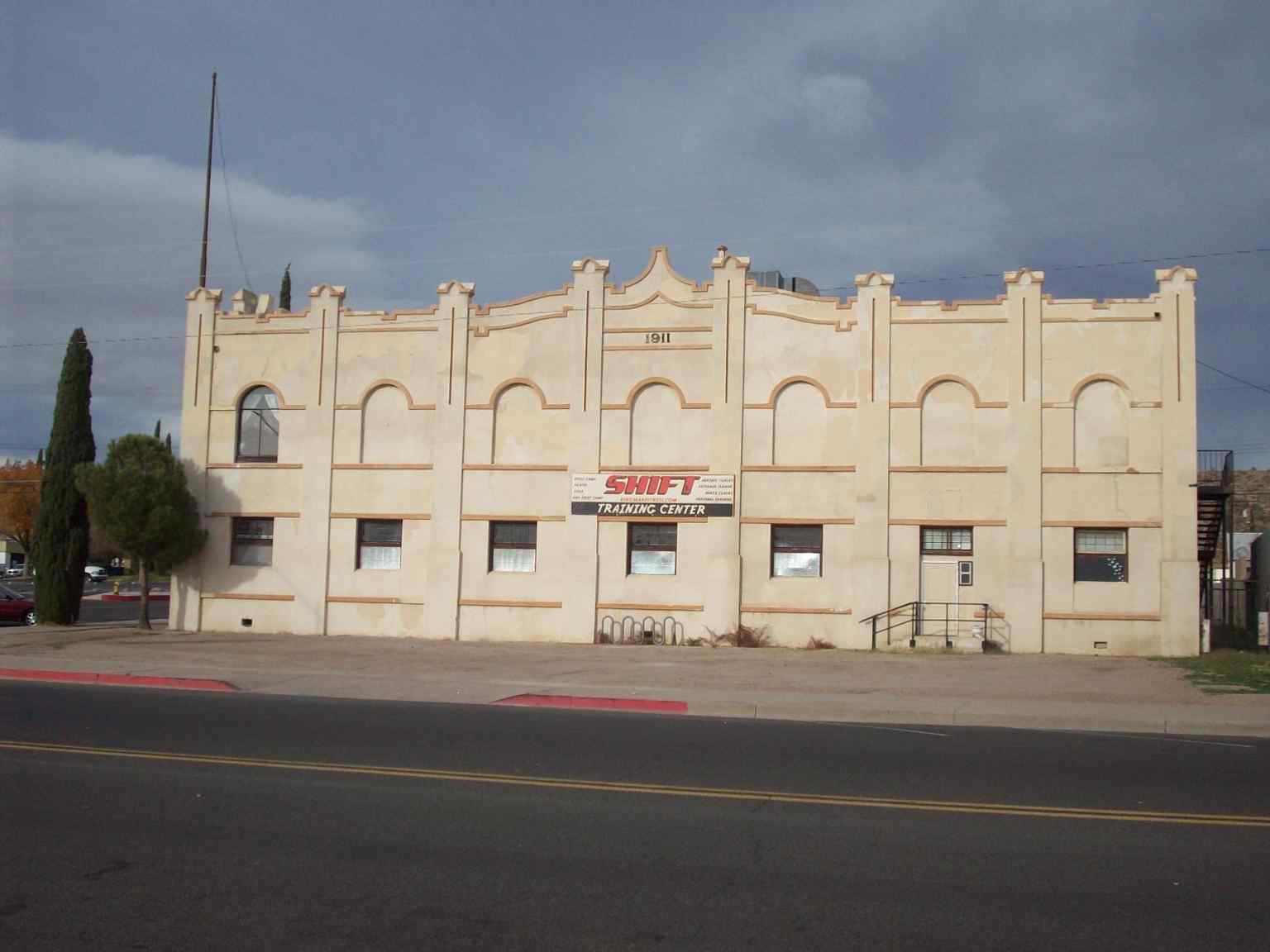
Local Lodge Number 8 originally met at the nearby Elks Lodge before raising funds for this dedicated clubhouse. The Odd Fellows were famous for their elaborate, secretive initiation rituals, which sometimes involved real human skeletons. Those rituals must have been compelling, because they attracted historical figures ranging from Wyatt Earp to Charlie Chaplin. As fraternal membership declined in the late twentieth century, the Odd Fellows shifted to commercial tenants to generate revenue. This led to minor architectural changes, like filling in those original arched windows you see on the second story. Eventually, the lodge moved out entirely. Today, the building is the office for the Historic Electric Vehicle Foundation. Founded by electric car pioneer Roderick Wilde, the group actually built the world's first all-electric street rod from a 1929 Ford Roadster back in 1995. While their massive vehicle collection is housed at a nearby museum, this fire-hardened lodge remains standing as a testament to a town building for the future. Now, point yourself down the street toward a place that once housed both the dead and the well-shod, as we make the brief one-minute walk to the Van Marter Building.






