
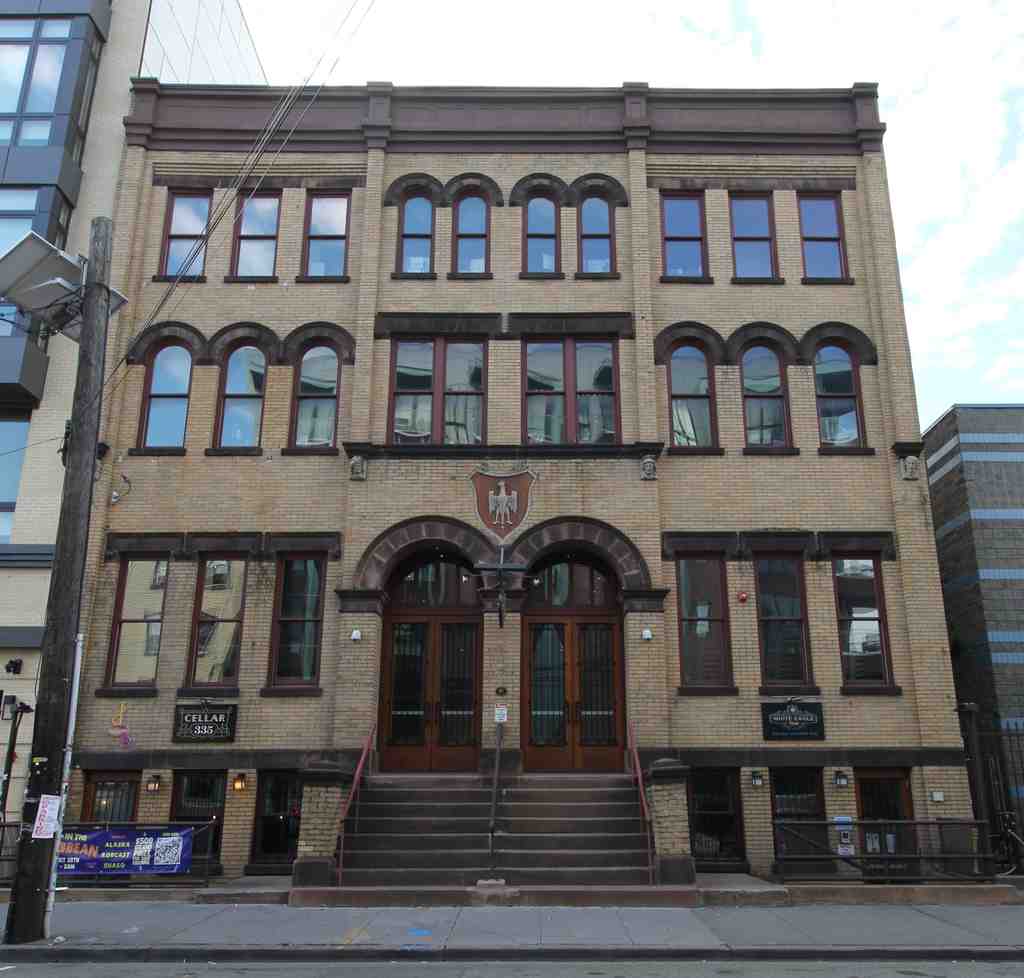
To spot White Eagle Hall, just look straight ahead for a tall, tan-brick building with arched windows, broad stone steps, and a proud white eagle emblem perched above twin arched entrances-right on Newark Avenue.
Now, imagine you’re stepping up to these doors, feeling the energy of the city humming around you, and-if you listen close-maybe you’ll hear echoes of music, laughter, and the squeak of a basketball on old wood floors. White Eagle Hall isn’t just a building; it’s a stage set for over a century of Jersey City’s best stories.
It all started in 1910, when a group of Polish immigrants teamed up with master craftsmen to build a place where their community could gather, celebrate, and connect. Led by the determined Rev. Peter Boleslaus Kwiatowski-who, rumor has it, could organize a neighborhood quicker than most people tie their shoes-they put their hearts (and backs) into creating a landmark that would last. The white eagle you see on the façade? That’s not just decoration-it’s Poland’s proud national symbol. And if you look closer, you’ll spot the solemn faces of four Polish heroes carved right into the stone. Bet you didn’t expect to bump into historic royalty today!
Inside, sunlight pours through two elegant glass skylights honoring Frédéric Chopin and Marcella Sembrich, a piano legend and a dazzling opera star. Enter on a busy night today, and the room glows with excitement-a sea of music lovers or theater fans, swept up in something amazing.
Back in the day, this hall was the local hotspot for bingo games, community concerts, and the kind of wild dance parties your grandparents would never admit to. Later on, it became a gym for the legendary St. Anthony High School basketball team, the Friars. Their coach, Bob Hurley, led them through so many championships that the walls almost started handing out trophies by themselves. Seriously, you could practically smell the sweat and adrenaline of high-stakes games-though thankfully, that’s all been cleaned up now!
The stage also saw fierce “Battle of the Bands” contests. And believe it or not, Jersey City’s own Frank Infante, who’d go on to play guitar for Blondie, had one of his first moments of glory right here under these very lights.
A while back, the hall got a million-dollar makeover-original wood floors turned into bar counters, church relics transformed into new fixtures, and a bright new future emerged. Today, with sparkling bars, sky-high ceilings, and the energy of a premiere music venue, it’s the heartbeat of Jersey City nightlife.
So take in the sight, and know you’re standing in front of a hall built by hope, kept alive by legends, and restored by Jersey City’s dreamers-who believed, just like those Polish immigrants, that a great gathering place could make a city feel like home.


