
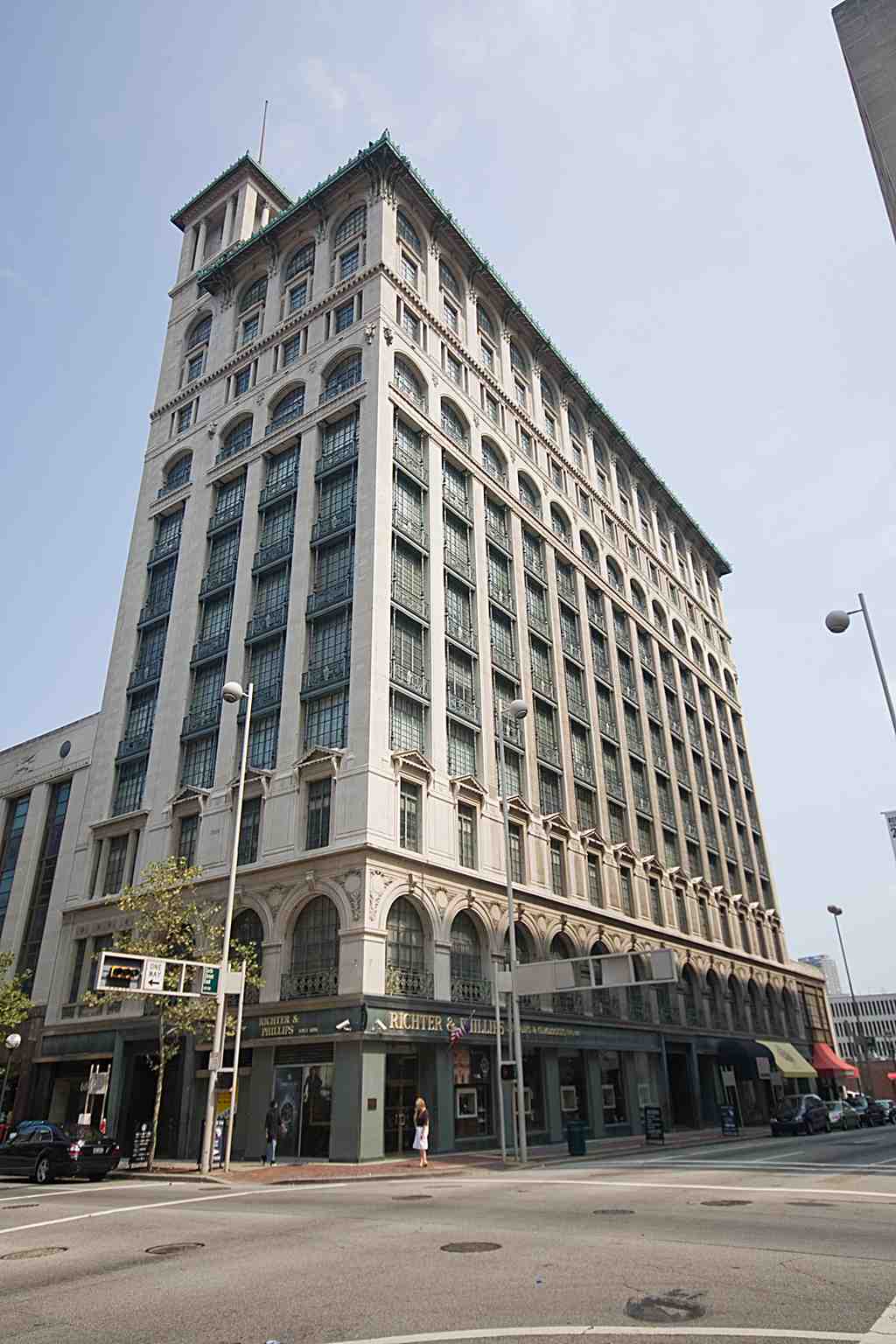
Look just ahead and a bit to your left to spot the Gwynne Building-a grand, cream-colored, 14-story giant lined with tall arched windows and framed in stone, standing prominently at the corner with its upper tower jutting above the city.
Now, plant yourself right where you stand and imagine it’s 1913-Cincinnati’s streets are bustling with trolley cars and the air smells faintly of coal and ambition. Suddenly, rising above the clatter and horse hooves, there’s this brand-new building: the Gwynne Building, stretching up 14 stories, an architectural marvel made of steel, concrete, Indiana limestone, brick, and granite. No wood here-back then, fireproof meant serious business, and you could practically eat off the floors (though I don’t recommend trying). If you look closely at the corners, you’ll find ox heads peeking down, keeping a watchful, if slightly judgmental, eye on passersby.
Here’s the twist-this isn’t a tale of just bricks and mortar. It was commissioned by Alice Gwynne Vanderbilt, the very same who married into the famous Vanderbilt family. Turns out, she and the building’s architect, Ernest Flagg, were cousins, family ties written in stone and steel! Alice named the building after her father, Abraham Gwynne, a Cincinnati judge, whose own father had been here when the city was still an up-and-coming frontier town. Now that’s roots.
At one point, this was the nerve center for Procter & Gamble-a far cry from today’s skyscraper headquarters. You’d have found suits, secretaries, and the whiff of soap deals in the air until 1956. Over the years, the Gwynne Building’s halls have witnessed million-dollar renovations, wild real estate tales, and a cast of tenants-from transit authorities to filmmakers-each adding a new layer to its storied walls. So next time you pass by, remember: beneath those mosaic floors and watching oxen, you’re standing with Cincinnati legends and a touch of New York grandeur-all thanks to a family determined to leave their mark. And hey, at 14 stories, they sure aimed high!


