
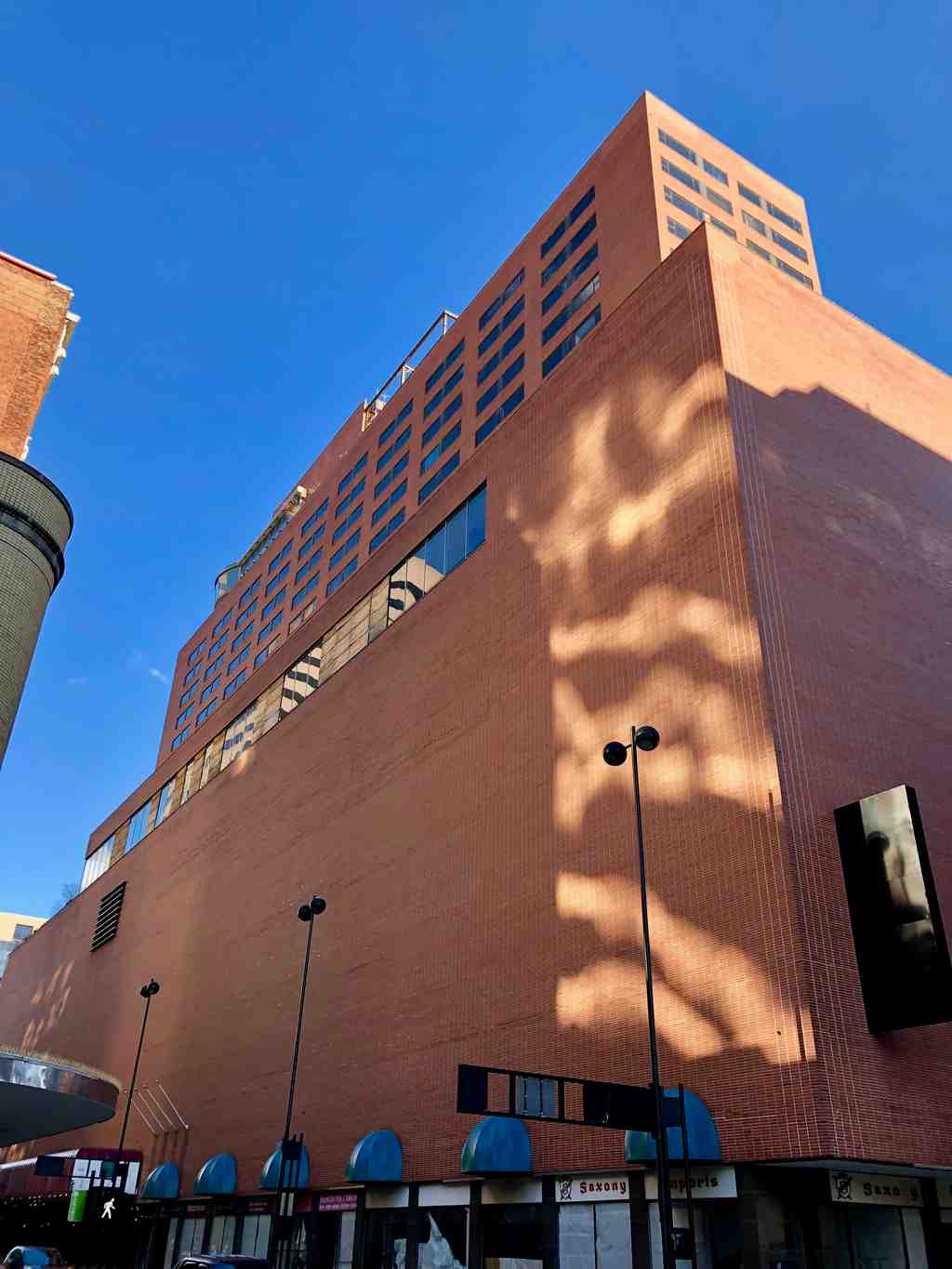
The Terrace Plaza Hotel stands in front of you as a tall, boxy brick building with very few windows on its lower floors and a cluster of square windows higher up-just look for the big reddish block rising between Sixth, Vine, and Race Streets.
Alright, welcome to one of Cincinnati’s most surprising landmarks! Imagine it’s 1948-you’re standing where Cincinnati meets the future. Towering 18 stories above the street, the Terrace Plaza Hotel isn’t just another building. This was the early dawn of modern skyscrapers in America, born from a post-war energy that buzzed with new ideas. The brick behemoth before you once dazzled everyone; magazines even claimed, “If you want to discover what your grandchildren will think of as elegance of this postwar era, you will have to go to Cincinnati.” Talk about bragging rights!
Underneath that rigid, almost mysterious façade, the hotel broke all the hotel rules at the time. Picture walking into the J.C. Penney department store or the Bond clothing shop in those huge, windowless lower levels. And then, if you could get past the checkerboard tile and linoleum, there was the real twist: the main hotel lobby wasn’t even at street level. Fast elevators zipped guests up to the 8th floor, where winter brought ice skating, and above it all sat a five-star French restaurant with wall-to-wall windows that looked out over the city.
The story gets bolder-Skidmore, Owings & Merrill, now legendary architects, were just getting started when they created this place, and they handed the design job to Natalie de Blois, who was only 24 at the time. When most men were off at war, she engineered the future, right down to the matchbook covers. The Terrace Plaza became one of the first hotels designed by a woman, and every inch was carefully thought out, from the custom furniture to the artwork by Joan Miró, Saul Steinberg, and Alexander Calder. Now, that’s what I call hotel décor-your average chain hotel carpet would be jealous!
The building launched with style, immediately famous for being the first hotel after WWII to offer self-operated elevators and, get this, an individual climate-control thermostat in every room! It’s the little luxuries, right? After its grand opening, ownership bounced around a bit-John Emery developed the place, then Hilton took over, renaming it The Terrace Hilton, and later it cycled through Crowne Plaza and even AT&T, who turned whole floors into a call center. You could say this building has worn more hats than your local theater troupe.
At one point, renovations were promised and plans for a “Next Hotel” and sparkling glass facades were drawn up, but fate-or maybe Cincinnati’s stubborn brick-had other ideas. The hotel finally closed in 2008, lingering in limbo for years, even landing on America’s most endangered historic places list. It survived asbestos removal and narrowly dodged landmark status, as city leaders wrangled over the costs of saving it.
Now, it’s getting another chance. An Indiana developer bought the building and peeled away the soft walls in 2024, revealing the building’s steel skeleton-ready for the next reinvention. One day soon, The Terraces may become the toast of Cincinnati living… again. So as you stand here, just remember: even in its quietest moments, this building has always been a conversation starter. And who knows-you might be looking at the oldest “new” address in town!




