
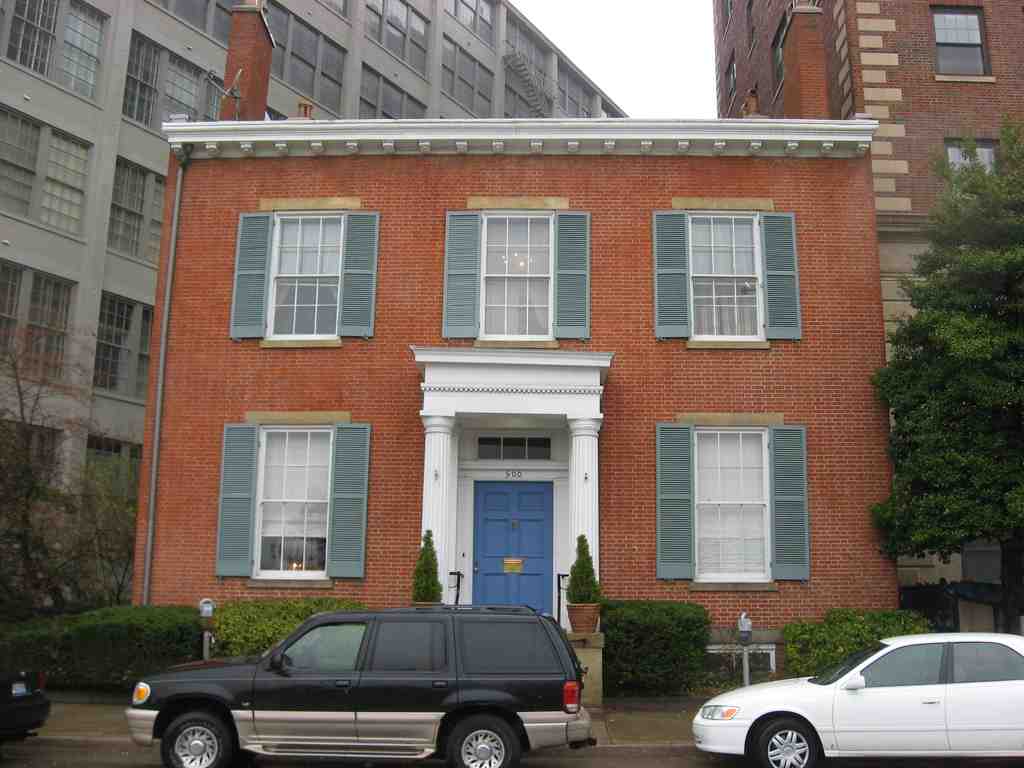
To spot the Lytle Park Historic District, look ahead for elegant, historic red brick buildings with pale blue shutters and classical entrances, set back against the backdrop of larger downtown structures-it's like a charming oasis framed by the city.
Welcome to the Lytle Park Historic District, where the spirit of old Cincinnati is alive and well, even as the city buzzes around it! Picture this: you’re standing on ground that’s seen just about everything-lush forests, battle-hardened soldiers, grand parties, ambitious city planners, and even a beardless Abraham Lincoln. Yes, you heard me right. Beardless! That statue inside the park is the only public monument where Lincoln’s chin is as bare as a bowling ball.
Let’s step back into the late 1700s. Instead of honking cars and the occasional food truck, imagine dense hardwood trees and the distant echo of axes as settlers carved out their futures. Right here, Major John Doughty picked this spot for Fort Washington, safeguarding early Cincinnati-then just a little-known village called Losantiville-from dangers along the Ohio River. If these trees could talk, they’d tell tales of brave Dr. Richard Alison, the fort’s doctor, riding through with his trusty horse, Jack, who once took a bullet in the head and kept going! Jack was a local legend. Dr. Alison used to joke, “My horse has had more in his head than some doctors I’ve known,” every time they passed by. Talk about horsepower with extra mileage!
The land then became home to the Lytles-one of Cincinnati’s founding families. William Lytle II’s house stood nearby as the neighborhood’s heartbeat. Lytle wasn’t just any old resident-he helped start the first Cincinnati bank and was a founder of the University of Cincinnati. You could say he was making history while everyone else was just making breakfast.
A bit further along, Martin Baum-the guy who turned gardens into paradise-built the estate that’s now the Taft Museum of Art. This wasn’t just any backyard. He hired a German gardener named Staubler, and together they created what was once the most beautiful garden in the city, filled with arbors, blooming grapes, and vibrant flowers. Unfortunately, money trouble forced him to sell it, but the garden’s beauty lingered, whispering stories to every artist and dreamer who wandered through.
Next, the legendary Nicholas Longworth took up residence. He grew vineyards, made sparkling wine, and, legend has it, once gave Abraham Lincoln a personal tour around the garden, not even realizing he was future president material. Can you imagine Lincoln wandering these gardens, quietly being snubbed by local lawyers but finding peace among the grapes and roses?
Then came 1905, when the city scooped up this land and opened it as Lytle Park in 1907. Soon after, in 1917, Cincinnati got its now-famous bronze statue of a beardless Abraham Lincoln, pointing right at the entrance-you can't miss it! The park became Cincinnati's own "urban oasis," with flower beds bursting with tulips and chrysanthemums every season, just a little pocket of quiet in the heart of downtown.
But every good story has some drama. In the ‘60s and ‘70s, the park was almost bulldozed for an expressway. Enter ex-mayor Charles P. Taft and everyday citizens who fought tooth and nail to save it. Eventually, the Lytle Tunnel was built UNDER the park, making this the first green space in America to sit atop an interstate. Above your feet, city life blooms. Below, cars scurry unseen.
Today, Lytle Park Historic District is surrounded by a patchwork of historic buildings-think elegant clubs, old police stations, and hotels reinvented from former inns-making this square a living scrapbook of architecture and ambition. So, as you stand here, know you’re walking in the footsteps of soldiers, doctors, poets, presidents, and even the occasional heroic horse! Quite the lineup, right?




