
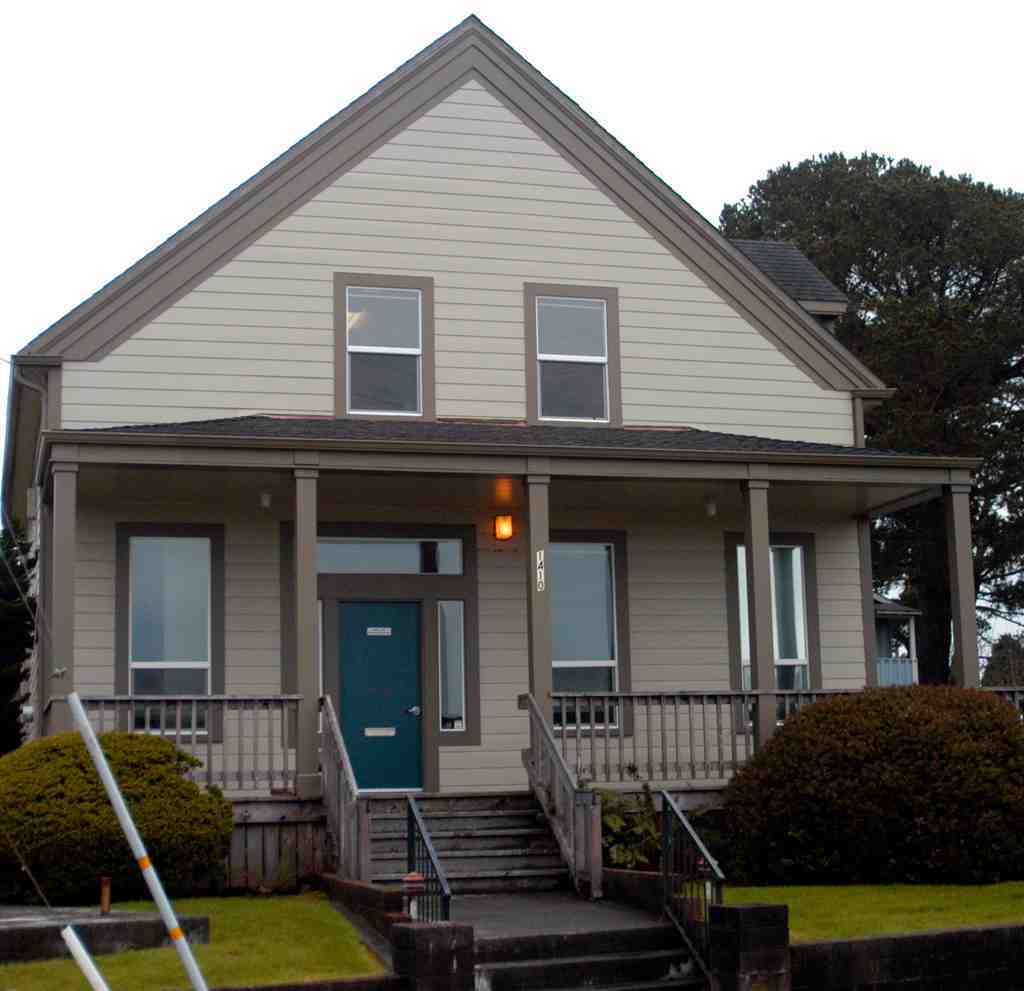
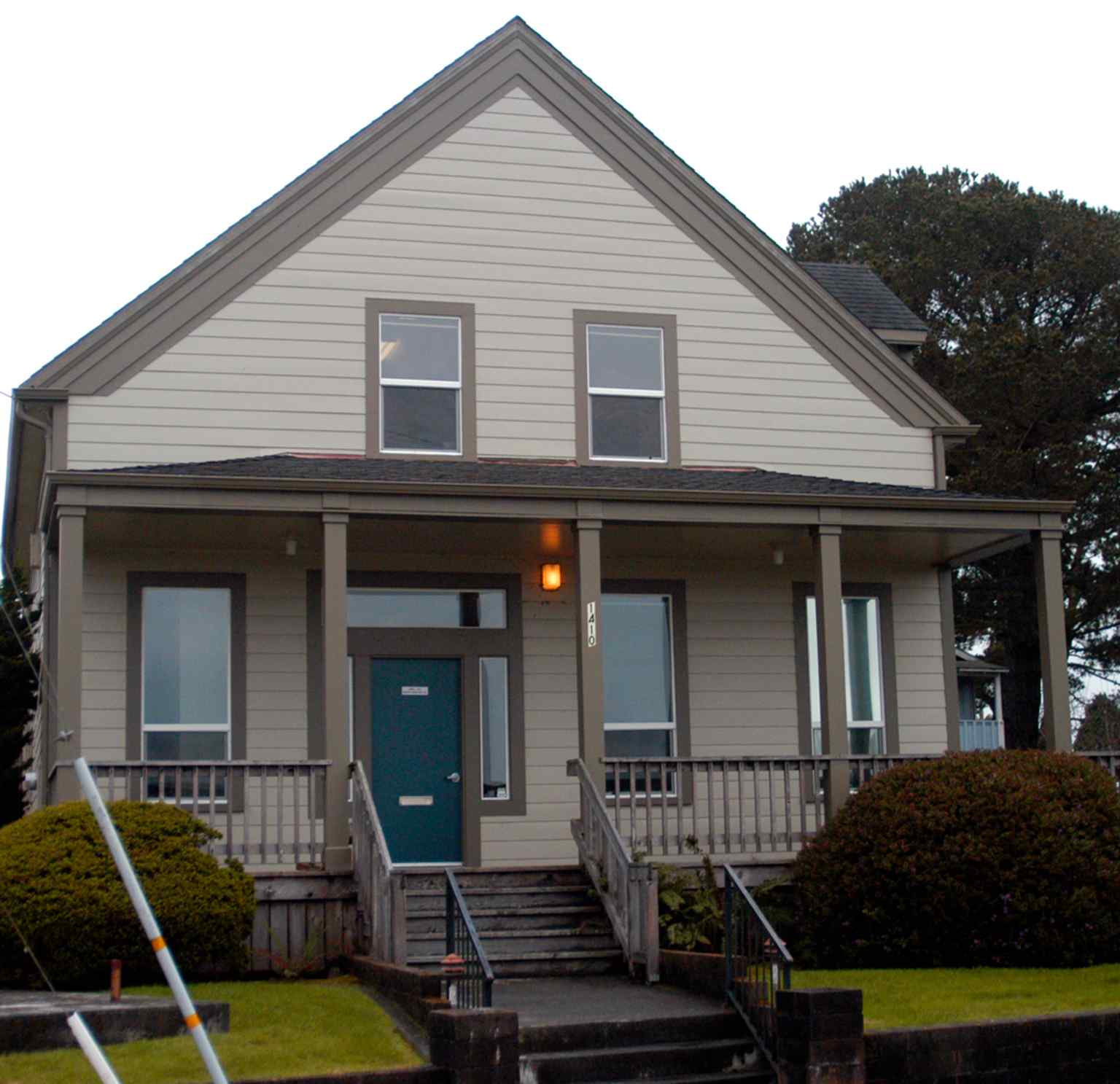
Look to your left for a simple, light-beige wooden house with a steeply pitched triangular roofline and a broad front porch supported by square wooden columns. Welcome to the George McFarlan House. Just seven minutes ago we were staring up at the towering, opulent Carson Mansion, and now we are looking at something completely different. This house was built around 1857, when Eureka was just a four-year-old settlement resting on traditional Wiyot land. George McFarlan actually arrived here with William Carson. They were both pioneers from Canada who originally chased gold on the Trinity River before realizing the real wealth was in the redwood forests. But while Carson later built a sprawling redwood palace, McFarlan and his wife Catharine lived right here. It perfectly captures that early pioneer struggle, where just getting a sturdy roof over your head was a massive victory. This modest structure is designed in a salt-box style, a traditional New England seacoast design characterized by a long, asymmetrical roof sloping down the back. It was a practical choice imported by the early pioneers. But the way it was built is absolutely fascinating. The wooden boards of this house are actually numbered. That means it was either brought to Eureka in pieces like a giant puzzle, or built somewhere else and moved here. And instead of using a standard wooden frame with internal studs, builders nailed vertical one-by-twelve rough-sawn redwood boards directly onto horizontal boards to form the walls. Inside, they skipped fancy plaster and just stuck wallpaper directly onto cheesecloth, a loose woven cotton fabric, right over the rough wood. Later, an eastern wing was added using V-rustic siding, which consists of wooden planks with beveled edges that lock together to form a V-shaped groove. McFarlan was an industrial powerhouse. He helped pioneer one of the region's first logging railroads before 1858, a massive infrastructure leap that moved timber far faster than floating logs down rivers. He even owned the land that would become Sequoia Park. But his story ended in tragedy. On Christmas Eve of 1875, McFarlan was found mysteriously drowned in the frigid waters of Humboldt Bay. Catharine passed away just three years later. Yet, their humble home endured. It survived the decades, even when it fell into severe disrepair by the 1970s. In 1982, a devastating fire broke out, destroying its later additions. It is a miracle this simple wooden structure survived the kind of fires that destroyed so much else in Eureka's history. Instead of bulldozing the ruins, the community rallied. They carefully reconstructed it, honoring this pioneer artifact with the exact same dedication usually reserved for grand mansions. For years after its restoration, it even served as a maritime museum, sheltering the nautical history of the very bay that claimed its owner. Take a long look at this enduring piece of Eureka's foundation. As we wrap up our walk together, let us take a moment to reflect on all the incredible layers of history we have uncovered today.


