
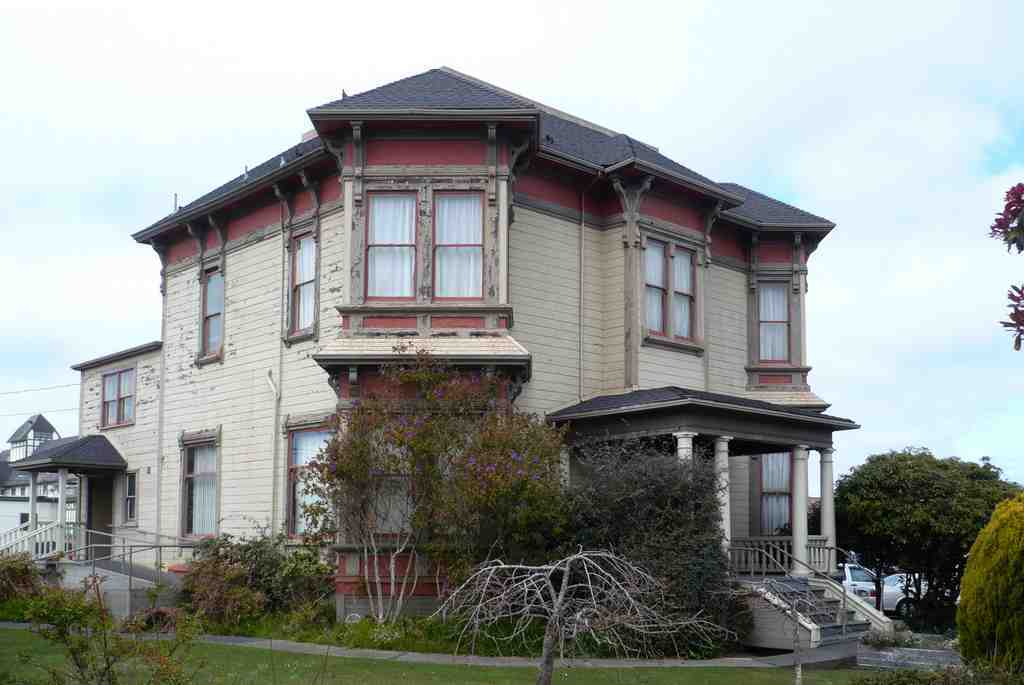
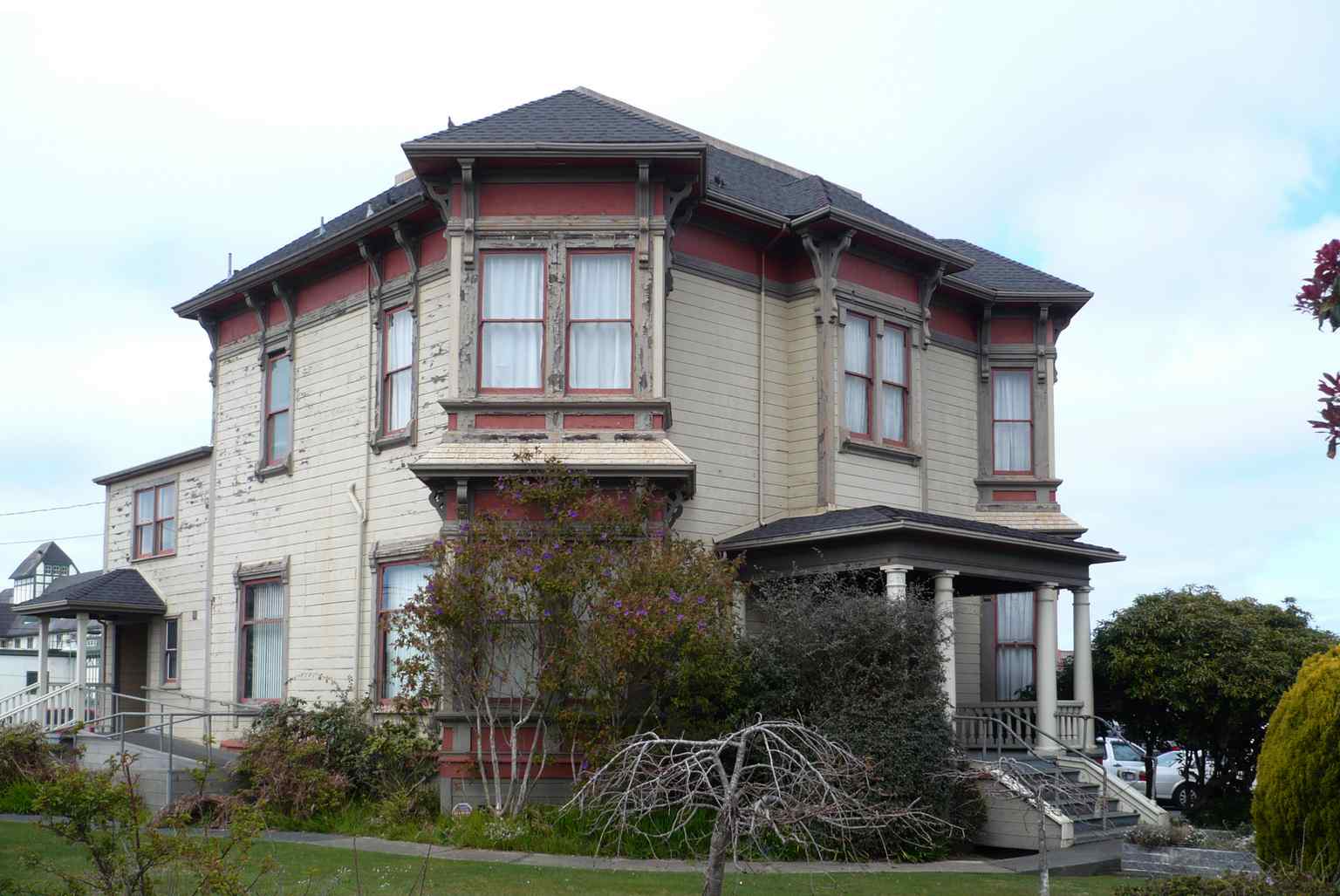
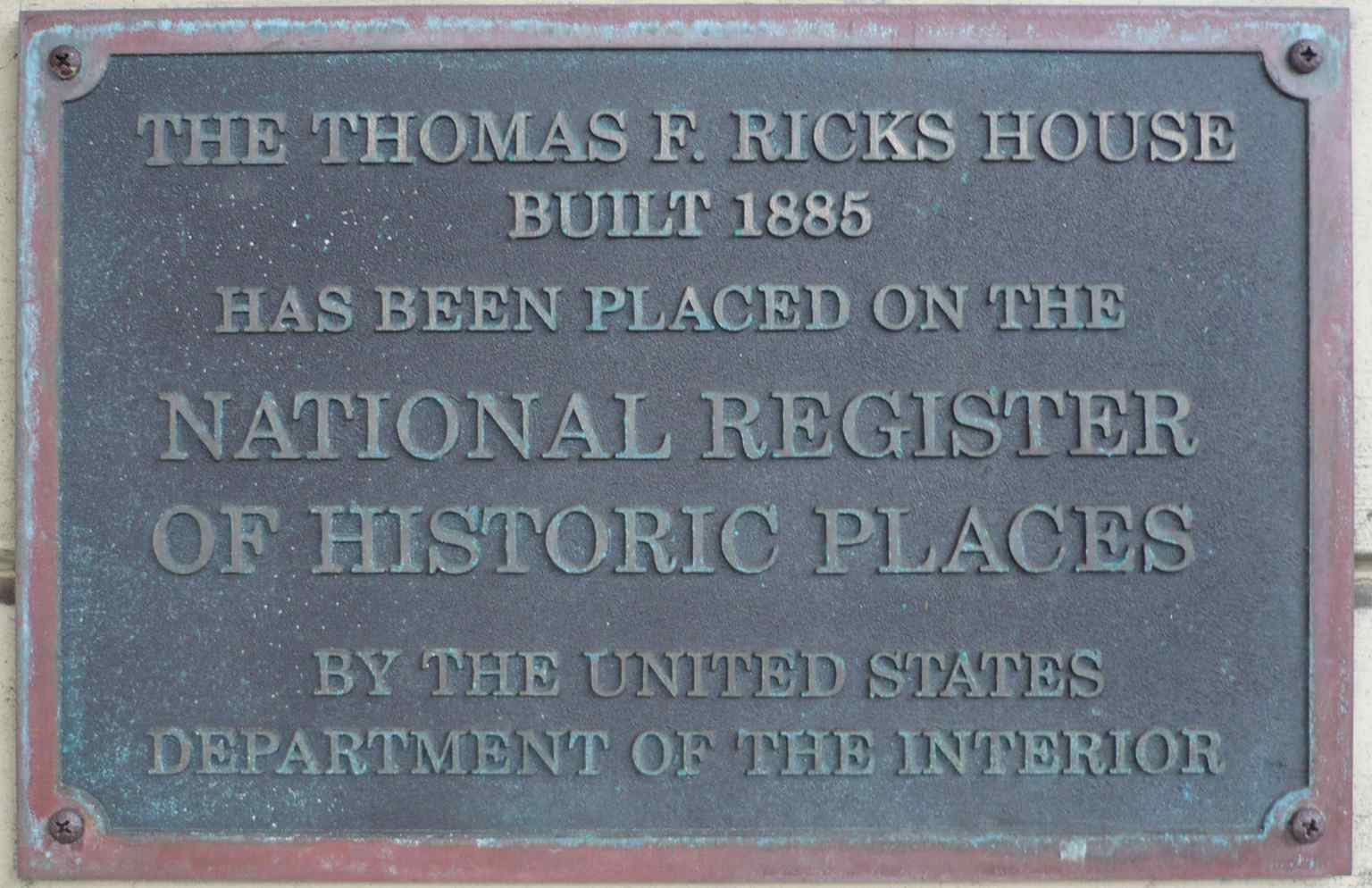
Just to your left, you will spot a two-story wood-sided house with striking dark red trim highlighting its stacked, boxy bay windows. Built in 1885 for Thomas and Eva Ricks, this home is Eureka's best surviving example of Eastlake style, an architectural trend famous for elaborate, geometric wooden ornamentation that mimics the look of finely crafted furniture. Notice those squared-off, angled windows pushing out from the wall. That is a symmetrical stacked canted square bay window. It is a highly technical architectural term for a perfectly balanced, mirror-image design meant to project absolute sophistication and order. But beneath this polished veneer of Victorian elegance lies the much messier story of how this town actually kept itself going. Thomas's father, Caspar Ricks, was a gritty forty-niner whose early water wells literally kept the booming, thirsty city alive. As Eureka expanded rapidly, those localized wells simply could not pump enough water to sustain the population. So, Thomas's brother Hiram stepped up to tackle the crisis. Hiram took over the family's water company and commissioned a massive thirteen-inch pipe to bring an unlimited flow of water from the Elk River, six miles away. It sounded like a brilliant solution, but the public response went horribly wrong. For the next two decades, residents furiously protested the Elk River supply, absolutely convinced that animal waste from numerous dairy farms upstream was seeping straight into their drinking water. It was a fierce, ongoing clash between the desperate need for a municipal water system and massive public panic.
That constant tension between maintaining a grand facade and making difficult choices just to survive played out inside this very house, too. In 1907, the property was converted into St. Francis Hospital. Those immaculate, symmetrical Victorian parlors were immediately gutted to make room for medical wards. The facility became famous for treating injured mill workers and successfully performing groundbreaking surgeries, but behind the scenes, it suffered from terrible financial management. To avoid going entirely bankrupt, the hospital formed a radically progressive alliance. They merged with a competing clinic and gave seats on their board of directors to local labor unions, including the rough-and-tumble sawmill workers. It was a practical, gritty compromise that saved the institution and kept the doors open. Decades later, the building adapted yet again, eventually becoming the beloved permanent headquarters for the local Y.W.C.A. Now, let us head over to another historic home that stands today as the dedicated guardian of the county's fascinating memories. The Humboldt County Historical Society is just a short one-minute walk away.


