
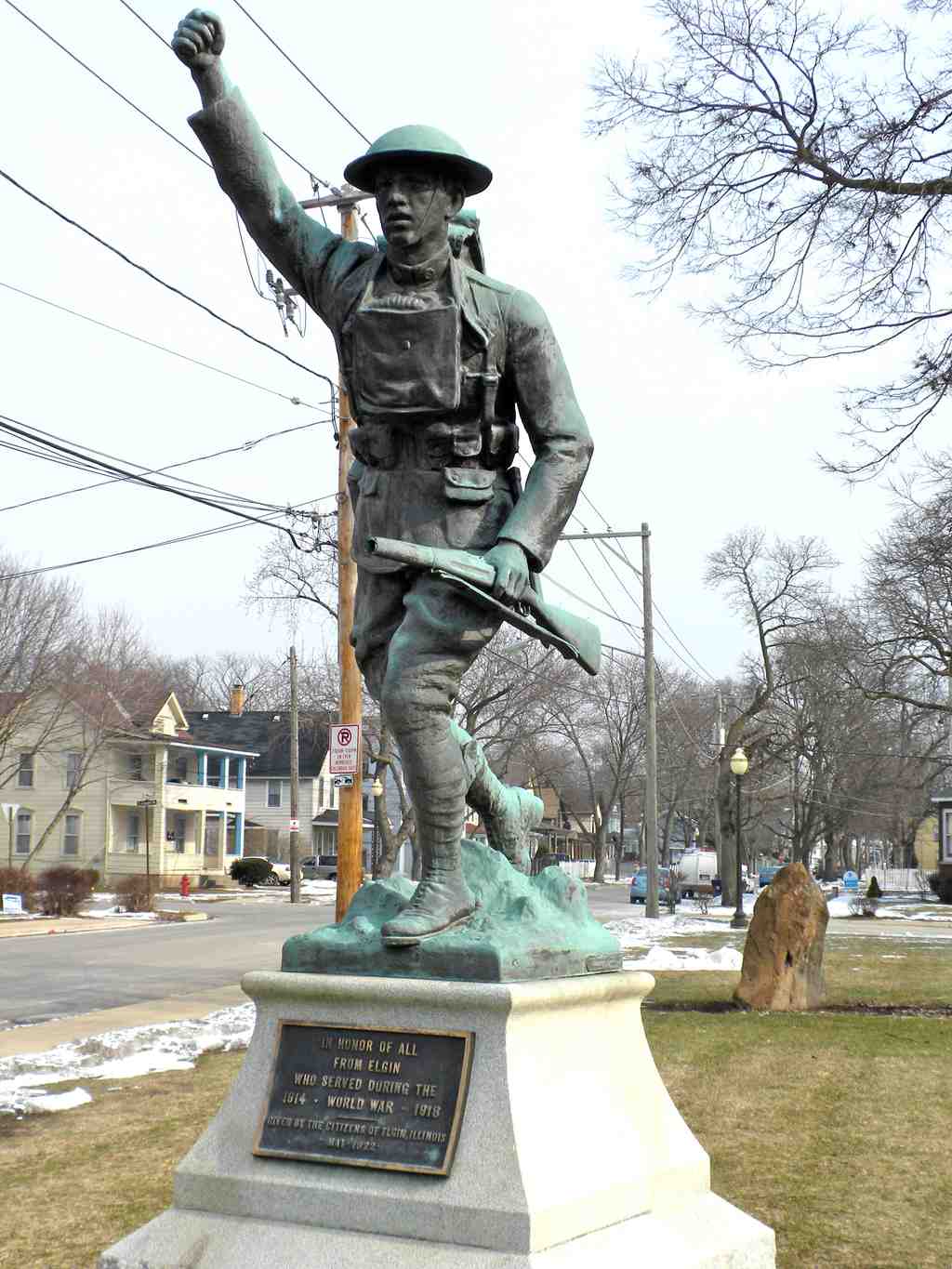
To spot the Elgin Historic District, look ahead for a cluster of charming old houses and grand churches surrounding a leafy park-you’ll see a bronze World War I soldier statue, hand raised in salute, standing proudly at the intersection.
Now that you’re right here at the heart of Elgin’s oldest neighborhood, travel back with me to 1835. Imagine this spot as a patchwork of wild prairie, tall grass, and the hopeful echo of wagon wheels-James Talcott Gifford, Elgin’s restless founder, built a tiny cabin just within sight. Let’s add a little drama: the first nights must have sounded like a symphony of nature and uncertainty. Two years later, Elgin’s first dam splashed to life, and by 1842, the plots for the town were drawn up-one for Gifford, one for progress. Gifford wasn’t resting though; by 1850, he’d built a solid cobblestone house that looked just like the stately homes back in his native New York, right here for you to see.
As you walk this district, you’ll find the echoes of Elgin’s booms and busts. In the 1850s, the railroad rang through town-trains whistled, cows mooed, and almost overnight, Elgin became Chicago’s fridge, sending off waves of fresh milk and butter. Picture the mighty Gail Borden Jr., brainy and just a little bit stubborn, setting up the world’s largest condensed milk factory right here. You could practically smell sweet milk in the air.
Don’t miss Elgin Academy, founded in 1856 to make sure brains grew along with businesses. By the late 1800s, Elgin was the home of THE pocket watch, as thousands worked elbow-to-elbow at the Elgin National Watch Company, each tick and tock carrying stories of precision and pride.
This neighborhood became a living museum of American stories-art museums popping up, churches booming with hymns, and in 1924, a masonic temple big enough for a thousand secret handshakes. The district absorbed wave after wave of newcomers: German immigrants built their own stony church, publishers brought in books by the truckload, and artists made Academy Place glitter.
If these old walls and cobblestones could talk, they’d whisper about neighbors gathering for ice cream socials, debate club banter, and perhaps even a pocket watch or two running a little late. Congratulations! You’ve just strolled through nearly two centuries of Elgin’s finest moments, right here in this unforgettable district.


