
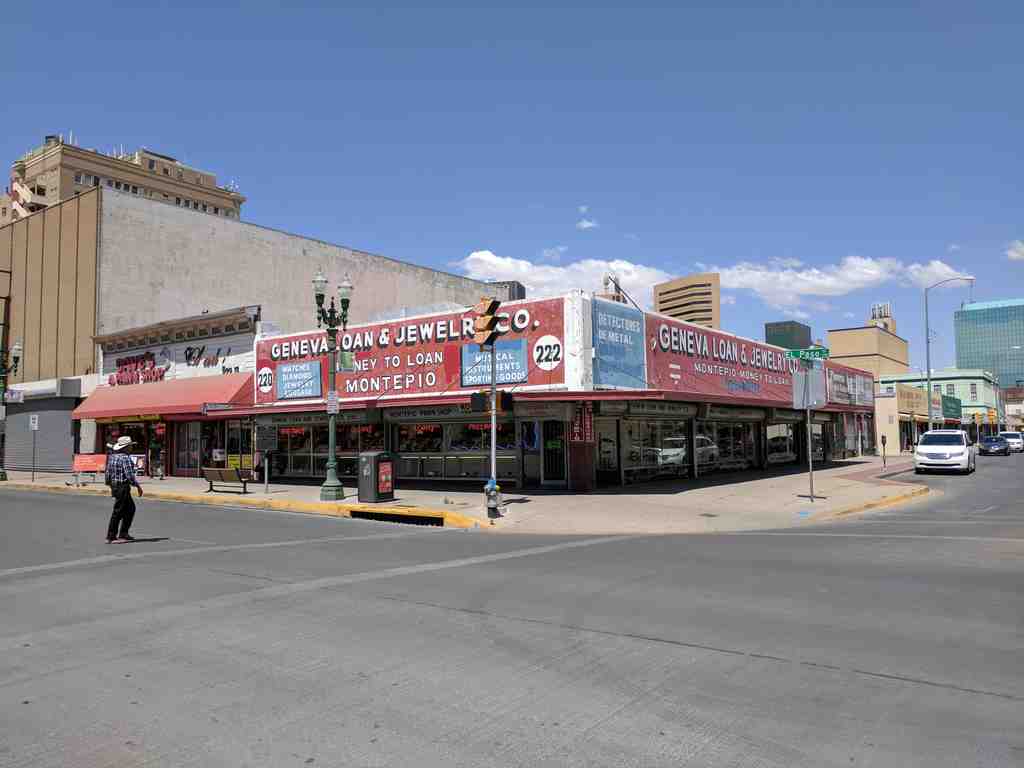
Directly across from you, look for a long, one-story building with a classic wooden cornice peeking above a bold red storefront sign-it’s nestled right on the corner with Geneva Loan & Jewelry painted big and bright, making it hard to miss!
Now, get ready to travel back-no time machine required-as you stand in front of the Montgomery Building, the stubborn survivor of El Paso’s wild frontier days. Picture this street about 140 years ago: not a shiny car in sight, but horses hitched up under a wooden awning, dust swirling in the air, and the fresh sound of a distant train whistle as the Southern Pacific Railroad pulled into town for the very first time in 1881. The city was buzzing with changes, slowly transforming from adobe huts to busy blocks with brand-new brick and lumber. Suddenly, old El Paso started looking like those “big city” towns back east-or at least that was the plan.
This building, put up in 1882 by William J. Montgomery, is a real trickster-it’s got a ‘false front’ designed to make it look taller and grander than it really is. That’s right, old Montgomery just needed a roof, a floor, and two new walls, and he borrowed the sides from his neighbors on both ends. He split it into two addresses-216 and 218 S. El Paso Street. Can you imagine the owners of those original side buildings, peeking over to see a whole new place pop up like an overzealous sandwich filling between their bread? This western architectural style, kind of like wearing a fancy hat to seem taller, was all the rage for making new businesses look impressive, even if they were only one story high.
Back then, you’d find a bustling pharmacy and a bookstore in here, and folks probably argued about the latest snake oil remedies or which dime novel hero was the bravest. Over the years, the building has been everything from a shoemaker’s workshop to a restaurant and, now, today, a pawn shop and a clothing store cram themselves beneath those vintage cornices. Underneath the modern signage, the original wooden façade still hides, while the cornice-decorated like a piece of fancy architectural icing-remains proudly on display.
This odd little building is more than just old wood and tin-it's a living slice of El Paso’s wild, dusty, get-rich-or-try-trying spirit, standing stubborn against the glassy towers around it. Think of it as the last poker player still at the table from a hand dealt back in the 1880s, keeping the city’s frontier heart alive with every century that rolls by!


