
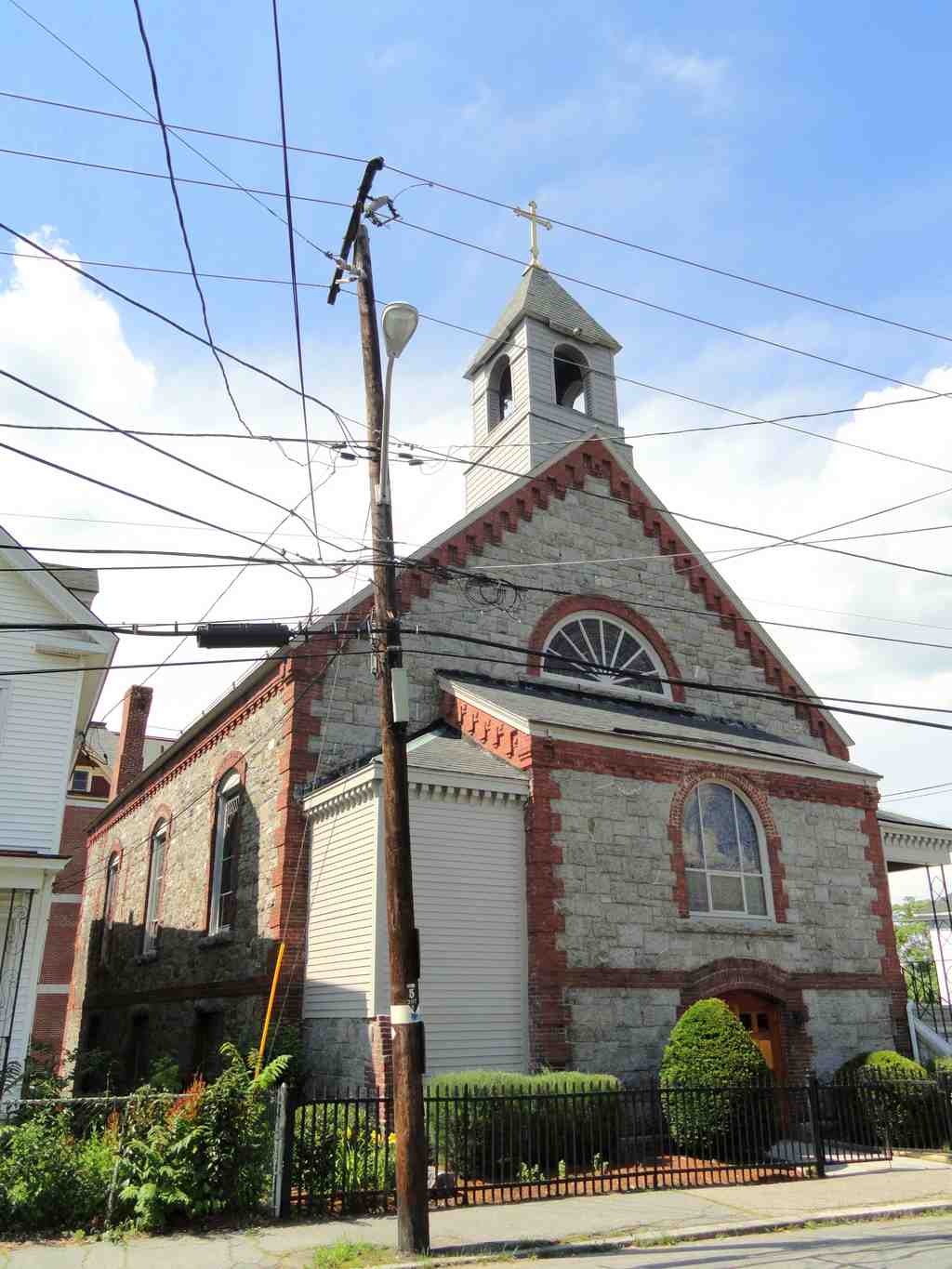
To spot St. George Antiochian Orthodox Church, look ahead for a stone building with red brick trim around its arched windows and doorway, topped with a small bell tower and gold cross peeking above the power lines.
Alright, traveler, let your imagination roll back to the late 1800s-picture the streets bustling not with smartphones and sneakers, but with the heavy steps of Syrian-Lebanese immigrants landing in Lowell, their hearts longing for a sense of home and community. These new arrivals came not only with dreams and suitcases, but also with their deep-rooted Eastern Orthodox faith. At first, without a church of their own, can you believe Sunday services were held in cramped living rooms, voices echoing in kitchens and halls? The effort to build a proper place of worship was no small joke; fundraising probably involved more coffee and baklava than you’d ever imagine.
Finally, in 1917, they bought the building you’re looking at-originally crafted by French Huguenots in 1883, and transformed over two years to become an Orthodox haven. Imagine the pride and excitement on May 25, 1919, when Metropolitan Germanos Shehadeh, assisted by Archmandrite Seraphim Nassar, dedicated it with incense swirling and bells ringing. From just 25 to 30 families, the parish swelled as more folks came, drawn by the mills powering Lowell’s industrial boom.
Inside, you’d find dazzling icons, including a breathtaking painting of the Holy Virgin, installed in the mid-1980s, and a majestic Christ overhead-let’s just say, you won’t find anything like this at IKEA. The building kept evolving: fresh air conditioning cooled summer crowds and, in 2008, St. George earned its place on the National Register of Historic Places-a badge of honor for the struggles and joys woven into every stone. So, as you stand here, you’re witnessing not just a church, but a living symbol of journey, faith, and the relentless quest for home in a new world.




