
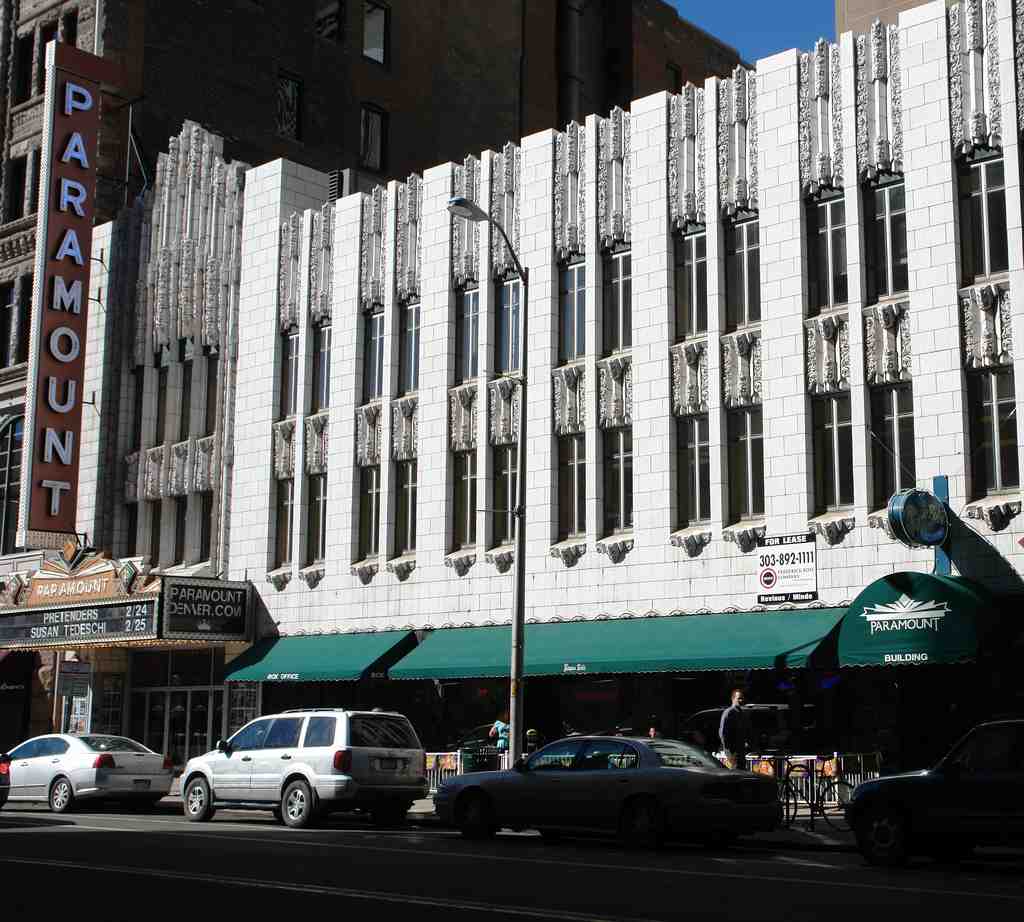
You’re getting close to the Paramount Theatre! Just look in front of you for a building that really stands out: the facade is white, shining almost like tiled ice, decorated with tall vertical windows and clusters of ornate, carved details reaching up the walls like a frozen waterfall. You can’t miss the big vertical “PARAMOUNT” sign stretching up the corner, glowing with a bit of old-school cinema magic. And if the green awnings don’t catch your eye, the vintage marquee displaying showtimes surely will!
Now, picture this: It’s the 1930s. You’re standing where moviegoers in their sharpest suits and flappiest dresses once lined up beneath glittering lights to see the latest talkie. Denver’s Paramount Theatre was the place to be-opened in 1930, designed by the famed Rapp and Rapp firm, with interior magic painted by the hands of artists like Vincent Mondo and Louis Grell. It was the crown jewel of movie houses, sparkling with a bold art deco look that made Glenarm Place feel like the heart of Hollywood.
But the real star of the show? The Wurlitzer organ inside, one of only two twin-console types left in the whole country! With four keyboards, twenty-one ranks, and more than 1,600 pipes, it can shake the seats or make you feel like you’re floating on a cloud. If you ever hear a sudden burst of mighty music echoing through the theatre, that’s the Wurlitzer setting the mood.
By the late ‘70s, the Paramount had seen it all-opera, movies, and even a few lonely days as the last grand movie palace in Denver. Then it roared back to life, welcoming stand-up stars like Sinbad, big-name concerts, and roaring crowds. It’s survived close calls, face-lifts, and the occasional ghost story-well, I can’t confirm the ghosts, but you know theatres. There might be a spook or two hanging out in the balcony!
So, next time you see that glowing sign and those dazzling, decorated windows, remember you’re looking at more than a concert venue. You’re seeing a piece of living Denver history, echoing with the cheers, music, and laughter of generations. Step close enough, you might just hear a phantom note from the mighty Wurlitzer-now wouldn’t that be a sound to remember?


