
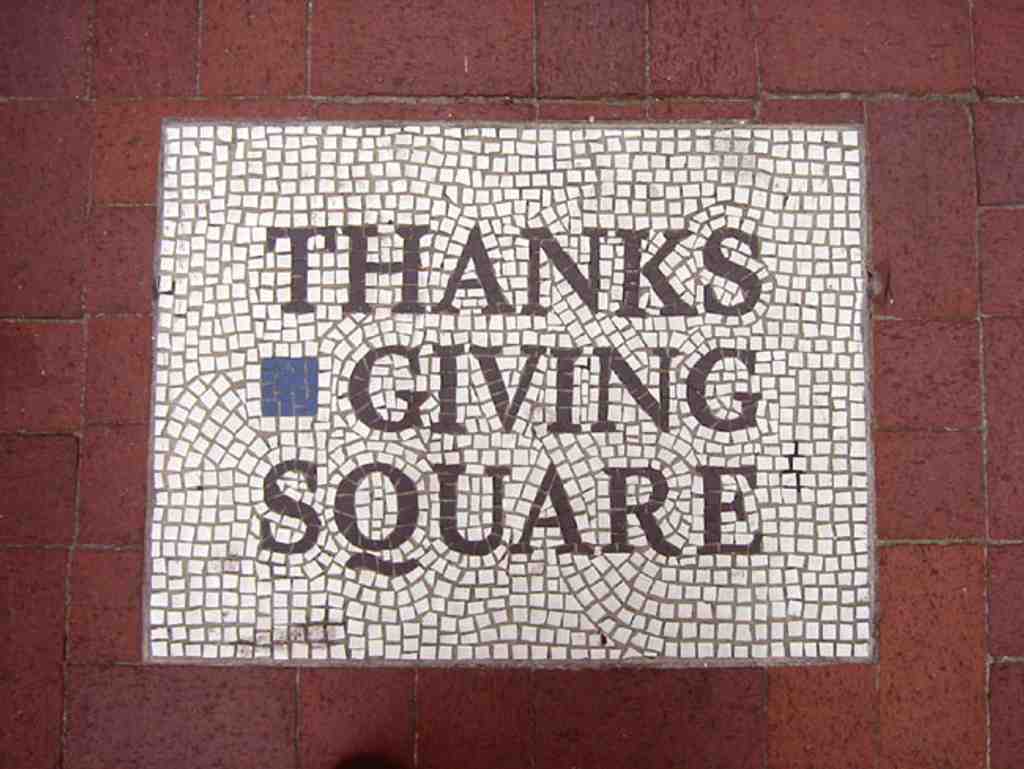
You will know you have arrived when you spot a rectangular sign crafted from small white mosaic tiles, spelling out the square's name in bold black lettering beside a distinct blue square, all embedded directly into the red brick walkway. Welcome to Thanks-Giving Square.
Back in the 1970s, Dallas businessman Peter Stewart wanted to build a lasting public monument to gratitude, a space he envisioned would carry profound meaning for centuries. To make it happen, he tapped Philip Johnson. Now, Johnson was a brilliant but stubborn architect who refused to compromise his fortified design, bringing a towering reputation and an equally formidable ego to the drafting table.
The collaboration was a battle of wills almost immediately. Stewart absolutely hated Johnson's initial blocky concepts, calling them awful and entirely too square. The tension between the two men threatened to derail the whole project before it even began. The breakthrough only came when Stewart consulted a Benedictine monk, a member of a Catholic religious order strictly dedicated to quiet contemplation. The monk suggested an ascending spiral shape, based on the idea that gratitude is a gift that always returns to the giver on a higher plane.
Johnson actually liked the spiral idea, eventually modeling the soaring white chapel after a chambered nautilus shell. But he demanded a serious trade-off. If Stewart wanted a peaceful sanctuary, Johnson was going to protect it on his own terms.
Take a moment and look at the heavy concrete walls and those defensive bronze gates surrounding the perimeter. Can you see how they create a fortress-like feel right in the middle of the city?
That was entirely by design. Johnson completely rejected the idea of an open, inviting park. He insisted on sinking the square fifteen feet below street level and wrapping it in heavy walls to physically block out the rest of the world. When architectural critics argued that his walls acted like a roadblock that aggressively pushed people away instead of inviting them in, Johnson famously fired back that a great place needs to be hard to get to.
You can glance at your screen to see how the active fountains inside play a prominent role in this defense, loudly churning water to mask the noise of the surrounding streets once you finally breach the gates.
It is a fascinating standoff in concrete. You have two men with fierce ambitions pushing against each other, perfectly capturing the kind of colossal personalities that were busy shaping the local skyline during those years of rapid, explosive growth. A businessman wanting to welcome the world, and an architect demanding the world earn its way inside.
Take a second to consider how a single piece of architecture can try to be both a welcoming sanctuary and an impenetrable fortress at the exact same time. The square is open daily from nine to four if you want to explore the inside. For now, let us head toward Energy Future Holdings, which is just a two-minute walk away.




