
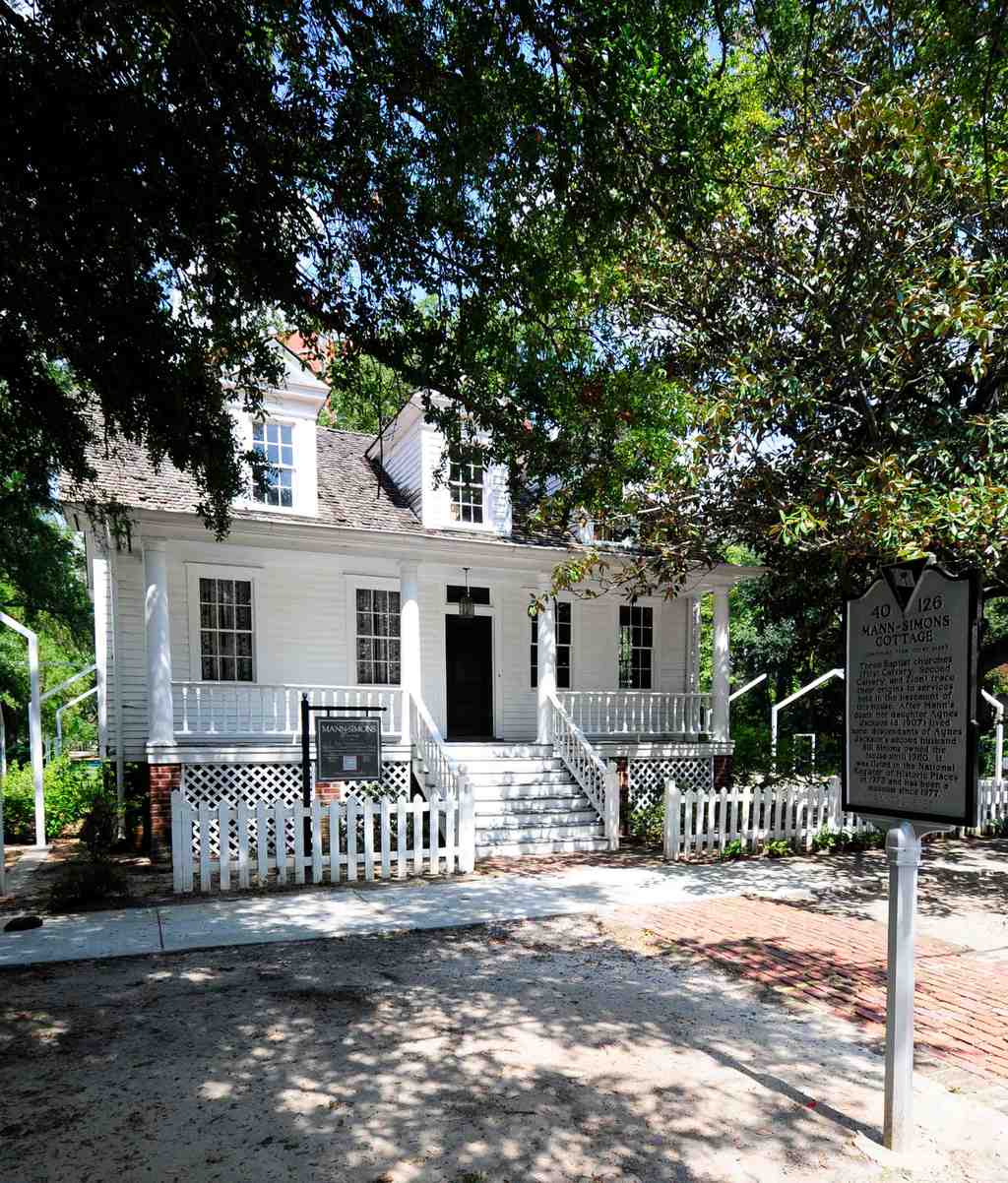
Right in front of you, nestled behind a white picket fence and partially shaded by leafy trees, stands a charming white cottage with three dormer windows peeking from the roof, a raised porch with four sturdy columns, and a welcoming set of stairs leading to its dark front door-just look for the house that looks ready to host a porch swing and an afternoon story or two.
Now, let’s dive into the story of the Mann-Simons Cottage-a place full of courage, community, and a sprinkle of good old-fashioned resilience. Imagine dust swirling under your feet as the 1800s city wakes, and the air is thick with the scent of magnolia and possibility. This very corner-at Richland and Marion-was where Celia Mann, once born enslaved in Charleston in 1799, built a new world. Her husband, Ben DeLane, scraped together his boatman’s wages to buy her this land in 1843. Picture the scene: papers exchanging hands, hopes as high as the bluest summer sky.
By 1850, Celia was officially free-her name marked in the census and her roots firmly planted. Not one to sit idle, Celia became a skilled midwife, her gentle knock heard all across Columbia by families both anxious and joyous. Back then, free Black people made up just 6% of the city’s souls, so the Mann household was not just a home-it was a beacon. After the Civil War ended and the country tried to patch itself together, Calvary Baptist Church itself was born inside Celia’s very house-even Sunday hymns here must have been something to hear! After Celia passed in 1867, her daughter Agnes inherited both her mother’s will and her spirit.
Agnes Jackson Simons had her hands full with a growing family and a changing world. She and her husband, Bill Simons, a free man of color and a popular musician, didn’t just settle-they expanded. The old hall-and-parlor house was replaced in the 1870s by this very “cottage style” home with its unmistakable gabled roof and those three windows poking out front like curious children. The Simonses added buildings out back: a small grocery, a lunch counter, even another house. You can almost smell the biscuits and hear the laughter as locals traded stories nearby, everyone a piece of this lively neighborhood puzzle.
When Agnes died in 1907, her son Charles Simons stepped into the spotlight. Charles wasn’t just a homeowner-he was a deacon and a Freemason, a community leader who bought up extra land and built rental homes. Here’s a twist: after 1913, he started renting these houses mostly to European immigrants, echoing Columbia’s ever-shifting cultural scene. Charles thrived in a time when Black South Carolinians rarely found economic security. He built not just a life for himself, but a legacy.
After Charles, the house passed to Amanda, his wife, a dressmaker respected in her own right. When Amanda died in 1960, her niece, Bernice Conners, became the final family resident. The tides turned in 1970 when the city eyed this spot for new apartments and seized it through eminent domain. But the community wasn’t about to let Celia’s cornerstone disappear without a fight. Spearheaded by her great-great-granddaughter, Robbie Atkinson, a movement swelled up-Black organizations, churches, garden clubs all banded together to protect their heritage. Thanks to their efforts, by 1973, the house was listed in the National Register.
Ever since, historians and locals have teamed up to dig deep-literally!-with archaeological projects that uncovered new layers of this home’s story. Today, the Mann-Simons Cottage stands not only as a museum, but as a symbol of what can grow when a community refuses to let its roots be torn out. So as you stand in the soft shade, take a moment to appreciate all the footsteps that crossed this porch before yours-and don’t trip on the history, it’s pretty thick around here!


