
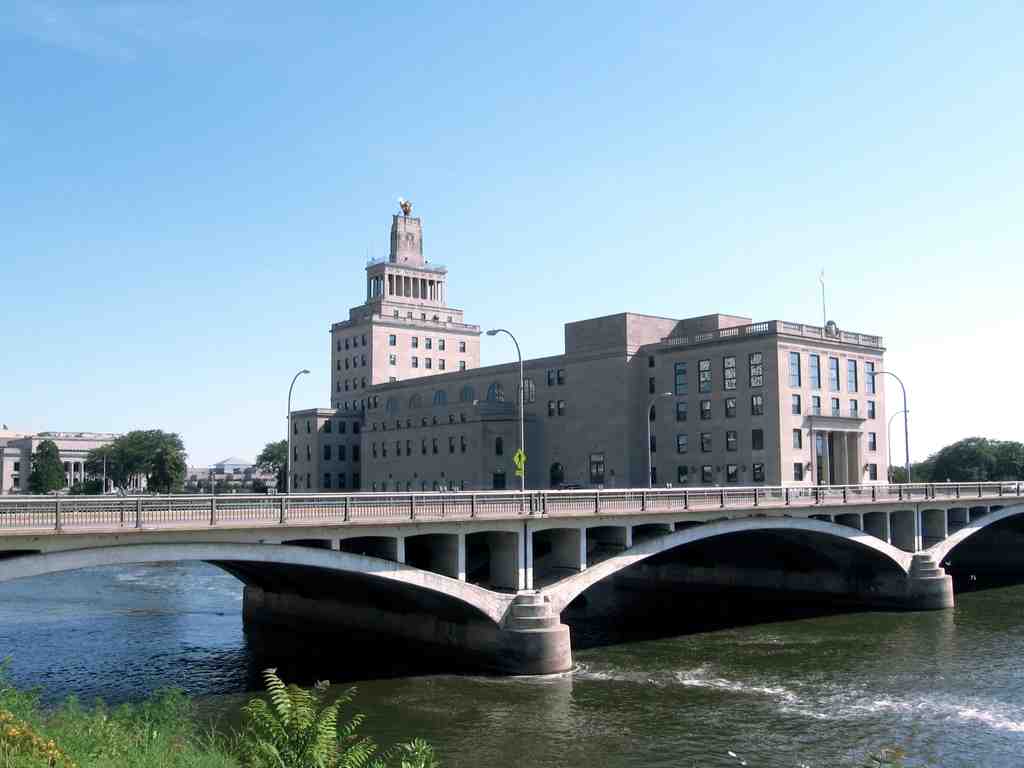
Historically, Mays Island-and an adjacent block-was listed on the National Register of Historic Places in 1978. This island saw it all and then some during the devastating flood of 2008, with water levels rising above the first floors of every building. Talk about making a splash! Before that watery fiasco, the island was like a bridge itself, unifying both sides of Cedar Rapids with its concentration of local and county government entities.
The Memorial Building, a fine piece of architecture, was designed by the local talents Hunter & Hatton. The Linn County Courthouse, a dashing Beaux Arts structure, was crafted by Joseph Royer of Urbana. A fun fact: it's so insular that these long, narrow buildings, just like the island, face each other, giving it an almost secluded vibe.
Picture this: Mays Island wasn’t always such a neat civic hub. Before Cedar Rapids officially became a city, it was a low, marshy area, kind of an equine hideaway for local horse thieves! In the 1850s, "Major" John May came along, claiming the island for his utopian vision. Though he paid someone else to fight in his stead during the Civil War, his knack for real estate spun into motion the dream of an island town.
Initially, May’s ambitions were thwarted by floods and its inaccessibility-no bridges back then! Undeterred, he lobbied for a name change for neighboring Kingston to "West Cedar Rapids." He was planting seeds for a united city, and boy did they grow! By 1871, Cedar Rapids annexed Kingston and built a bridge right through Mays Island-talk about long-term vision! And so, businesses started to flourish.
Speaking of flourishing, in 1889, a Russian immigrant named Henry Smulekoff set up a thriving furniture business here, which operated until 2014-a testament to the lasting allure of this historic island.
There you have it! Mays Island is more than just a speck of land in the river; it's a symbol of unity, resilience, and a touch of old-school entrepreneurial spirit. Now, onto our next stop!


