
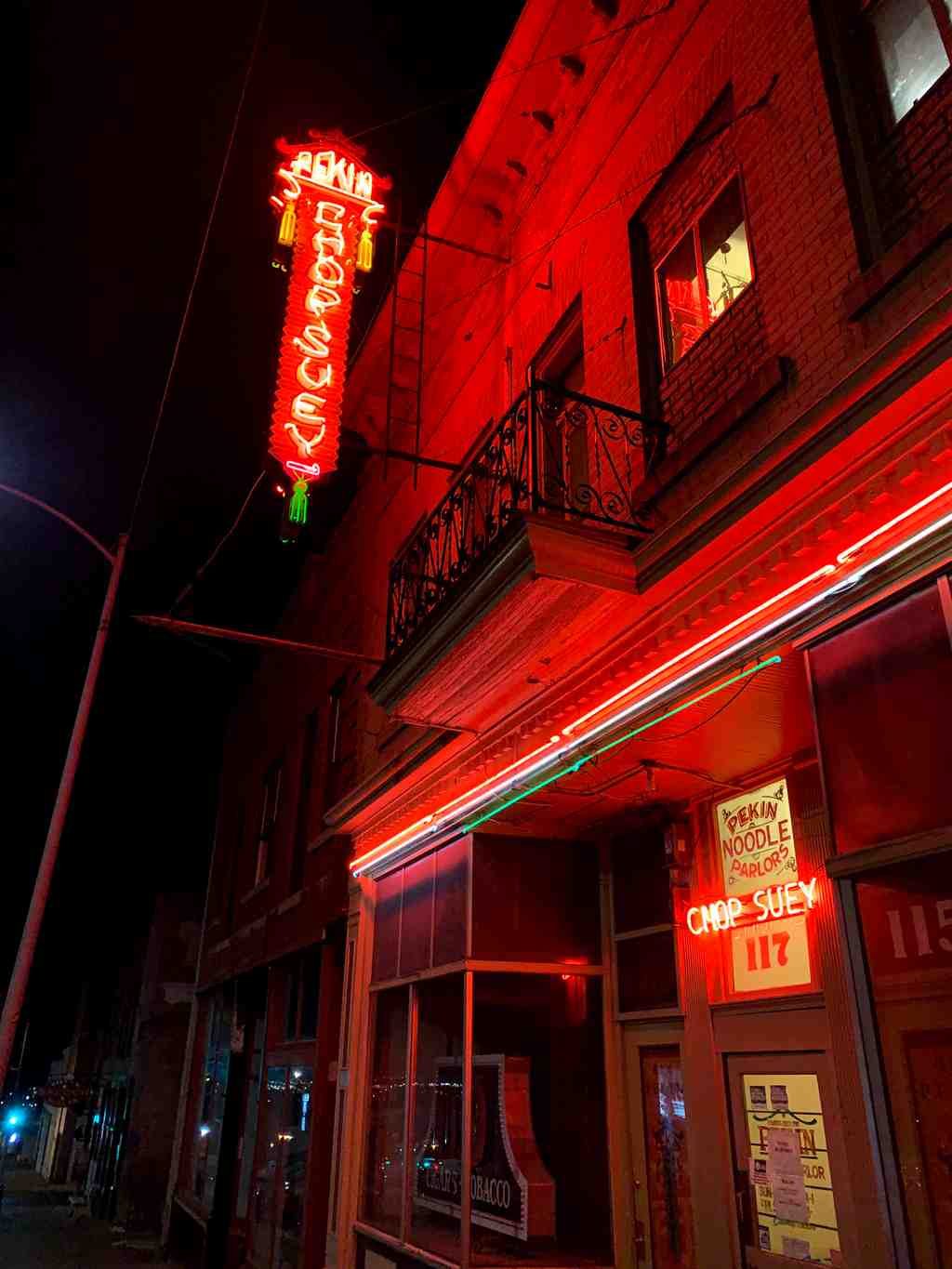
To spot the Pekin Noodle Parlor, just look up for the glowing red neon sign that says "PEKIN CHOP SUEY" hanging from the building above a narrow glass storefront on South Main Street.
Now, be sure to give that neon sign a nod-it’s no ordinary sign, and this isn’t just any restaurant. You’re standing in front of the Pekin Noodle Parlor, the oldest continually operating Chinese restaurant in the entire United States. That bright glow first lit up Butte’s night sky back in 1916, and if neon could talk, it might argue it’s nearly as famous as the food inside.
But let’s rewind to the late 1800s, when the hills around Butte were teeming with gold miners and the clang of pickaxes could be heard. Chinese immigrants flocked here for a chance at fortune, only to be met with suspicion and anti-Chinese sentiment. Driven out of the mines, many Chinatown families settled just steps away from where you’re standing now, turning this neighborhood into “China Alley”-a bustling stretch filled with markets, laundries, noodle parlors, and as legend would have it, the odd underground game or two. By its peak, maybe 600 people called Chinatown home, though relentless boycotts from the local labor unions forced most to leave, and by 1940, fewer than 100 remained.
Amidst these challenges, two determined relatives, Hum Yow and Tam Kwong Yee, came together to open a little eatery dedicated to serving comfort to everyone from miners with pockets full of dust, to tuxedoed theater-goers. In 1911, they settled into this very spot, right on top of a storefront that once hosted herbal shops-and, depending on who you ask, some not-at-all-legal gambling in the basement. Upstairs, the entire restaurant would have looked quite different: pale green walls, lush green curtains, and an almost-tropical vibe. These days? Walk up the stairs and step into a corridor flush with salmon-orange walls, hand-built partitions, and cheery red lanterns, all designed to whet your appetite before you even see a menu-talk about color psychology!
The heart of Pekin has always been its family. The Tam clan has stuffed fortune, flavor, and a little humor into every plate of chow mein or yaka mein, their famous “wet noodles.” When immigrants like Ding Kuen Tam-better known around here as Danny Wong-took up the reins, he and his wife Sharon Chu welcomed everyone like long-lost cousins. Drop in on any weekend during their reign, and you might have heard diners giggling in the semi-private booths, with servers carting out trays that boasted the taste of better times.
In recent years, the Pekin Noodle Parlor has been celebrated as an American Classic by the James Beard Foundation, but some say you haven’t truly found glory until you’ve seen Danny’s original 1916 dining tables-still here, creaky and proud. This neon-lit noodle parlor is proof that even as eras change and flavors come and go, the warmth of good food and the hope of a better future still shine brightest-just like that red neon sign above you.
Are you ready for the next stop, or hungry for a plate of noodles yet?


