
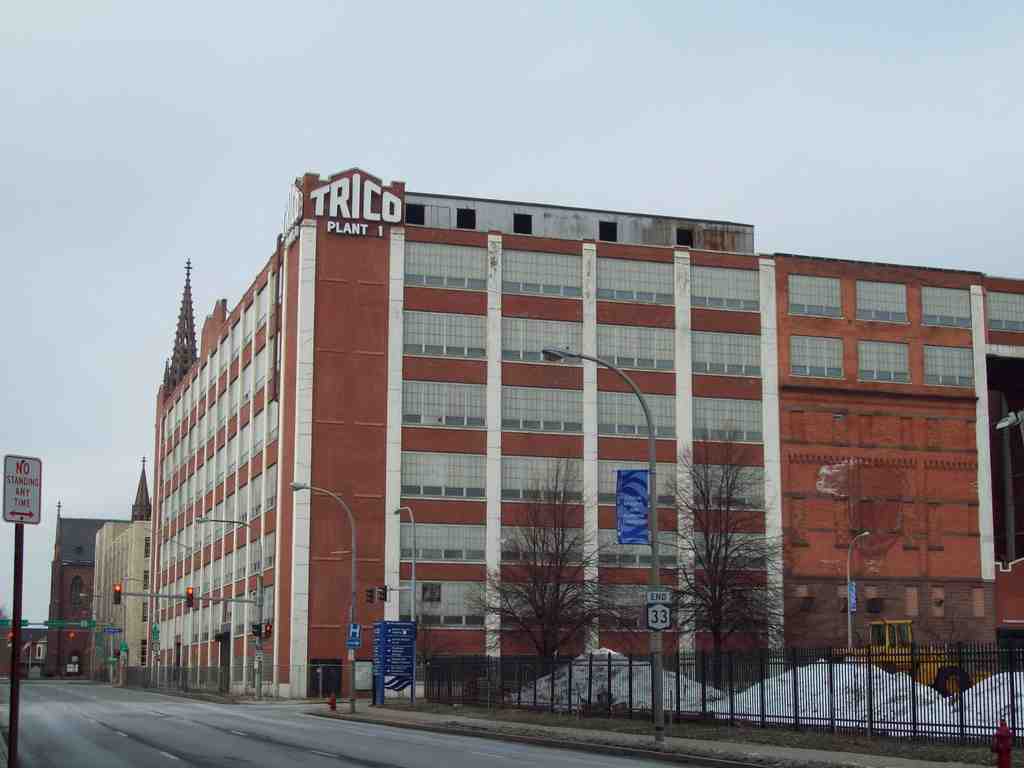
In front of you stands the Trico Plant No. 1, a huge industrial building with bold red brick stripes and endless rows of windows framed in white-just look for the big “TRICO PLANT 1” sign perched at the top corner, impossible to miss against the sky.
Now, as you stand on this spot, imagine the year is 1920. The noise of Buffalo’s bustling city fades a bit as you take in this giant block of windows and brick, sunlight glinting off those endless metal-framed panes-this was once the epicenter of innovation, the home of windshield wipers! Yes, those humble gadgets on your car started a wild ride right here. The Trico Plant wasn’t always the swanky apartment building you might see today; it was born as a “daylight factory,” a clever name for a style obsessed with soaking machinery and workers in natural light, making the workday just a bit less gloomy.
Let’s rewind even further-before the hum and clatter of windshield wiper assembly lines, this stretch of Ellicott Street boasted a grand old brewery, built by Christian Weyand in the 1890s. Picture barrels, ice blocks, and the aroma of beer wafting through the neighborhood, back when this area was bustling with German-American families. The ice house from that brewery is still tucked in among the factory walls, a little like history’s own surprise Easter egg. Oddly enough, the brewery found a second life-the same building where workers once stored beer barrels became the birthplace of Buffalo’s wiper empire, proving that both good beer and clear windshields are vital to civilization.
The story of Trico starts with a rainy night in 1917. John R. Oishei, then the manager of the Teck Theater, found himself peering desperately through a blurry windshield, only to hit a bicyclist. The solution? Partner up with inventor John Jepson, who had created a nifty wiper blade. After renting a small workshop, Trico's business exploded when they landed contracts with classic carmakers like Cadillac, Packard, and Lincoln. By 1920, they needed a bigger space-and bought that now-silent brewery down the street, ushering in a new era.
Oishei wasn’t just the factory boss. Imagine him: striding through the plant, the hum of hundreds of workers filling the air, sunlight pouring through those massive windows. At one point, Trico was the single largest employer in Buffalo, and this building buzzed with innovation. As production ramped up, the “daylight factory” style took over-the concrete skeletons rose, furnished with enormous glass walls that let sunshine flood the workspace, an engineering marvel for its day. That meant fewer accidents, better health, and yes, even happier workers-well, as happy as you could be spending your days making windshield wipers.
This giant plant grew until it spanned a whole city block, with every nook and cranny dedicated to keeping America’s vision clear on the road. Oishei, driven by more than just profit, created the John R. Oishei Foundation, a beacon of generosity in Buffalo to this day-his fortune swept forward by those wipers was funneled into hospitals, community causes, and social uplift.
Eventually, the hum of assembly lines stilled. After decades of growth, Trico pulled most of its business out in the late ‘90s, and the sleeping giant stood silent for years. There was drama too: developers wanted to breathe new life into the plant, but fate and disagreements got in the way. At one point, nearly all of it teetered on the edge of demolition. Community activists fought to save a piece of history, demanding a second look before the walls-and memories-came crashing down. Finally, as you see today, parts of the factory became new again, with lofts and innovation centers moving in, echoing with lives and dreams instead of factory noise.
If you listen closely, you might just hear echoes of those roaring machines, clanging hammers, and the laughter of workers as sunlight streamed across their benches-maybe even the faint pop of a lost beer barrel, rolled from the brewery days. History here hasn’t faded away; it’s all layered above and below, waiting for you to imagine it. And remember: next time it rains and your wipers clear your windshield, you’re part of this quirky, extraordinary story!


