
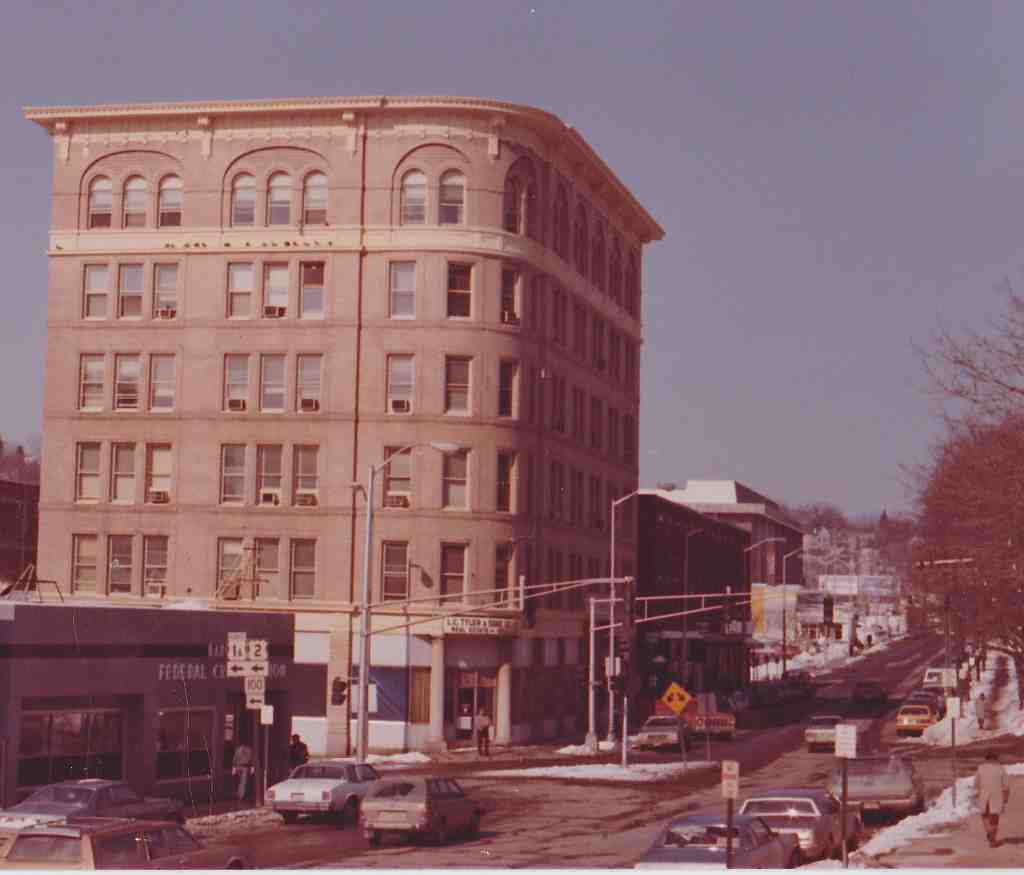
Just ahead, look for a tall, six-story yellow-brick building with big arched windows at the top corner-right where Harlow and Central Streets meet-standing proudly above the street like a golden loaf of bread that’s risen just right!
Now, picture it: it’s 1911, and Bangor’s busy downtown is a maze of brick and ambition, but disaster strikes-a roaring fire sweeps through, leaving the heart of the city in ashes. Out of these smoky ruins rises the Graham Building. Built fresh after the fire, this place is more than just six stories of yellow brick; it’s a survivor’s proof, a little like Batman after a tough night. Designed by Wilfred E. Mansur for John R. Graham-Bangor’s own “Electric Man”-this building was a spark plug in the city’s leap from lumber town to electric powerhouse. Thanks to Graham’s deals with General Electric, and a dash of inspiration from Francis Clergue (who’d already brought electric street railroads buzzing through the city), folks here swapped sawdust for sparks. Imagine the excitement: the first electric street railways in New England, humming underfoot, all because Graham had a vision brighter than his building’s gleaming yellow bricks.
Step closer to the entrance on Harlow Street, dressed up with solid concrete details and a classy balustrade. Imagine old-timey Bangor residents bustling in-maybe to Bangor Hydro-Electric Company’s offices, or to catch a train at the Bangor and Aroostook Railroad. Maybe they’d pop downstairs for medicine at the Post Office Pharmacy, or see what’s new at a line-up of local shops. Today, lawyers from Rudman Winchell keep watch from upstairs, and the Maine Attorney General’s office holds fort on the second floor. Every layer of this building, from train tickets to legal briefs, has powered Bangor’s story, one twist of fate at a time.


