
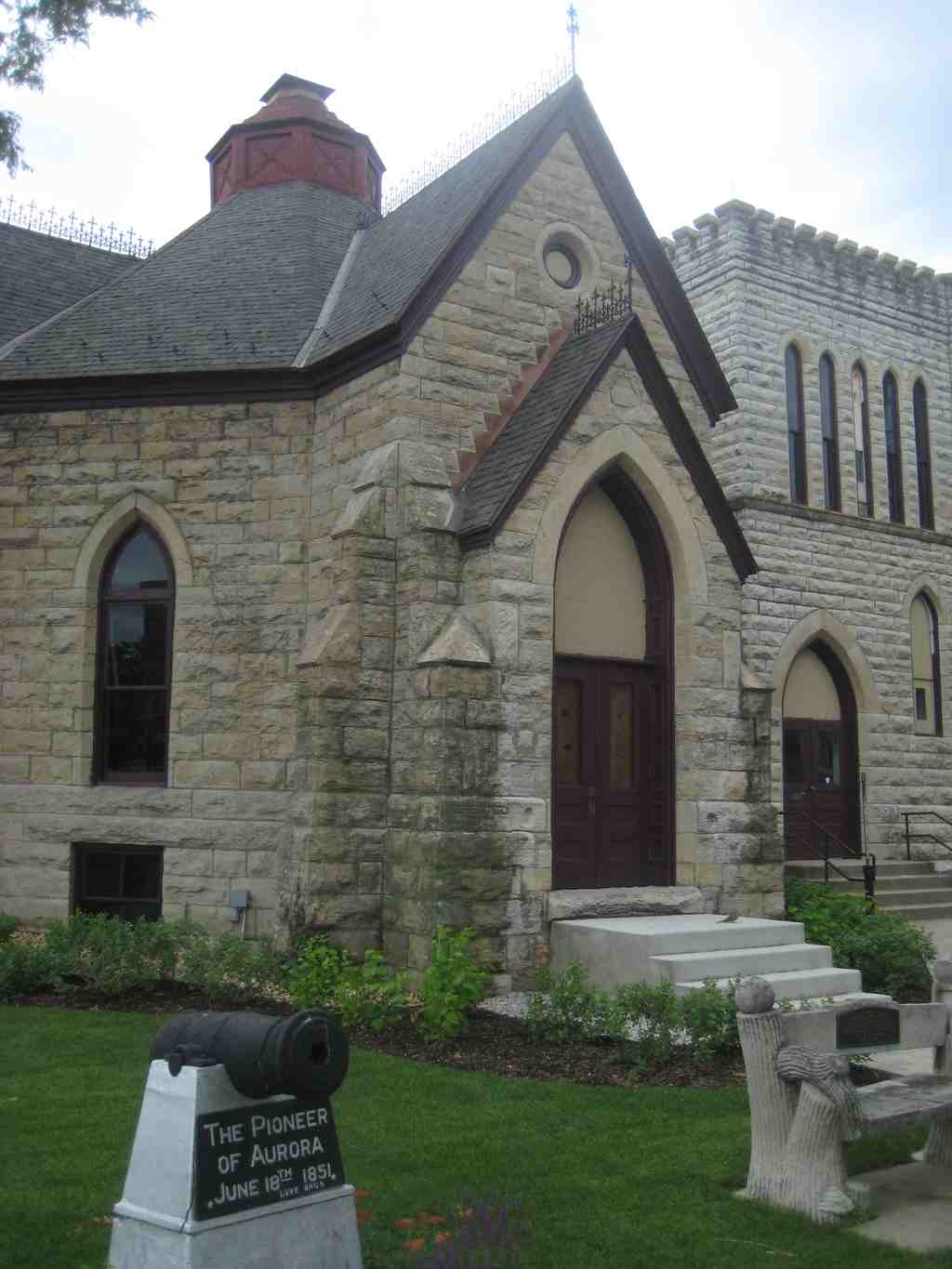
To spot the Grand Army of the Republic Hall, look for a sturdy, octagon-shaped limestone building with a pointed Gothic roof and a small cannon perched outside on the lawn-hard to miss, especially with its castle-like charm.
Now, let’s set the scene-take a deep breath, and imagine it’s 1869 and Aurora is buzzing with excitement. The town just survived the chaos of the Civil War, and everyone wants to do something remarkable to honor the brave Union soldiers. But instead of building a boring old statue, a clever fellow named Fred O. White had a more ambitious idea-why not put up a building where folks could gather, share tales, and remember their heroes? The inspiration came all the way from Massachusetts, after Fred visited a memorial there-though thankfully, Aurora skipped the fancy granite roof and some of the pricier bits.
So, the community rolled up their sleeves and, stone by local stone, brought this unique hall to life right here on Stolp Island-literally “neutral territory,” because nobody on the east or west side of Aurora could agree where to put things without a squabble. Ah, politics!
The hall’s limestone walls soon echoed with laughter, debates, and the footsteps of veterans from Post No. 20 of the Grand Army of the Republic. Any honorably discharged Union vet could join-just picture the air filled with clinking coffee mugs, hot stories, and the creak of old wooden chairs. Before the Carnegie Library opened across the street, this place was the only public library in town. Books were borrowed, secrets whispered, and history was kept alive.
But time moves on, and by 1947, the halls grew quieter; the last GAR member, Daniel Augustus Wedge, left behind a legacy-but no more tales to tell. In the 1960s, disaster nearly struck when the city decided to demolish the building. The townspeople roared their disapproval, leading to a fund-raising campaign-and the old hall was saved just in time.
Restored and renewed, today this gothic gem stands as the Grand Army of the Republic Memorial Museum. Peek through those beautiful doors and feel the story all around you-war heroes, passionate townsfolk, a community forever changed, and a building that stood the test of time (and a city council with itchy bulldozer fingers). Now, that’s what I call a plot twist worthy of any great American novel!


