
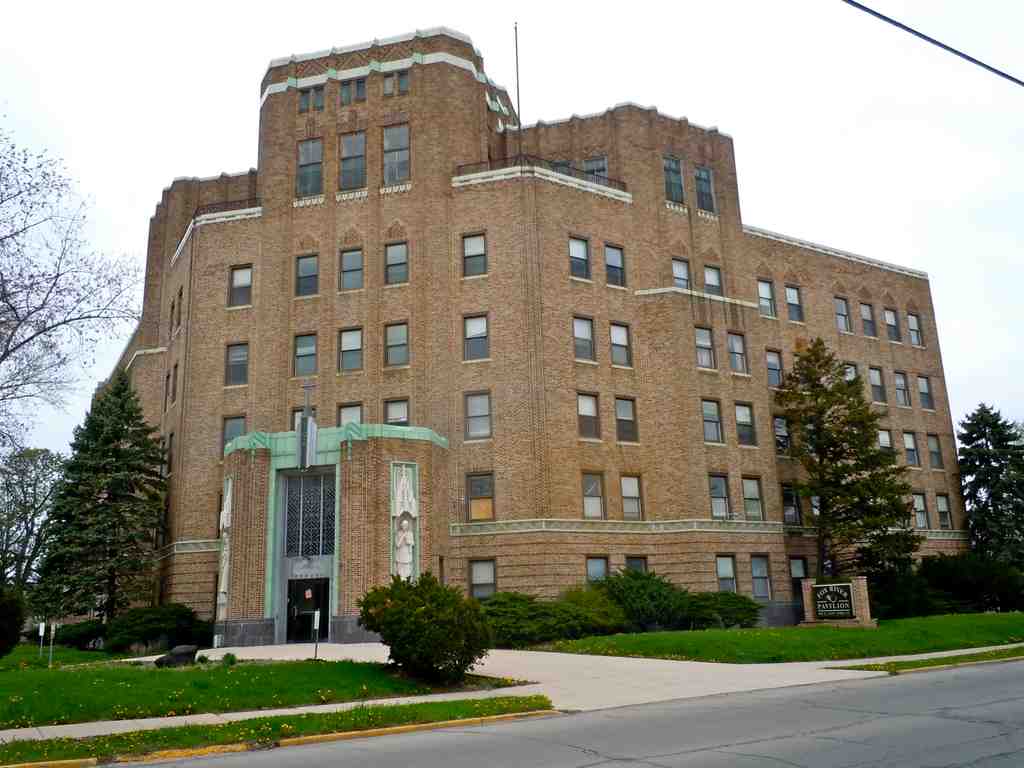
You’re looking for a tall, sturdy building with light brown brickwork, striking geometric lines, and green copper trim around its front entrance-just keep an eye out on your left, standing proudly on the corner with its unmistakable Art Deco presence.
Alright, take a deep breath of that fresh Aurora air-now picture yourself standing here nearly a century ago, with nurses bustling past in crisp white uniforms and the jangling sound of a bell ringing from inside. This towering structure before you is the Fox River Pavilion, but to the good folks of old Aurora, it was first known as St. Charles Hospital-a lifeline to the city, built when Aurora was growing bigger by the day. But the story starts even earlier; imagine a group of determined Franciscan Sisters, ducking out of the shadows in 1876, escaping harsh persecution in Germany for their Catholic faith. They made a new home for themselves in Illinois, and soon after, needed someplace grander to help all the sick folks in the bustling, booming city of Aurora.
Now, the sisters probably didn’t anticipate building a six-story fortress with gorgeous Art Deco flair-just look at those zigzag decorations above the windows and the copper-topped entrance shining in the sunlight! In 1932, during some of America’s toughest years, a builder named C. J. DeWit rounded up local workers-imagine the hammering, clanging, and hopeful chatter echoing off the walls.
Inside, there were once 110 hospital beds, doctors hurrying to emergencies, and nuns quietly tending to patients day and night. The building lived many lives-after decades as a hospital, it morphed into a nursing home and sanatorium, housing all sorts of stories: laughter, tears, and perhaps a ghostly whisper or two late at night. But in 2010, real-life drama struck-after a tragic event, the halls emptied, and the doors were locked for good.
Standing here now, this building might look still and silent, but if you listen closely, you can almost sense the layers of history rising up with each brick-tales of resilience, compassion, and the quirks of a city determined to care for its own. So go ahead, give the old pavilion a friendly nod as we head on to the next stop-who knows what stories those walls might whisper as you walk by?


