
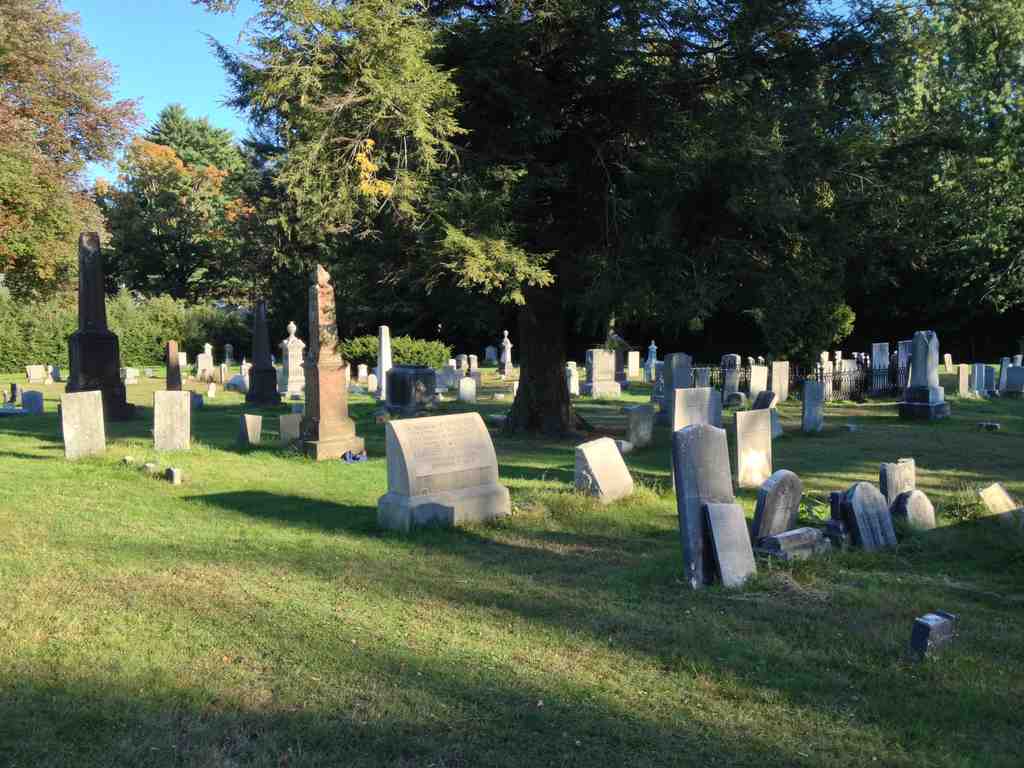
You’re looking for a spread of old gravestones in a green, shaded field, with a striking wrought-iron-fenced plot tucked beneath large trees-stand anywhere near that and you’ve found Amherst West Cemetery.
Alright, you’ve arrived at Amherst West Cemetery, a patch of history right beneath your feet, sprinkled with centuries-old gravestones that capture the tales and secrets of Amherst’s earliest days. This peaceful four-acre spot first came to life in 1730, when Hadley folks decided their eastern precinct needed a place to say goodbye to its own. Fast-forward to 1786-Amherst became its own town, and this cemetery became the final resting place for generations of townsfolk. Picture it: back in the 1700s, the ground here was bare and simple, dotted with slate headstones etched by nearly two dozen local carvers, and between the shadows of hefty maples, you’ll spot the oldest marked grave from 1737.
Now, don’t trip over history-markers from the grand Victorian era look dramatically different. Limestone and brownstone gave way to tough, weather-defying granite, especially for the well-to-do families. Things didn’t get fancy until the 19th century when the cemetery’s winding figure-eight paths took shape. In the southeast corner, you’ll find stones marking African American burials-modest, unadorned, quietly dignified.
Not everyone here is anonymous though. In the Dickinson family plot, behind a proud wrought iron fence, lies the poet Emily Dickinson, her parents, and other notables like Civil War veterans and U.S. Representative Ebenezer Mattoon. Picture family and friends, dressed in black, slipping through the gates-first the plain granite piers of the old Gaylord Gates, and later, the stately ashlar stone Burnham Gates added in 1954.
So, as you stand in the dappled sunlight, feel the history-centuries of love, loss, and poetry all share space under these trees. And hey, I promise, none of the ghosts bite.




