
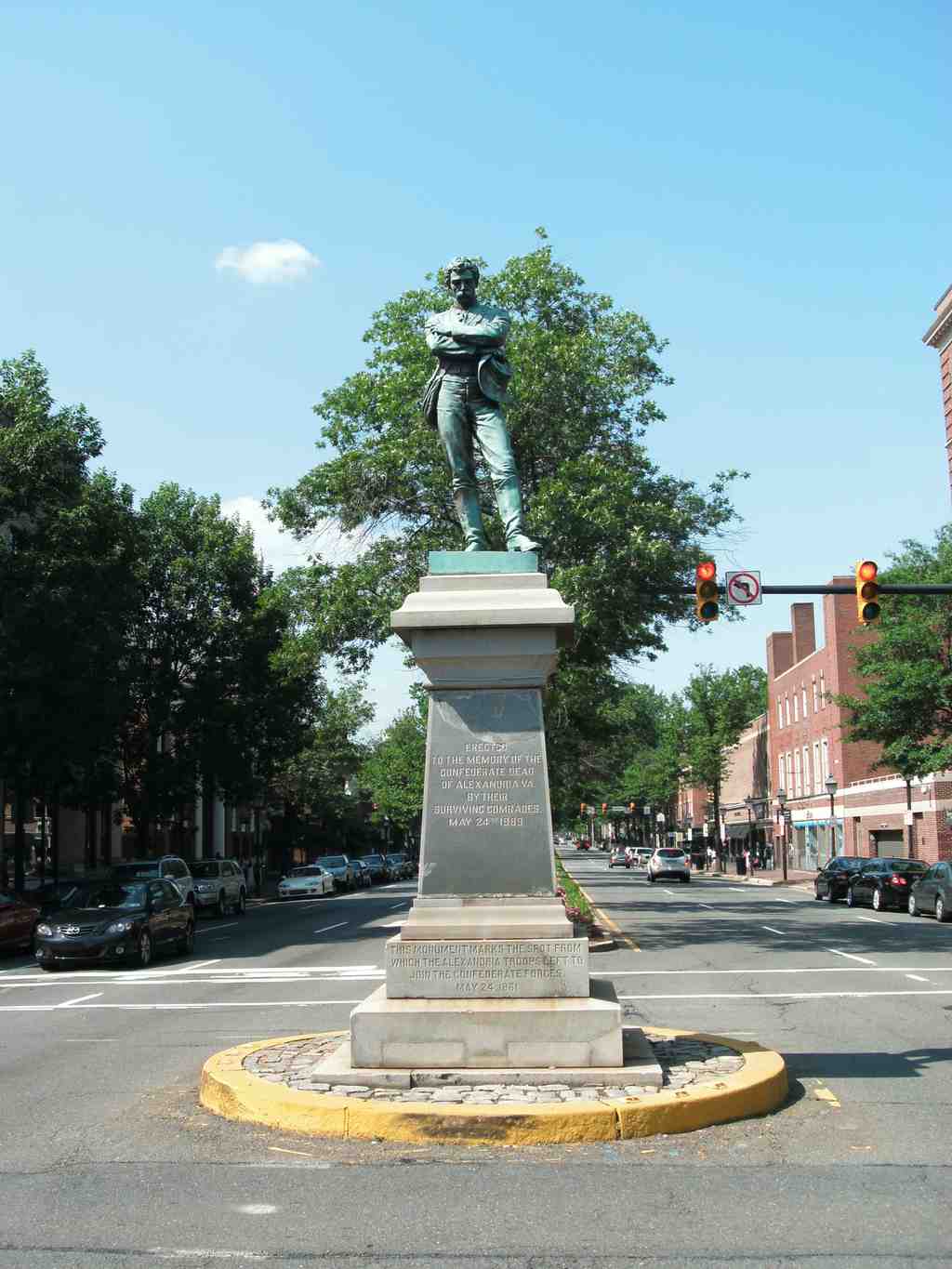
Anchored to a tall, square marble and concrete pedestal, a lone bronze soldier stands looking downward with his arms tightly crossed over his chest. That was the Appomattox statue, or at least, that is what used to stand right out there on your left in the middle of the intersection of South Washington and Prince Streets.
If you want to see how this bronze monument watched Alexandria shift from early motorcars to modern traffic before its sudden removal in two thousand twenty, just pull up the before and after image on your screen.
The monument was dedicated in eighteen eighty-nine to memorialize local Confederate dead from the American Civil War. The sculptor, M. Caspar Buberl, brought to life a design by John Adams Elder. Elder had painted a lone, unarmed soldier staring at the ground after the Confederacy surrendered to Union forces. You can take a closer look at that somber expression and downward tilt in the app. Elder never actually saw the finished monument, because he caught a brutal case of malaria while painting a portrait of Confederate President Jefferson Davis, eventually dying from the resulting paralysis.
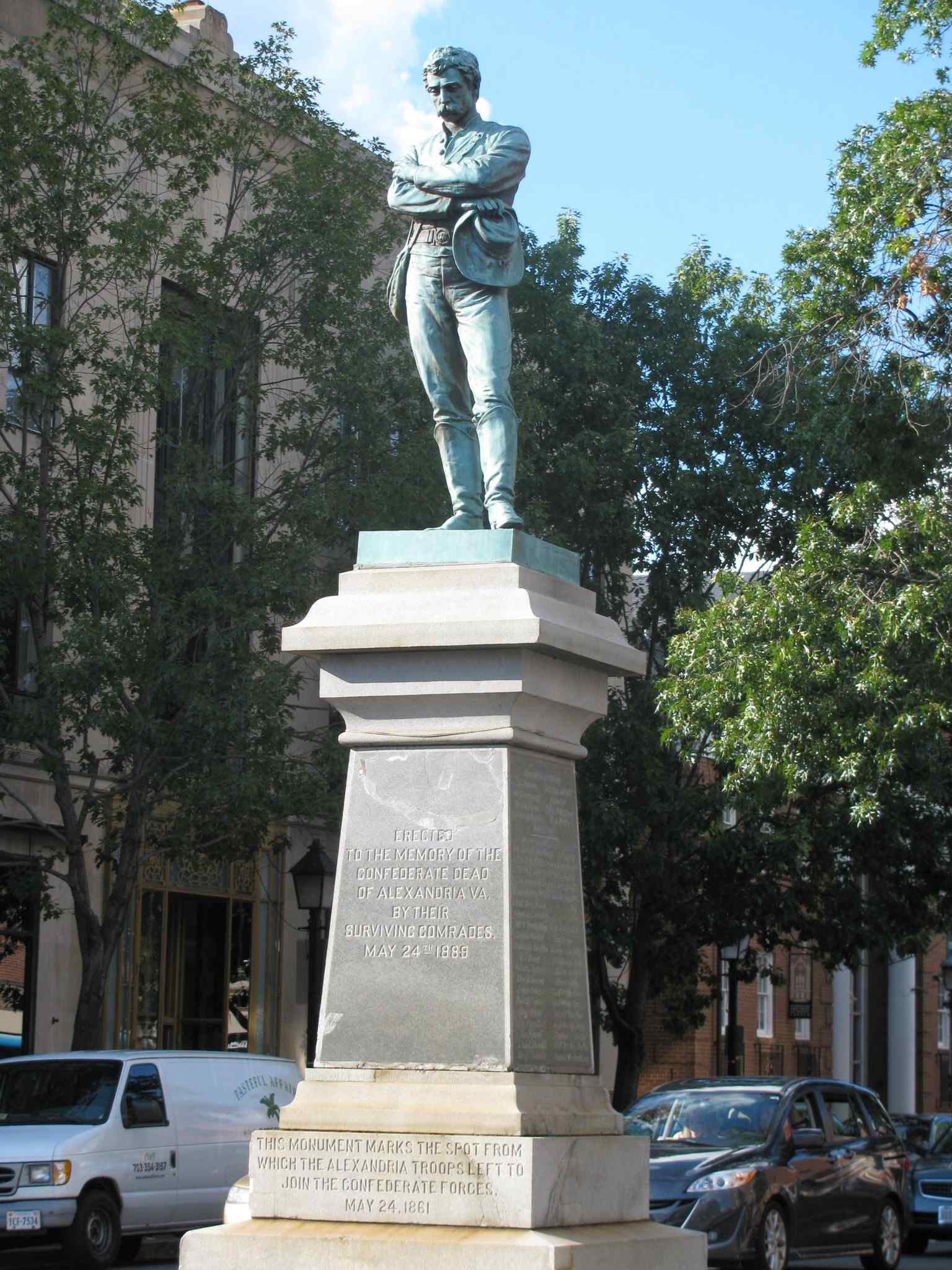
The timing of its dedication was incredibly deliberate. Organizers unveiled it exactly twenty-eight years to the day after Alexandria's garrison evacuated the city ahead of advancing Union forces. For the local Black community, who had fought so fiercely to cultivate their own networks of faith and independence amidst the cruel realities of human ownership, the statue's looming presence was no accident. It was a heavy, unavoidable monument to the regime that fought to keep them enslaved.
Decades before the modern debate over monuments, people here were pushing back. In the late nineteen sixties, following the assassinations of civil rights leaders, a group of Black high school students marched on City Hall demanding the statue's removal. Among them was a teenager named Bill Euille, who would later become the city's first African American mayor. Their march did not topple the statue, but it did force the permanent removal of the Confederate flag flying beside it.
The monument also had a few strange encounters with local traffic. In nineteen eighty-eight, a van smashed into the base and knocked the soldier right off. The impact popped open a hidden time capsule. A man living at a nearby YMCA grabbed the capsule and made a run for it. A detective eventually had to track him down to get the historical artifacts back intact.
The story finally came to a close in June of two thousand twenty. Following nationwide protests, state lawmakers passed a bill allowing local governments to take down war memorials. Alexandria planned to dismantle it in July, but the United Daughters of the Confederacy, a heritage organization for descendants of Confederate veterans who owned the statue, decided to act first. Their crews arrived early one morning and quietly hauled the bronze soldier off to an undisclosed private location.
Take a moment to look toward the empty center of the intersection where the bronze soldier once stood, and consider what its absence represents today. It is a quiet but powerful shift, making room for a city finally choosing to tell a wider story. We are going to keep moving now toward the Alexandria Historic District, which is just a short two minute walk from here.





