
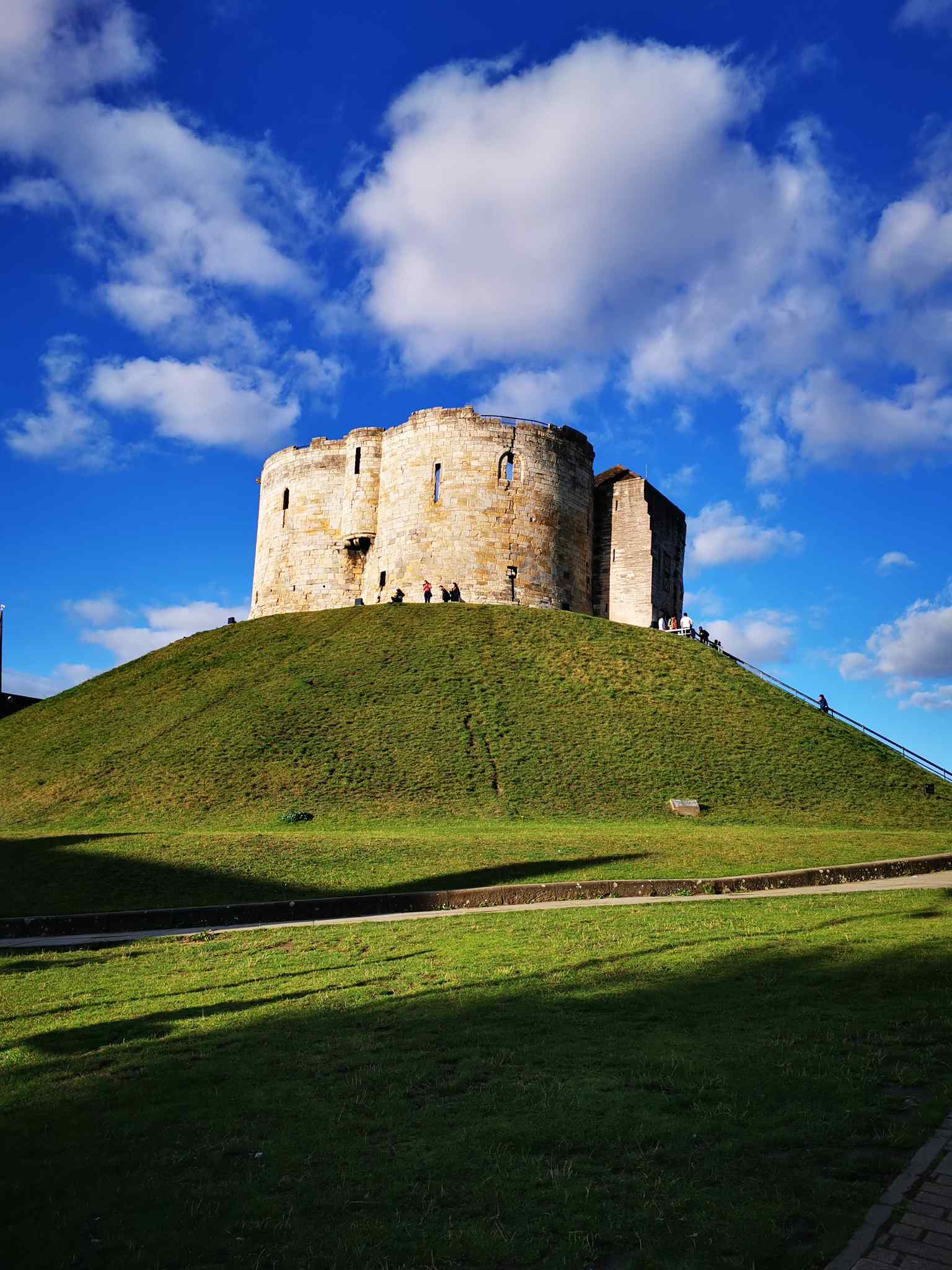
Look to your left, where you will see a massive, steep grassy mound topped by a pale stone fortress shaped like a four-leaf clover, with a long, straight flight of steps slicing right up the middle to the dark entrance. Just a short walk from the drill hall we saw a few minutes ago, this towering earthwork has watched over the city for nearly a thousand years. We are looking at Clifford's Tower, the stark, ruined heart of York Castle. It is an incredible sight, but beneath that picturesque stone lies a history dripping with extreme tension and an unbreakable will to resist.
In the year eleven ninety, the original wooden fortress, or keep, that stood on this very hill became the site of an unimaginable tragedy. Local noblemen, heavily in debt to Jewish moneylenders, incited a violent, angry mob to erase what they owed. The terrified Jewish community, led by their religious leader Rabbi Yomtob, fled up this steep mound and barricaded themselves inside the timber tower. But as the vicious crowd laid siege outside, the refugees realized their terrifying reality. They faced being ripped apart or forcibly converted to another faith. So, they made a heartbreaking choice. In an act of ultimate, tragic refusal to yield to their attackers, they chose collective suicide. Fathers took the lives of their own families, and then themselves, before burning the wooden tower to the ground so the mob could not desecrate their bodies. It is a profoundly powerful legacy, a devastating stand of people who chose to dictate their own ending rather than surrender their faith and identity to the violence of a mob.
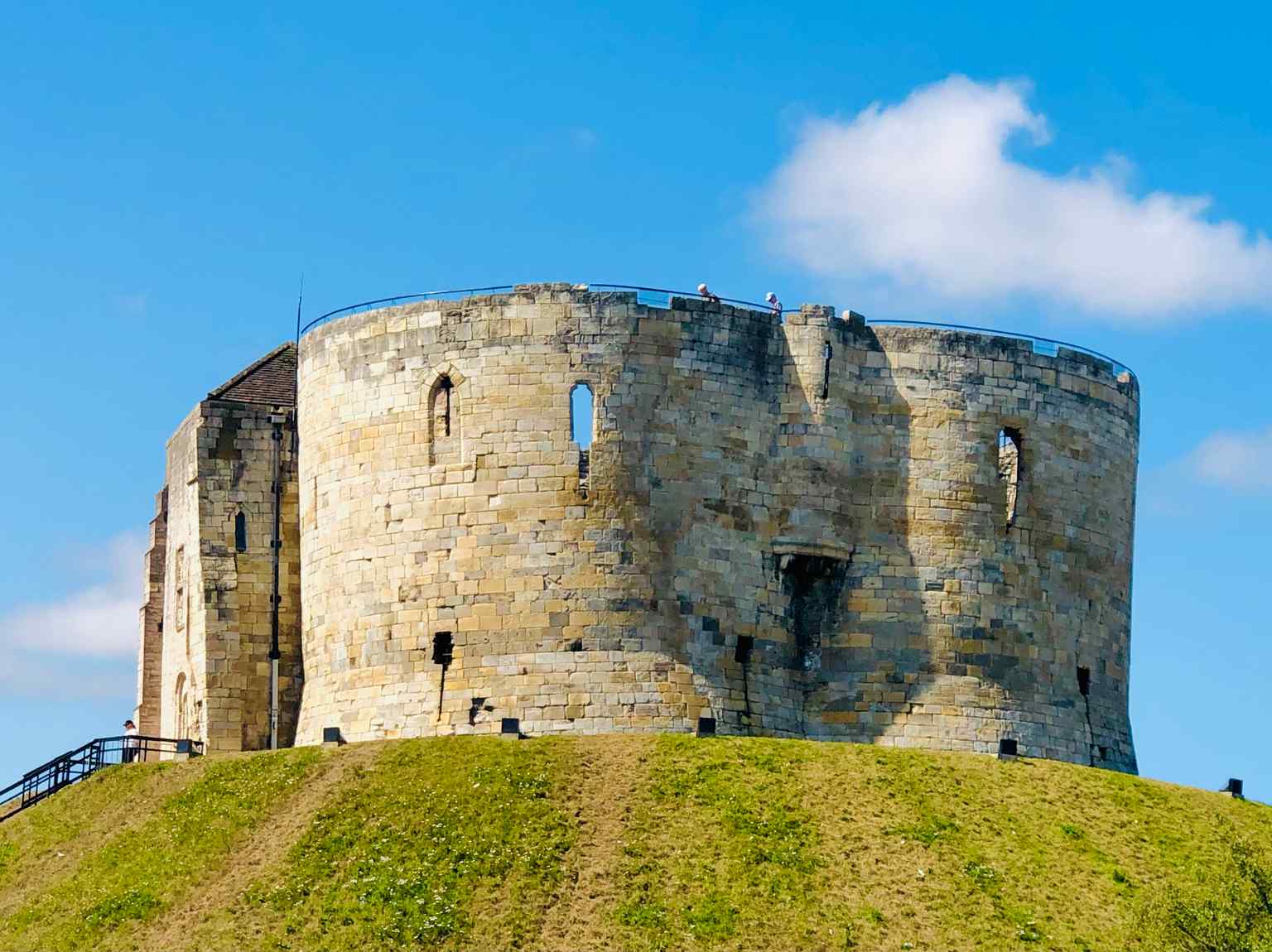
The tower was later rebuilt in the rare, four-lobed stone shape you see today, known as a quatrefoil. Centuries later, during the English Civil War in the sixteen forties, this fortress became the northern capital for Royalist forces loyal to King Charles the First. They strengthened the walls for heavy cannons and endured a brutal siege by over thirty thousand Parliamentary soldiers, holding out fiercely for months before eventually surrendering. The ruinous state we see now came in sixteen eighty four when a massive explosion blew out the interior. Officially, it was an accident from a ceremonial cannon salute. But the locals, who absolutely despised the cruel military garrison living inside, noted that not a single soldier was hurt, and many had conveniently moved their personal belongings out just hours before. The garrison basically blew up their own hated headquarters to escape their miserable posting.
As our tour comes to a close, take a moment to look out over the ancient rooftops. Think about the incredible, unyielding spirit woven into every stone and street you have explored on this journey. If you want to explore the tower's interior and see the new roof deck, the site is open daily until five in the evening. Thank you for walking with me, and enjoy the rest of your time in this magnificent city.






