
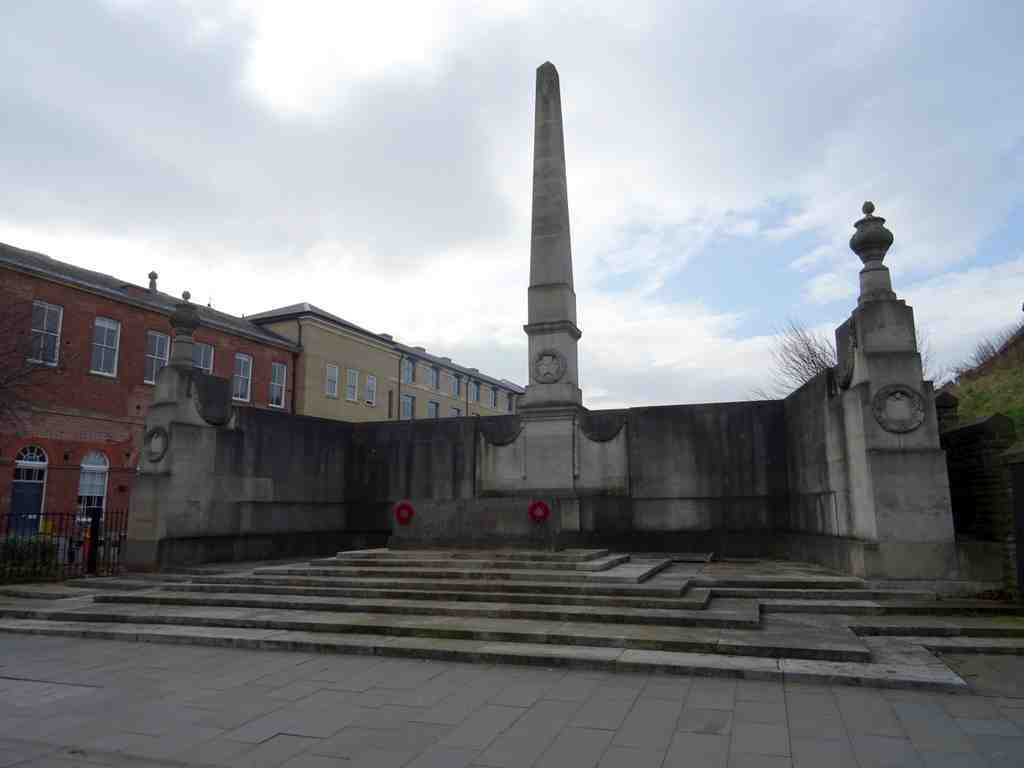
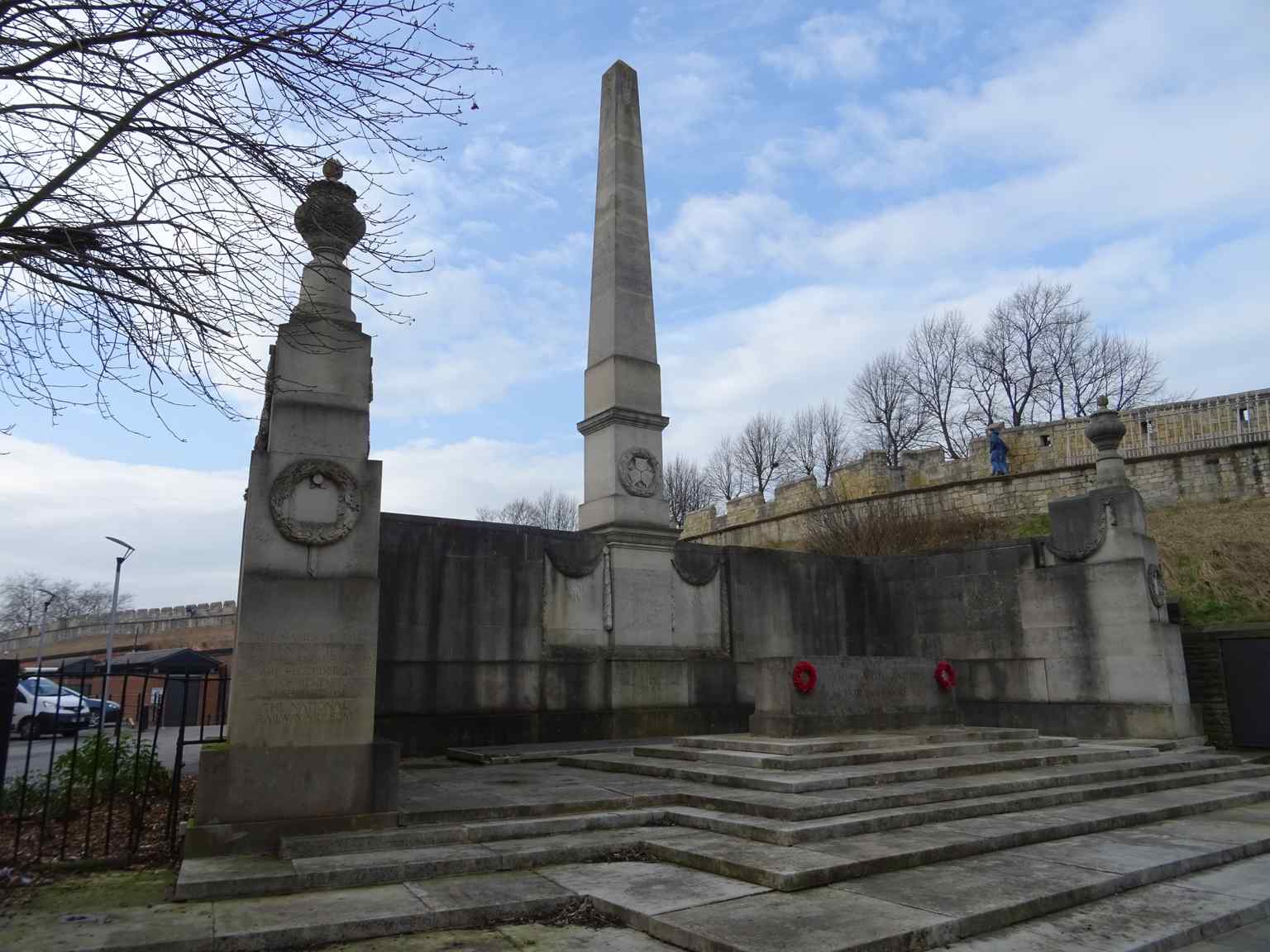
Look directly ahead for a massive, pale Portland limestone structure, featuring a soaring central obelisk rising from a three-sided screen wall flanked by carved stone urns at its outer edges. When the First World War broke out, over eighteen thousand men from the North Eastern Railway company left their jobs to fight. They formed the seventeenth Battalion of the Northumberland Fusiliers, affectionately known as the Railway Pals. This was a completely unique military experiment, as it was the only Pals Battalion-a unit made entirely of friends and colleagues enlisting together-raised by a single commercial company during the entire war. To honor the staggering loss of over two thousand of those men, the company commissioned the renowned architect Sir Edwin Lutyens. He was the mastermind behind this towering obelisk of memory, creating a solemn space for an entire community to process their profound collective grief.
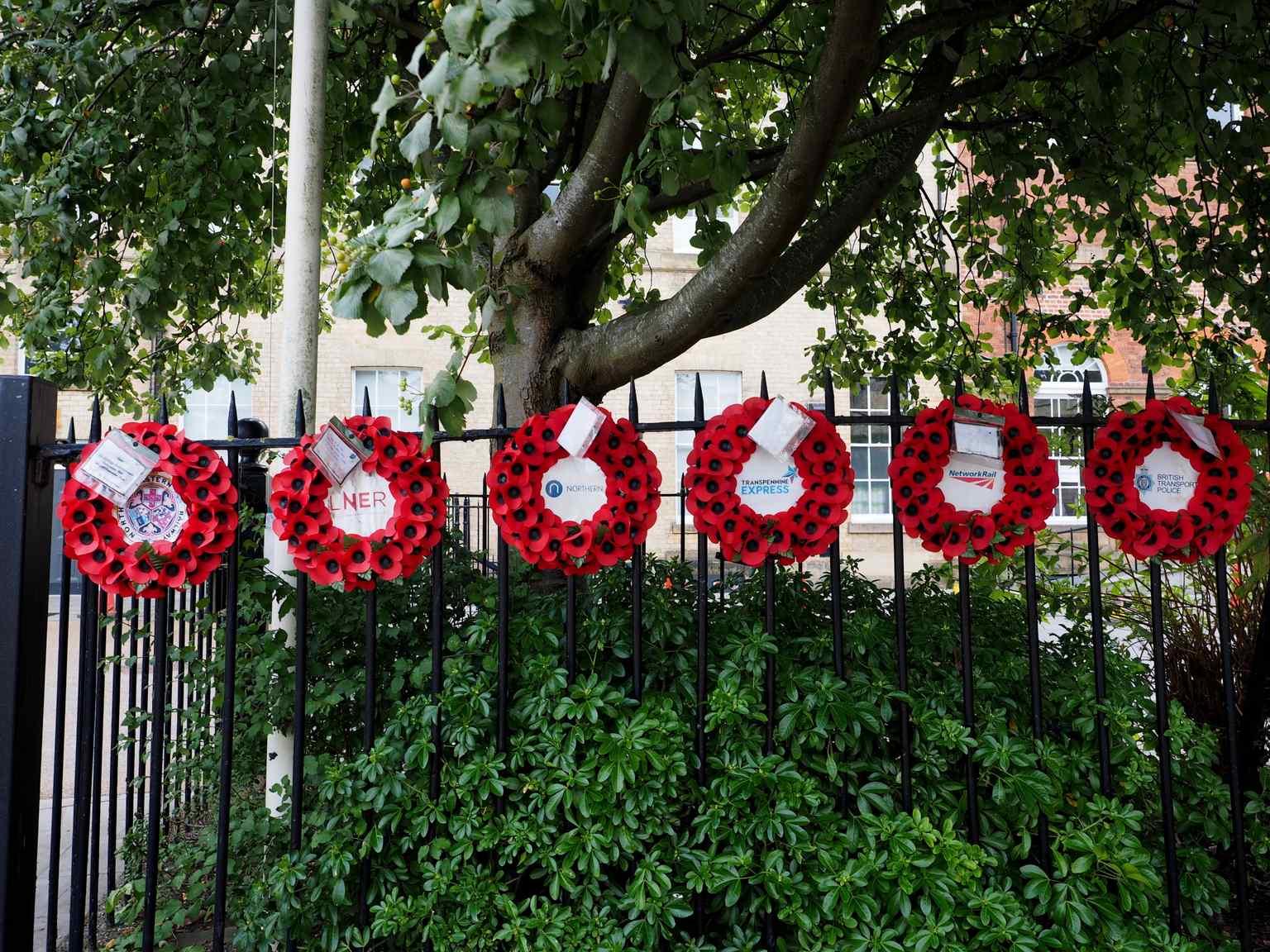
The sheer scale of this sacrifice meant the local railway network faced a massive labor shortage. With their men using their engineering skills to build railways and communication trenches on the Western Front, the company recruited thousands of women to keep the country moving. They worked as porters and engine cleaners, even causing a minor societal stir by wearing practical trousers instead of skirts in the sheds. Meanwhile, danger found the railway workers who stayed behind, too. During terrifying airship raids on York in nineteen sixteen, bombs rained down, but workers like W.T. Naylor, a local bricklayer, bravely rushed into the fires to save lives. That unyielding grit, pushing forward through devastating loss and constant threat, defined this entire community.
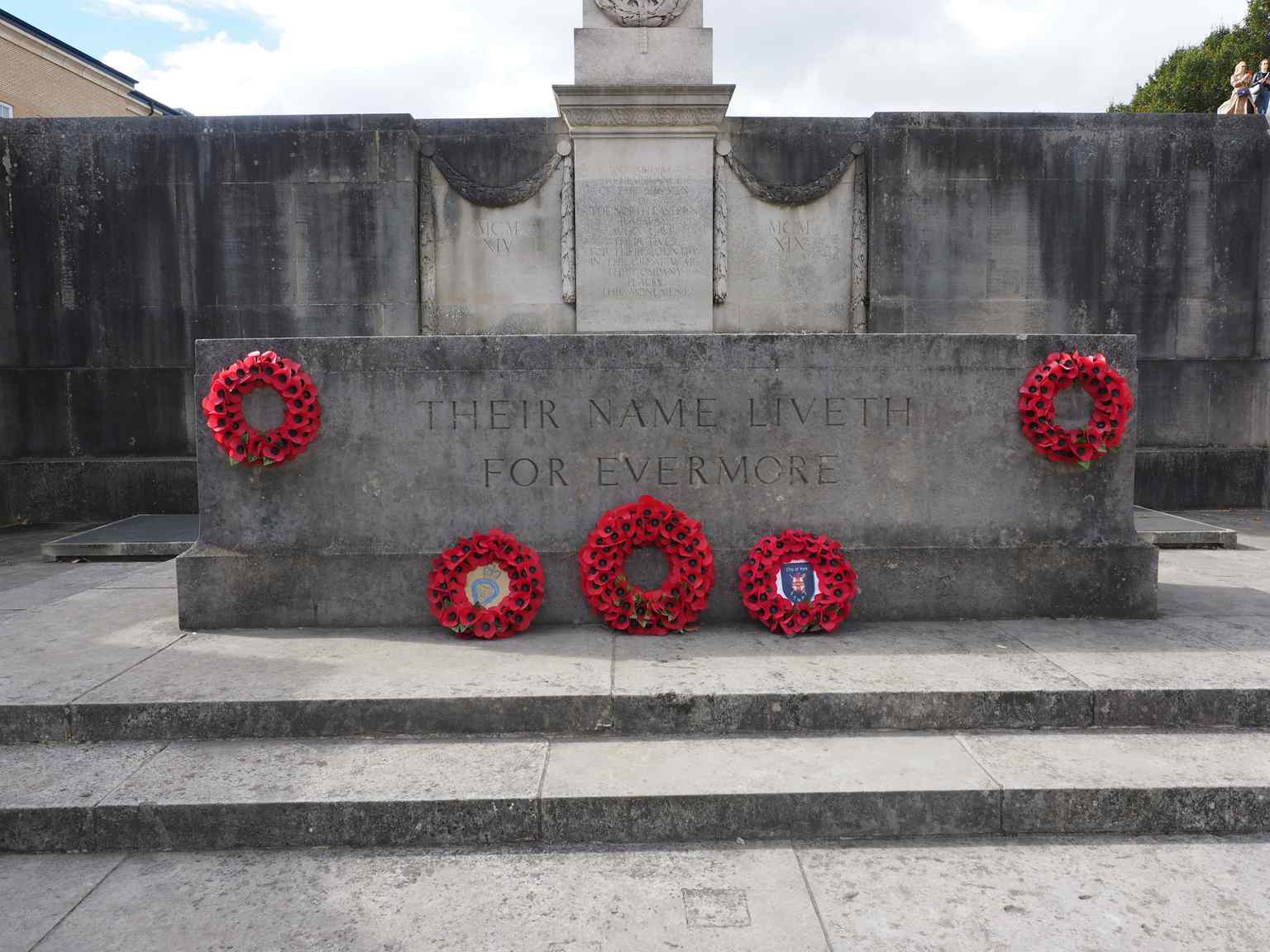
In nineteen twenty, the railway board allocated twenty thousand pounds for this monument, which is roughly one million pounds today. They wanted a grand architectural vessel for their mourning. At the center of the wall recess, you will see a large, altar-like monolith known as a Stone of Remembrance. It is deliberately simple, bearing only the words: Their Name Liveth For Evermore.
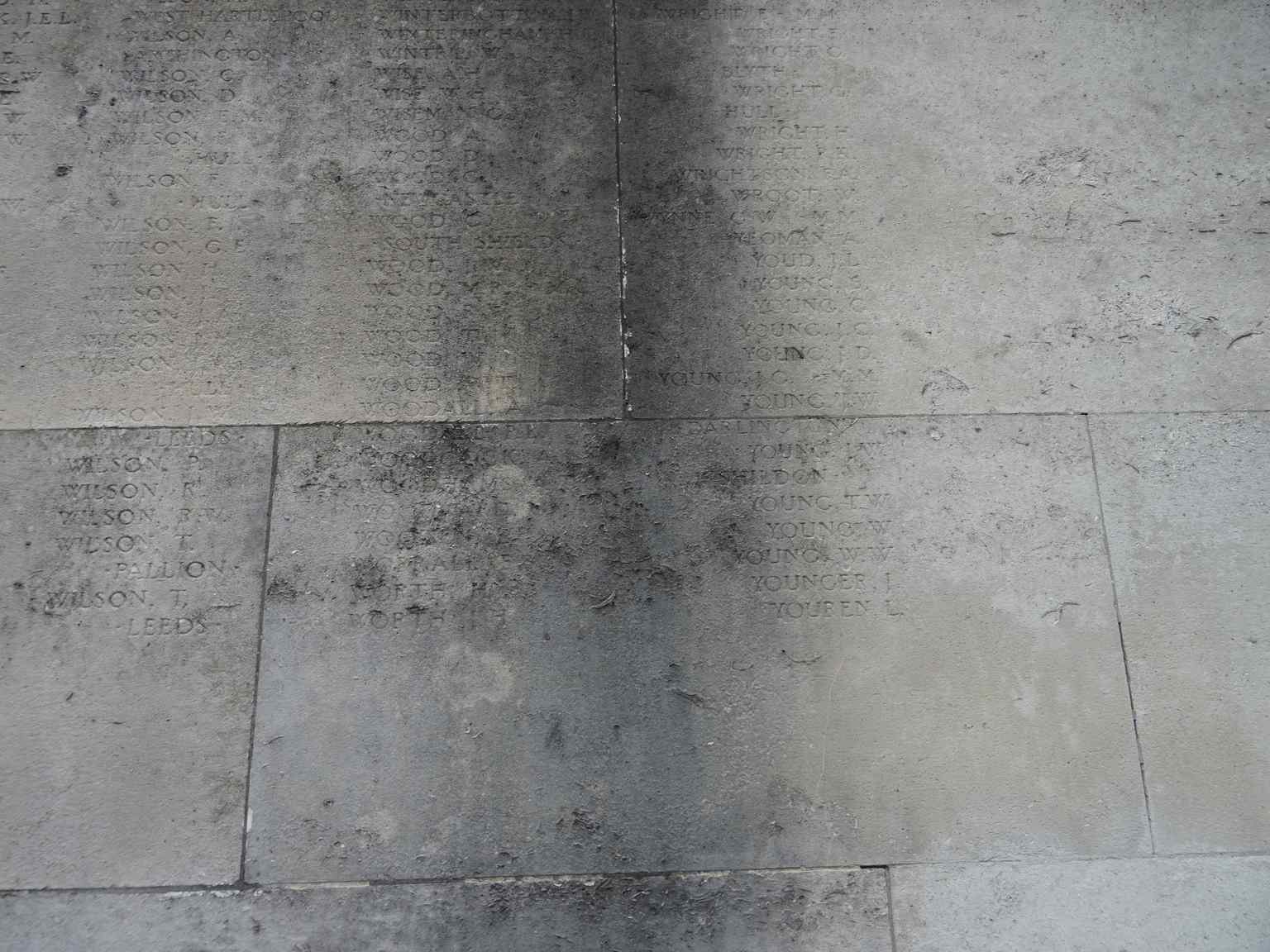
Originally, the names of the fallen were carved directly into the stone panels. But over decades, the soft limestone deteriorated. Rather than re-carving and further damaging the fragile monument, the names were preserved in a special book at the National Railway Museum.
The immense budget for this memorial actually caused quite a local scandal. The railway's funding was ten times larger than the budget for the official city memorial, sparking fears that this monument would completely overshadow the city's tribute, and the tension over where to place them both dragged on for years. Since this public space is open twenty four hours a day, you can always return to reflect quietly. For now, let us take a three minute walk to see exactly how that local political drama played out, as we head over to the York City War Memorial next.






