AudaTours logoAudaTours

York Audio Tour: Echoes of Ages from Vikings to Victories

Audio guide15 stops

Look closer at York’s ancient skyline and you’ll spot memorials etched with sorrow, a tower that survived fire and betrayal, and stone sentinels hiding tales of rebellion and rivalry. This self-guided audio tour winds through streets where scandal, heroism, protest, and politics shaped a city known for both pageantry and pain—inviting discovery far beyond the usual guidebook stories. Which city monument nearly sparked a civil war between two rival boards before its very first stone was set? What tragedy unfolded within the castle walls so shocking it still echoes in the city’s collective memory? Why did York’s grandest architect refuse to budge, even from half a world away? Move from the hush of solemn gardens to the battered pride of a centuries-old keep as hidden dramas peel back the layers of York’s storied heart. New secrets are always waiting on the next corner. Press play and see York’s shadows come alive where history is carved in every step.

Tour preview

map

About this tour

  • schedule
    Duration 40–60 minsGo at your own pace
  • straighten
    4.1 km walking routeFollow the guided path
  • location_on
  • wifi_off
    Works offlineDownload once, use anywhere
  • all_inclusive
    Lifetime accessReplay anytime, forever
  • location_on
    Starts at North Eastern Railway War Memorial

Stops on this tour

  1. If you’re looking for the North Eastern Railway War Memorial, just keep your eyes peeled for a tall stone obelisk rising from a three-sided wall, flanked by decorative urns and a…Read moreShow less

    If you’re looking for the North Eastern Railway War Memorial, just keep your eyes peeled for a tall stone obelisk rising from a three-sided wall, flanked by decorative urns and a set of wide steps-it's tucked right next to York’s ancient city walls, almost like it’s guarding the entrance to another era. Now, let’s take a step back in time together-imagine it’s the early 1920s, and York is bustling with change after the First World War. The railway whistles echo through the air, mixing with voices of thousands who work for the North Eastern Railway, one of the north’s proudest companies. Over 18,000 railway employees went off to fight as soldiers, and by the time the Great War ended, more than 2,200 of them never came home. The city was still echoing with loss from Zeppelin raids, bombardments at the coast, and the tragic sinking of the railway tug Stranton. York, in those years, bore scars-both on its skyline and in its hearts. To honour its fallen, the North Eastern Railway board wanted a memorial-but not just any memorial! They picked the legendary architect Sir Edwin Lutyens, sort of a rock star of memorial design in his day. You might know his most famous work, The Cenotaph in London, where the whole country still gathers each Remembrance Sunday. Lutyens was tasked with creating something “ornamental, not utilitarian.” I suppose, if you’re spending £20,000-in 1920s money, mind!-you expect something more inspiring than a garden bench. But, as with any good story, drama soon arrived. The city of York was also planning its own war memorial, just down the road. Both-believe it or not!-hired Lutyens. There they were, two would-be neighbours, with one memorial planned to be ten times the size and budget of the other. Some folks worried the railway memorial would look down its mighty obelisk nose at the city’s more modest tribute. They fussed over location, too: both plans would touch York’s ancient city walls. Enter protests-one city councillor fumed that visitors from the train station would see the railway’s memorial first. The local historical society turned up the heat, saying the project would be like “defacing a sacred emblem” if it damaged the old ramparts. At one point, in a move right out of an engineer’s playbook, the railway built a full-sized wooden copy just so everyone could argue in person. After heated debates and even Lutyens refusing changes by cable from India-proving even famous architects are stubborn-the plans were tweaked. The railway’s memorial shuffled politely away from the wall, and the city’s memorial was moved just outside the gates. In a gesture of goodwill (and maybe a sigh of relief), the North Eastern Railway donated the patch of land for the city’s monument, keeping that historic relationship on the rails, so to speak. And so, in 1924, the real stone memorial you see now was unveiled in front of a crowd thousands strong. Along came uniformed sentries, dignitaries, and families-all standing silent while Field Marshal Lord Plumer revealed the finished tribute. Edward Grey, the NER board member and former Foreign Secretary, moved hearts with stories of families shattered by war-of old friends who’d lost only sons. The moment was thick with both pride and grief, punctuated by the sounding of the “Last Post,” as if the city itself paused for breath. If you look closely, you’ll spot intricate wreaths and the proud NER coat of arms carved in stone. The wall was once inscribed with every name of the lost-nearly 2,800 by the end of the Second World War. Although the wind and rain have faded some of those names, they live on both in memory and in a book held by the National Railway Museum. The memorial is now Grade II* listed-English Heritage’s way of saying, “Hands off!” Only about five percent of listed buildings get this extra level of protection. In 2015, it was officially recognised as part of the national collection of Lutyens memorials, joining an exclusive club of the country’s greatest monuments. And just recently, for its 100th birthday, the monument got a spa day: low-pressure, high-temperature steam to gently wash the years away-like giving it a warm bath after a century in the English weather! So, as you stand here, listen for the echo of footsteps and train whistles, and maybe picture the sea of faces, proud and mourning, who once gathered before this very stone. It’s more than just rock and carving-it’s a tale of heroism, loss, and a city finding its way to remember, together. Now, ready to roll on to the next stop? I promise, no more architecture debates-probably! If you're curious about the background, inception or the design, the chat section below is the perfect place to seek clarification.

    Open dedicated page →
  2. To spot the York City War Memorial, look straight ahead-it's the tall, light-coloured stone cross rising from a broad set of steps right at the centre of a quiet garden, framed by…Read moreShow less

    To spot the York City War Memorial, look straight ahead-it's the tall, light-coloured stone cross rising from a broad set of steps right at the centre of a quiet garden, framed by rows of trees and just across from the river. Now, picture yourself back in the years after the First World War. York, like every city and village across Britain, was trying to cope with the pain of more than a million lives lost-a wave of grief so heavy you could almost feel it pressing on the stones beneath your feet. When the war ended, people all over town began to argue: Should the memory of those lost be carved in stone, or should it take the form of something useful-a new bridge, a hospital, maybe even homes for widows and orphans? Passions were high, and the debates went on for months. At one point, the city council was juggling ideas for schools, bridges, hospitals, and even a new city hall, with each idea hotly contested over countless cups of strong Yorkshire tea. Finally, in a crowded town hall meeting in January 1920, crowded with folks of all ages, someone said, “Let’s just build a monument so we always have somewhere to remember.” The room grew quiet, and, with a sense of relief that you could almost scoop up in a bucket, everyone agreed: a monument it would be. With that decision done, the committee hired a name that was already practically famous: Sir Edwin Lutyens, the very man behind London’s Cenotaph and the mighty Thiepval Memorial in France. He visited York (probably dodging the odd pigeon or two) and strolled through nine possible locations. Believe it or not, his first choice was a former cholera burial ground-just the place for contemplating life and death, I suppose-but the committee picked the old moat by Lendal Bridge instead. Lutyens drew up a grand design: imagine a Stone of Remembrance perched high atop three steps, a bit like an altar you’d see in a vast cathedral, only outside and exposed to the Yorkshire wind. The Ancient Monuments Board gave its blessing. And yet, just as sausage and mash can’t always please everybody, the plan still didn’t sit well with everyone. Local history buffs thought it clashed with York’s ancient walls; others worried about the shadows cast by a separate railway memorial, whose budget was ten times larger-talk about “keeping up with the Joneses!” After more debates (and likely some grumpy letters in the newspaper), the committee scrapped the site, returning to Leeman Road, just outside the city walls, on land kindly donated by the railway company. As the money ran short, Lutyens’ grand vision for both a cross and a stone was trimmed back to just the cross you see now, all 33 feet of Portland stone, chiselled with precision and standing proud as a lozenge-shaped shaft. Its only decorations are some simple, chamfered arms forming a cross-silent, stark, but full of meaning. Resting on four uneven blocks, atop broad, low steps, it bears few words: “TO THE CITIZENS OF YORK 1914 - 1918, 1939 - 1945” and on the other side: “THEIR NAME LIVETH FOR EVERMORE.” I sometimes imagine a soldier tracing those words with a finger, thinking of old friends. The big day came in summer 1925, under a sky that couldn't quite decide if it wanted to drizzle or shine. Crowds gathered as Prince Albert, the Duke of York-who’d later become King George VI-unveiled the memorial, while his duchess unveiled a window in nearby York Minster dedicated to the women lost in war. The archbishop’s prayers drifted over the crowd, mingling with the scent of grass and stone. As you stand here, imagine the sense of relief, pride, and sorrow-the memorial was finally finished, benches were added with the last of the funds, and in the shade of the cross, York’s people could finally sit, remember, and hope for peace. Today, this calming garden and its striking memorial aren’t just stone and grass. They’re a gathering place, a reminder, and-if you listen closely on a quiet morning, maybe a whisper of all those old debates, now settled into gentle respect. So there it stands, not just a monument, but a piece of York’s heart, watching over the city just as faithfully as it has for nearly a hundred years. Not too shabby for a stone cross… and not a bad reason to take a quiet moment here before we head off to the next adventure.

    Open dedicated page →
  3. Straight ahead, you’ll spot a sturdy stone tower perched like a crown atop a steep, grassy hill, with a long flight of steps zig-zagging up to its arched entrance-if you look up,…Read moreShow less

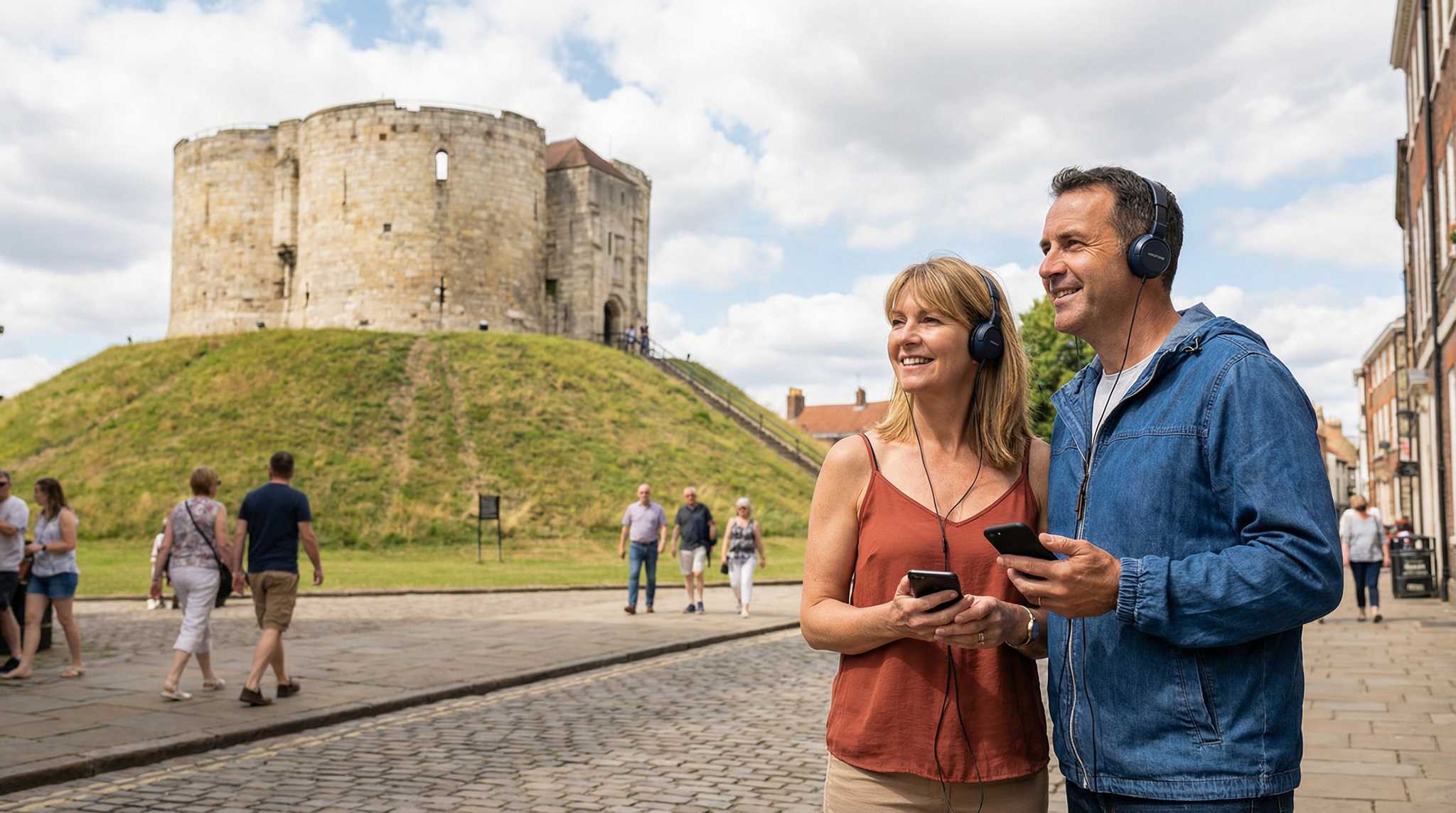
    Straight ahead, you’ll spot a sturdy stone tower perched like a crown atop a steep, grassy hill, with a long flight of steps zig-zagging up to its arched entrance-if you look up, you can’t miss the solid, round shape of Clifford’s Tower watching over York. Welcome to York Castle! Imagine you’re standing where Vikings, knights, rebels, royals, and, yes, a few unhappy prisoners once roamed. This massive stone keep in front of you has a history as twisty as the steps leading up to it. Let’s wind the clock back-way back-to 1068, just after William the Conqueror stomped into York. He wasted no time throwing up a wooden fort, bulldozing hundreds of homes to build a castle that shouted, “I’m in charge now!” The locals weren’t thrilled, and the Vikings teamed up with some rebels for a fiery attack that nearly wiped the place off the map. But William, not known for subtlety, came back with an even bigger plan-double the castles, extra moats, and a shimmering man-made lake called the King’s Pool that was surely a royal pain for anyone wearing wet socks. Fast forward to 1190, and York Castle sees one of its darkest days. Afraid and surrounded, the city’s Jewish community took shelter in the wooden keep. What happened next was tragic-a mob and betrayal led to a heartbreaking end for over 150 men, women, and children, a story that should never be forgotten. Standing here, you might imagine the tension, the flicker of flames, and the heavy silence afterward. Not long after, the literal castle rose from the ashes again-but this time in stone! King Henry III wanted it to impress and intimidate, so he went all out: four round towers shaped like a four-leaf clover, thick walls, loopholes for archers, and a neat little chapel doubling as a security checkpoint for the king. Clifford’s Tower, as it came to be called centuries later, became the go-to spot for everything-royal visits, minting shiny coins, holding prisoners (who, let’s be honest, probably never left a five-star review), and running the law courts. During the Scottish wars, the king moved his entire administration here-you could say London was on holiday and York was the temp headquarters. Over time, York Castle branched out: it hosted daring prison escapes, grim executions, and law courts that rivaled Westminster itself. And like any old house, it needed constant repairs-subsiding ground, cracked towers, and, once, a gale that blew the king’s rooms right off the motte! By the Tudor and Elizabethan ages, the place was more about grim justice than defense-traitors met their fate at the top of Clifford’s Tower, and a few cunning “castlekeepers” even tried selling off the stones when nobody was looking. Then, in the 1600s, along came the English Civil War. The Royalists turned the castle into their northern capital; Parliament besieged York for months. The walls shook with cannon fire, the city burned, and legends say a “friendly” explosion in 1684-possibly sabotage-blew the guts out of Clifford’s Tower, giving it the ruined, pink-tinged look you see today. (The garrison all managed to move their belongings beforehand... coincidence? Hmmm.) By the 1700s and 1800s, crime and punishment took over-grand neoclassical courthouses sprang up, new prisons adopted the latest in gloomy architecture, and the castle mills puffed smoke that made prisoners grumble louder than the guards. The “Eye of the Ridings,” once a grassy circle for electing York’s MPs and a stage for lively executions, eventually became more peaceful-unless you count the occasional flock of noisy geese. In the twentieth century, York finally said goodbye to its last prisoners, demolished the forbidding jail, tidied up the grounds, and turned Clifford’s Tower into a symbol of resilience. Today, you might hear tourists’ laughter where prisoners once groaned, and if you listen closely, perhaps an echo of the past-royal decrees, clangs of swords, and the uneasy hush before the next chapter in York’s never-dull story. Standing here now, you’re looking at nearly a thousand years of ambition, tragedy, and intrigue-trust me, this old tower has enough tales to fill its moat. And if you’re feeling brave, take those steps up: at the top, you’ll see all of York laid out, just as conquerors, kings, and some very nervous prisoners once did!

    Open dedicated page →
Show 12 more stopsShow fewer stopsexpand_moreexpand_less
  1. York Castle Museum
    4

    York Castle Museum

    Buy tour to unlock all 19 tracks
    To spot the York Castle Museum, look straight ahead for a grand, sand-coloured building with tall columns, arched windows, and a flag fluttering above its central…Read moreShow less

    To spot the York Castle Museum, look straight ahead for a grand, sand-coloured building with tall columns, arched windows, and a flag fluttering above its central portico. Welcome to York Castle Museum! Imagine yourself stepping into an old prison yard, the stone echoing beneath your feet and the distant shouts of former inmates still swirling in the Yorkshire air. This museum isn’t just a building-it’s a patchwork quilt of lives, stories, and even a bit of mischief woven right into York’s ancient heart. The museum stands where William the Conqueror plonked down a mighty castle back in 1068, daring anyone to challenge him, but today’s structure is a little less medieval and a lot more inviting! Now, let me paint a picture: in the early 1700s, before beanbags and video games, this impressive building was actually a prison for debtors-yes, people who owed money got sent here! They built it from old Tadcaster limestone, stacking the great blocks together to form these imposing walls. The central part of the building is capped with a neat cupola and clock, and if you look closely, you’ll see traces of its grim past, especially inside where notorious characters like Dick Turpin once paced in their cells, hearts pounding as they waited to face the judge. A bit more dramatic than being late with your rent, eh? The real magic of the museum started in 1938, thanks to a chap named John Kirk, a country doctor with a serious love for all things old and curious. He collected "bygones"-things people used to use, from hats and hairbrushes to more peculiar knick-knacks, all stuffed into boxes around his house! When York finally agreed to display his collection, the dusty old Female Prison, just across the bailey, was ready for a new lease on life. They even knocked down walls to join it to the Debtors’ Prison, linking the two buildings forever. Now imagine, just before World War II, a young woman named Violet Rodgers began working as Deputy Curator. When John Kirk passed away, Violet took over and steered the museum through the dark years of the war. Faint air raid sirens sometimes drifted in from the city, but inside, visitors could handle the historic treasures and imagine life long before iPhones existed. In the years after the war, the museum grew, adding quirky spaces like the Edwardian Half Moon Court and even moving an entire flour mill-Raindale Mill-from the windswept North York Moors to the grounds out back. You can almost hear the grind of millstones echoing through the gardens on a quiet afternoon. But wait, before you dash off, let’s walk together down the museum’s most magical lane-Kirkgate, a full Victorian street complete with shops, cobbles, and maybe even the ghost of a stern schoolmistress! In 2012, they made the experience even richer, showing not just the shiny shopfronts, but the tough back alleys and shadowy corners where life’s struggles played out. The York Castle Museum adapts with the times-surviving bomb threats, budget woes, and even the recent attack of a rare roofing material called RAAC, which closed part of the site in 2023-honestly, if these walls could talk, they might ask for a holiday! Yet through it all, the museum keeps reinventing itself, hosting playful and powerful exhibitions about toys, fashion, the First World War, even the heartbreak of broken relationships. So as you stand here, maybe feeling the wind tug at your collar, remember: these stones have witnessed prisoners’ dreams, doctor’s ambitions, children’s laughter, and Yorkshire’s stubborn resilience. If you listen closely, you might even catch a whisper of the past telling you, “History isn’t just in books; it’s all around you-just waiting for someone curious enough to look.” Shall we see what else York is hiding? Interested in a deeper dive into the buildings, curators or the awards? Join me in the chat section for an insightful conversation.

    Open dedicated page →
  2. location_on
    5

    Clifford's Tower, York

    Buy tour to unlock all 19 tracks
    If you look to your right, you’ll spot a sturdy red-brick building with crisp white stone frames around its windows and a great big slate roof-it’s not flashy, but if you see a…Read moreShow less

    If you look to your right, you’ll spot a sturdy red-brick building with crisp white stone frames around its windows and a great big slate roof-it’s not flashy, but if you see a sign for the York Army Museum above the door, you’ve landed in the right place. Welcome to the Tower Street drill hall, where history likes to march right up to you-in neat, disciplined rows, of course! Just picture it: outside, the clang of boots on the cobbles, the distant holler of a drill sergeant, and inside these walls, over a century’s worth of shouts, stories, and secrets. The year is 1885, and this building doesn’t just whisper history-it shouts it. Originally, it was the nerve center for the artillery volunteers, men who stood ready in their bold uniforms, braced for anything from the roar of cannon to the threat of invasion (or maybe just a wayward ferret in training drills-hey, every regiment has its legend). As decades rolled by, the drill hall played an endless symphony of military change. Imagine the uniforms shifting in style… khaki jackets giving way to crisp new kit, names being swapped faster than a game of musical chairs: from the 9th Medium Brigade to the 54th, from the Yorkshire Hussars to the grand Queen’s Own Yorkshire Yeomanry. At one point, even the horses protested, demanding fancier stables-a rumor, but who’s checking? By 1958, like a retiring general, the hall found a new purpose. It became the headquarters for the Prince of Wales’s Own Regiment of Yorkshire, and from 2006, for the proud Yorkshire Regiment itself. But that’s not all! In 1984, these old brick walls decided to show their stories to the world and became the York Army Museum-home to dazzling medals, battered boots, and enough tales of courage to fill every last nook. So while you’re standing here, close your eyes… Can you hear it? The echo of parades, the rattle of swords, and yes-perhaps a ghostly trumpet or two. And don’t worry, the only thing you’re likely to battle here is a tough army quiz inside the museum. Shall we march on?

    Open dedicated page →
  3. location_on
    6

    JORVIK Viking Centre

    Buy tour to unlock all 19 tracks
    To spot the Jorvik Viking Centre, look for a row of large, arched windows and doorways built into a reddish-brown brick building, with banners above the entrance announcing…Read moreShow less

    To spot the Jorvik Viking Centre, look for a row of large, arched windows and doorways built into a reddish-brown brick building, with banners above the entrance announcing “JORVIK” and often a lively line of visitors stretching out front-if you see people queuing under those signs, you’re in the right place! Welcome to the wild world of the Jorvik Viking Centre! Imagine you’re standing in a spot where, over a thousand years ago, Vikings stomped through muddy streets, bartered in raucous markets, and occasionally got into the odd argument over a particularly feisty goat. But, let’s rewind a bit first-because the secret beneath your feet goes back much further than you might guess. In the 1850s, this very site was home to a candy factory owned by Thomas Craven. Sweet smells of boiled sugar might have filled the air back then, but fast forward a century, and the factory packed up, leaving nothing but memories-and, unknown to most, a Viking city sleeping quietly under the ground. In the late 1970s, as archaeologists from the York Archaeological Trust dug out the remains, they made discoveries that would make Indiana Jones jealous: timber houses, animal pens, Viking tools, and even-imagine this-Viking toilets. Not only did they find bones, pottery, and rusty bits of metal, but the miracle of thick, oxygen-starved clay preserved wooden planks, scraps of leather, and plant remains, all hidden for over a thousand years. Over 40,000 objects in total! Just picture it: a lost world revealed by careful hands and muddy boots. Now, the clever folks at York Archaeological Trust didn’t want to keep this treasure trove buried in books or glass cabinets. They wanted you to feel it, smell it, and maybe even shiver at the thought of stepping in something a Viking left behind. So, in 1984, they opened the Jorvik Viking Centre, named after “Jórvík,” the old Norse name for York. This isn’t any ordinary museum. Think of it as a “time warp”-when you step inside, you’re whisked away in a time capsule carriage complete with speakers in your ears, the whiff of smoked fish in your nose, and the clanking sounds of a Viking blacksmith in your head. As you ride through, dioramas spring to life with stunningly real mannequins based on both modern faces and, thanks to advanced facial reconstruction, the very skulls dug up from local Viking graves. The voices you hear might even be researchers from the University of York, speaking Old Norse-how’s that for authenticity? Don't worry, no knitting required; just gaze at pigsties, bustling marketplaces, and perhaps listen for a bit of Old Norse chatter about the price of cabbages! It’s a swirl of colors, smells, and sounds that put you right in the heart of Viking York. Over the years, the centre grew bigger and more immersive. By 2001, a massive refurbishment added high-tech magic and enough new smells to make even the hardiest Viking wrinkle their nose. The ride is now longer-16 minutes-and so full of action that even a horned helmet might spin with delight. Every detail was intensified: the heat of the forges, the cold of a stone street at dawn, the earthy stink of a Viking animal pen-no wonder it’s been called "Britain’s most popular attraction." At one point, critics grumbled about it being too much like a “pop-up book” or “Disney,” but the creators simply chuckled, saying, “We’re making history fun-if you want dull and dusty, look elsewhere!” But life isn’t all feasting and fun. In 2015, disaster struck. Floodwaters swept through York, soaking exhibits and turning the Viking settlement into a modern-day Atlantis. Luckily, the rarest relics were whisked out of harm’s way, and after intense repairs, the Centre reopened in 2017, better than ever. If you visit today, you finish your time-travel ride in September 975 AD, and then wander among 800 remarkable objects, including a brilliant replica of the famous Coppergate Helmet, found just steps from where you stand. Not only is it a must-see for all Viking fans, but it’s also the inspiration for attractions across the UK. Oh, and if you come in February, you might stumble into the annual Jorvik Viking Festival-York’s wildest week, full of re-enactments where modern Vikings, from all over the world, clang swords, shout battle cries, and celebrate the ancient festival of “Jolablot.” So take a deep breath-if you smell smoked fish, honey, or, perhaps, something unmentionable from Viking latrines, you’ll know you’re close! And as you join the swirling crowds at Jorvik’s door, just remember: history doesn’t get much more alive, or more fun, than this. Curious about the origins, 21st century or the public response? Don't hesitate to reach out in the chat section for additional details.

    Open dedicated page →
  4. York Mansion House
    7

    York Mansion House

    Buy tour to unlock all 19 tracks
    Right in front of you, you’ll spot the Mansion House by looking for a grand, early Georgian building with a bright, eye-catching red and white facade, tall elegant windows, and a…Read moreShow less

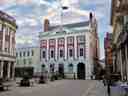
    Right in front of you, you’ll spot the Mansion House by looking for a grand, early Georgian building with a bright, eye-catching red and white facade, tall elegant windows, and a flag waving proudly from its rooftop as it stands at the heart of St Helen’s Square. Now, let’s step back through the mists of time and imagine yourself standing right where lords, ladies, and city officials once trod in buckled shoes and powdered wigs-well, I hope you haven’t brought a wig, or the wind might run off with it! The Mansion House is more than just a posh pad for the Lord Mayors of York-this place is the oldest house specifically built for a Lord Mayor anywhere in England still in use today. In fact, London’s Mansion House only came along twenty years later, so York beat the capital to it. Take that, London! Picture the bustle of St Helen’s Square in the 1700s: horses clattering, traders haggling, and the sight of masons laying the very first stone here in 1725. After seven years of careful building, this grand home rose up by 1732-so if you sense a whiff of ancient glory, it’s because these walls have seen both feasts and fiascos! The architect remains a mysterious figure, shrouded in the mists of history, though some think the stately front may be the work of William Etty. Where you stand was once the gateway to the old Common Hall Gates, opening into the medieval world of the Guildhall just behind us. There used to be a public house-imagine a rowdy tavern, laughter spilling into the square-and a chapel here, all of it swept away in 1724 to make way for the Mansion House. Still, some stories linger: today, just as in centuries gone by, every May, the proud Mayor Making ceremony is held in the old Guildhall, with the new Lord Mayor processing right into this building behind me to take up their new post. Imagine the nervous excitement-perhaps even a dropped ceremonial hat or two! The Mansion House isn’t just grand on the outside; it holds a sparkling secret within. If you could peek inside, you’d see one of the largest civic silver collections in England, now handsomely arranged in a Silver Gallery created in 2017. And no, not everything is neat goblets and pretty platters. Among the oldest treasures is a strikingly elegant gold cup and-wait for it-a silver chamber pot! That’s right, York’s high society had to answer nature’s call just like the rest of us, though theirs was probably a much more glamorous affair. These gifts arrived by the will of Marmaduke Rawdon, who likely wanted the city’s Lord Mayors to enjoy the joys of both fine dining and… more personal comforts, generation after generation. But the sparkle doesn’t end there. Civic regalia, including swords fit for an epic fantasy, rest within these walls. The Bowes Sword, wrapped once in crimson velvet adorned with pearls and precious stones, was a lavish thank-you from Sir Martin Bowes, a Lord Mayor of London with roots here in York. He was so grateful to the city for saving his childhood church, St Cuthbert’s, that he sent this glittering blade. When it took an unexpected detour to London with King James VI’s entourage in 1603, it came back missing a few jewels-proof that even in royal circles, things mysteriously go "missing" when you lend them out! There’s also the legendary Sigismund sword, which once belonged to the Holy Roman Emperor himself and came to York via a twisty route through Windsor Castle and the hands of Henry Hanslap. The sword glows with royal arms and rests in a velvet scabbard fit for a knight’s dream. As you linger here, let your imagination fill with images of oil portraits of past Lord Mayors, velvet-and-silver ceremonies, and the echoes of centuries of power and pomp. The Mansion House stands as a testament, not just to York’s authority, but its love of tradition, pageantry, and the occasional shiny chamber pot. If these walls could talk, I suspect they’d ask for another polish-and perhaps recount a story or two where silver, swords, and ceremony meet the spirited heart of York’s history.

    Open dedicated page →
  5. location_on
    8

    Museum Gardens

    Buy tour to unlock all 19 tracks
    To spot the York Museum Gardens, look for the grand stone lodge with its round turreted corner right by the gates, nestled beneath tall green trees-just beyond that entrance, the…Read moreShow less

    To spot the York Museum Gardens, look for the grand stone lodge with its round turreted corner right by the gates, nestled beneath tall green trees-just beyond that entrance, the lush gardens stretch out before you. So here you are, standing at the ancient gates, ready to wander into a world where history and nature blend together like tea and biscuits-only with fewer crumbs and a lot more Roman ruins! Step inside and imagine: it’s the early 1830s, and the Yorkshire Philosophical Society is planning something far grander than your average flower bed. They’ve been given this land by the Royal Family, with strict instructions-no slacking! There must be museum-worthy collections and a garden worthy of visitors from every corner of England. The gardenesque vision is forged by Sir John Murray Naysmith. The result? Over 10 sprawling acres along the River Ouse, with sweeping lawns, riotous beds of shrubs, and trees from every part of the world. If you listen for a moment, you can almost hear the breeze rustling the ancient oaks and the monkey puzzle tree... But it hasn’t always been this peaceful. In the early days, there was even a rather rowdy menagerie. Fanny Baines, the daughter of one of the original botanists, remembered monkeys and a bear, which one day escaped and turned these lovely gardens into a “bear-bones” adventure! Legend has it the Keeper of the Yorkshire Museum and a reverend had to sprint for cover, locking themselves in an outbuilding, till the bear was sent off to London. No wonder they decided to stick to squirrels and birds after that. Today, if you look carefully, you’ll see song thrushes, robins, wood pigeons, and, until quite recently, descendants of the resident peacocks strutting about with more pride than a Roman legionary. Now, if you’re thinking history here is just for the plants, think again! Walk a little farther and you’ll stumble on the weathered stone of the Multangular Tower, a survivor from Roman Eboracum, built nearly two thousand years ago. Listen for the ghostly echo of a Roman soldier calling the watch-. And not far from there, the medieval ruins of St Mary’s Abbey rise with their great arches and intricate carvings, still visible despite centuries of storms and the ambitious stone thieves of York. During the abbey’s heyday, it was the wealthiest monastery in the north; monks walked these paths, and on market days, the poor queued up for alms at the lodge. The Victorians adored these gardens too. By the 1850s, they were the pride of York, packed with visitors hoping to catch sight of grand exotic trees, or perhaps Queen Victoria herself, who popped by in 1835. There was a swimming bath, which, with a dash of Yorkshire chill, must have been quite bracing! But the magic doesn’t stop outdoors. The spectacular Yorkshire Museum sits at the heart of the Gardens, one of Britain’s first purpose-built museums, showcasing ancient relics, Roman coffins, and even the bones of a beast called the great auk. The adjacent observatory, with its tilting roof and vintage telescope, is Yorkshire’s oldest, and once set the time for the whole city. Not bad for a place where you can watch birds, stargaze, and step through 2,000 years of history-all before lunch! Every summer, the Gardens fill with laughter, music, and a flair for drama-with open-air theatre, music festivals, and even Viking festivals where “warriors” swing (foam) axes beneath the abbey ruins. It’s said that not even the Romans could have put on such a display. If you’re especially lucky, you might catch a military band marching in for a roaring 21-gun salute on a royal occasion. So, as you walk these lawns and weave between roses, ruins, and curious squirrels, remember that every path here is layered with secret stories-Roman soldiers, medieval monks, runaway bears, star-gazing scientists, and summer festival goers, all treading this same ground before you. Welcome to the York Museum Gardens: living history, blooming all year round! If you're keen on discovering more about the description, events or the buildings, head down to the chat section and engage with me.

    Open dedicated page →
  6. St Olave's Church
    9

    St Olave's Church

    Buy tour to unlock all 19 tracks
    To spot St Olave’s Church, look for a cozy stone building with a high, arched entrance and pointed stained glass windows peeking above the sturdy Abbey walls, right along the…Read moreShow less

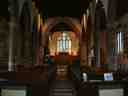
    To spot St Olave’s Church, look for a cozy stone building with a high, arched entrance and pointed stained glass windows peeking above the sturdy Abbey walls, right along the quiet street of Marygate. Here we are, just outside St Olave’s Church-pronounced ‘Olive,’ but don’t expect to find it on a pizza. Now, imagine for a moment the year is 1055. The sound of hammers rings out as builders raise this church right beside the grand walls of St Mary’s Abbey. The church takes pride in being the first ever dedicated to St Olaf, the axe-wielding, seafaring patron saint of Norway. Rumor has it, if you listen closely on a cold night, you can hear the eerie creak of a Viking longship landing within these stone walls. Now, let’s take a peek at the man behind it all-Siward, Earl of Northumbria. Imagine a hulking warlord with an iron helmet, beard like a lion’s mane, who lived just around the corner, right here in Galmanho. When he passed away, he asked to be buried in his brand-new church, so it became both his gift to God and his permanent address. For over a thousand years, folks have whispered his name in awe, wondering if his spirit still keeps an eye on things. Over the centuries, St Olave’s took quite a beating. Wars thundered outside its walls, the Abbey next door fell to ruins during Henry VIII’s Dissolution, and sometimes, the stone church felt more like a fortress than a place of prayer. But it always stood strong. In the 15th century, the church was mostly rebuilt, giving us those elegant pointed arches and tall pillars you see today. Drop by in the 1720s, and you’d have seen busy workers knocking windows through thick old walls once used as part of the city’s defenses. The sounds of their work must have echoed through the nave. Restorations in the Victorian era brought a fresh burst of life. The ceiling was pulled down, arches cleaned, and a splendid chancel was added. Today, this church glows with 15th-century charm. The stunning stained glass windows throw rainbows of light across ancient memorials and the polished wood of the pews, which every Sunday fill with a choir whose soaring music fills the air. St Olave’s carries quieter stories, too. It’s the burial place of Siward himself and home to the memories of artists, scholars, and warriors who once shaped York. Now, every note from the famous organ and every peal of six mighty bells reminds us: this is a church built to last-a place of peace, music, and maybe, just maybe, the odd Viking looking on with pride.

    Open dedicated page →
  7. BBC Radio York
    10

    BBC Radio York

    Buy tour to unlock all 19 tracks
    You’ve arrived right outside the world of airwaves and anecdotes: BBC Radio York! Now, take a moment-imagine the electric buzz of a busy newsroom behind those windows, the scent…Read moreShow less

    You’ve arrived right outside the world of airwaves and anecdotes: BBC Radio York! Now, take a moment-imagine the electric buzz of a busy newsroom behind those windows, the scent of coffee lingering in the studio corridors, and somewhere nearby, a presenter frantically searching for their missing notes. Welcome to Bootham, home to one of York’s best-loved voices. It all began like all great local legends do-with a pope and a sprinkle of Yorkshire unpredictability. Back in May 1982, the city was swept up in excitement as Pope John Paul II visited York. The BBC, keen not to miss a miracle, set up a makeshift radio service. For just 24 hours, the air crackled with news, music, and papal updates, a sort of magical demo run for what would become BBC Radio York. The real launch day came on July 4th, 1983, at the crack of dawn-6:30 am to be exact. Picture the original crew: John Jefferson, the first station manager; the late Tony Fish as Programme Organiser; and a team that could rival a football squad, ready to bring news, music, and Yorkshire banter to the masses. In the early years, the station’s schedule was lean-just a few hours in the morning and afternoon, with weekends barely making it to lunchtime. And during downtime? Listeners were treated to classic tunes from BBC Radio 2 unless, of course, there was a local rugby or football match-then the dial tuned in to sporting thrills, sharing moments with BBC Radio Leeds. But like all good Yorkshire puddings, BBC Radio York grew heartier with time. By the late '80s, broadcasting hours expanded. There were regional evening programs, starting rather grandly with a Saturday-night organ music show. Later, more specialist music shows took center stage, and by 1989, Yorkshire listeners were connected through an all-evening Night Network-imagine voices weaving through the region from 6 o’clock ‘til midnight. Here’s a fun bit: for a while, getting your own radio show here was trickier than finding the Dungeon’s secret passage. York’s students got there first-University Radio York, the oldest independent legal station, beat the BBC to the punch. Even Minster FM and Stray FM would follow, battling it out for bragging rights on the airwaves. But Radio York found its own voice and even became the training ground for famous faces-Victor Lewis-Smith’s cheeky show, the future Grand Tour’s Richard Hammond cracking jokes before he drove fast cars, and Jon Champion laying the groundwork for his career as a sports commentator. Through the '90s came bigger local news and heartfelt shows, then the 2000s brought in community strength, especially during times like the floods of 2000. For its live, boots-on-the-ground coverage, Radio York won the prestigious Sony Radio Academy Gold Award. During the Great Heck rail crash, their team demonstrated both speed and sensitivity, earning national recognition. There were more prizes: Gold for original journalism in 2011, best breakfast show awards, and host Jonathan Cowap getting top honors for interviews sharp enough to butter your morning toast. Of course, being a radio station isn’t just about charismatic presenters-it’s also about transmitters and technology. At one point, you could hear BBC Radio York on everything from 95.5 to 104.3 FM, Freeview TV channel 712, and even online streams via BBC Sounds. The mighty 140-foot Acklam Wold transmitter once buzzed across the Vale of York, while other transmitters reached up as far as Scarborough and down toward the Dales. For those missing their favorite show in Whitby? Sorry-BBC Radio Tees has you covered instead. But it hasn’t always been smooth sailing. At one point, decades-old studio equipment would decide it was nap time, and the station would drop off air-imagine the chaos of a Yorkshire tea round interrupted. Refurbishments were so demanding, the crew had to temporarily bunk in with their cousins at BBC Leeds, while the “BBC Bus” kept the local spirit rolling. Thankfully, the studio has had a facelift, and you won’t see cables being held together by optimism and duct tape anymore. From 6 am to 10 pm, the York studios pulse with stories, community voices, news, sports, weather reports every half-hour, and even the occasional weather forecast that dares to predict sunshine. York’s presenters-morning folks like Georgey Spanswick or witty afternoon hosts-are beloved by a loyal weekly audience of over 60,000 listeners. So, as you stand here, listen for the heartbeat of the city. Through winter storms, local victories, and joyful banter, BBC Radio York has been keeping the county company since 1983. And if you ever stumble across an old presenter muttering about “back in the day,” it’s probably just nostalgia-or maybe they’re still looking for that missing script from the launch day! Ready to delve deeper into the technical, programming or the notable former presenters? Join me in the chat section for an enriching discussion.

    Open dedicated page →
  8. location_on
    11

    Archaeology Data Service

    Buy tour to unlock all 19 tracks
    Stop right there, digital explorer! Welcome to The Archaeology Data Service-or ADS, for those of us who only dig up short names. You might be expecting ancient stones, but here…Read moreShow less

    Stop right there, digital explorer! Welcome to The Archaeology Data Service-or ADS, for those of us who only dig up short names. You might be expecting ancient stones, but here you’re standing at the frontlines of archaeology’s most daring battles: the war against “bit rot,” the digital version of crumbling ruins! I know, I know-it sounds like something out of a sci-fi horror movie: “Attack of the Pixel-Eating Bugs!” But it’s very real, and the heroes live right here in The King’s Manor at the University of York. Step back in time to the late 1990s. Imagine this: floppy disks were everywhere, people fought over dial-up modems, and archaeologists started to realize all their computer files-from excavation notes to 3D models-were more at risk than pottery left outside in Yorkshire rain. They worried these fragile files might disappear forever. So a grand team-up happened. Eight university archaeology departments, from Oxford to Newcastle, banded together like academic Avengers (no cape required). With help from the Council for British Archaeology, they sent a bold proposal to create a safe digital vault for treasures-one that would outlast dodgy hard drives and outdated file types. The mission? Build a fortress for digital relics and help archaeologists across the UK-and soon, the world-keep their discoveries safe. York became the headquarters, and in September 1996, under Professor Julian D. Richards, the ADS was born. They started with just two staff members-imagine a digital Noah’s Ark with only two crew! Their vision: give advice about preserving digital gems, and teach the whole archaeological community how not to lose their own treasures to the swirling mists of technical oblivion. Unlike dusty archives with stern librarians, the ADS is a digital world. You can’t smell old parchment, but if you listen closely, you just might hear the hum of servers working overtime to keep history alive. ADS has guarded secrets from Stonehenge to Sutton Hoo, holding the digital keys to these archaeological sites for anyone to unlock. More than just an archive, they welcome everyone, so you or I could, with a few clicks and their terms and conditions, browse the evidence from thousands of digs. Don’t worry-they just ask you not to open a shop with their finds; learning, not selling, is the motto! But it’s not all smooth stone tools and perfect pottery. Imagine when the government funding that supported their bigger partner-the Arts and Humanities Data Service-disappeared in 2008. That could’ve spelled doom! But like good archaeologists, the team dug in and found new ways to carry on, securing fresh support from the university, the European Union, and beyond. Now, their repository holds treasures like the “grey literature”-that’s 20,000+ unpublished excavation reports. Not so grey, really-it’s a goldmine for research! Ever wonder how they organize all this digital loot? With a catalogue called ArchSearch, you can explore records for every ancient monument in England, Scotland, and Wales. Feel like a detective sifting through mysteries? This is your file drawer. They even have fancy online tools: geographic search maps, interactive galleries, and all sorts of tech everyone from seasoned archaeologists to curious students can use. But ADS is not just a treasure chest; it’s also a wise old owl. They offer advice to anyone who wants to keep their digital data safe-a sort of “Guide to Good Practice” for modern Indiana Joneses. Whether you’re archiving drone pictures or storing geophysics plots, the ADS helps you do it right, with friendly tips (and maybe less whip action). And goodness, are they busy! From creating massive archives for railway builds (the Channel Tunnel Rail Link had over a hundred digs attached!) to cutting-edge collaborations with computer scientists, ADS isn’t afraid of a little dust-or a lot of data. They help map ancient rock art, test natural language processing to comb through monumental records, and even adventure underwater looking for shipwrecks with European partners. ADS’s team is an international crew now, helping mix virtual reality with ancient relics and sliding digital artifacts all the way into Europeana-the big digital museum for the continent. So, as you stand here outside The King’s Manor, in the very heart of York, picture yourself at the gates of a truly modern archive-the beating digital heart that keeps yesterday’s discoveries safe for tomorrow. It may look quiet now, but inside, a silent drama of preservation and discovery unfolds every day! If only Indiana Jones had internet like this, he’d have spent more time uploading than outrunning boulders. Onward to the next stop, brave data hunter! Intrigued by the governance, the archive or the projects? Make your way to the chat section and I'll be happy to provide further details.

    Open dedicated page →
  9. location_on
    12

    York Art Gallery

    Buy tour to unlock all 19 tracks
    Right in front of you, you’ll spot the York Art Gallery by its grand, sand-coloured stone arches and the statue of a distinguished-looking gentleman standing confidently on a…Read moreShow less

    Right in front of you, you’ll spot the York Art Gallery by its grand, sand-coloured stone arches and the statue of a distinguished-looking gentleman standing confidently on a plinth-head for the impressive triple-arched entrance and you can’t miss it! Now, imagine stepping back in time to when York was buzzing with excitement. It’s 1879, and crowds are gathering in front of this very spot, eager to see the brand-new gallery rising where once there were just gardens and old buildings. In fact, if you listen closely, you might almost hear the clatter of horse-drawn carriages and the chatter of thousands of visitors coming to see Yorkshire’s second ever Fine Art and Industrial Exhibition. The previous exhibition, back in 1866, had been so popular-over 400,000 people attended-they actually made a tidy profit. Instead of spending it on a gigantic tea party, the organisers built this gallery, aiming to encourage art and industry in the heart of York. The building itself is a bit of a patchwork of ambition and budget reality. The original architectural plans zigzagged between an Elizabethan look and a posh Italian style. In the end, neither was fully realised, but what stands before you was imagined by the York architect Edward Taylor. Look up! Instead of the grand statues that were once planned, the gallery’s façade is decorated with mosaic panels and ceramic portraits of creative York figures-including William Etty himself, whose statue stands proudly outside, probably wondering why they never did give him a snappier hat. When it first opened its doors, this place wasn’t just about admiring fine art in hushed tones. Oh no-there were art displays, noisy machinery exhibitions, and even an enormous pipe organ that filled the huge temporary exhibition hall with music. The hall itself was so massive, it lingered behind the gallery for decades, serving as a venue for raucous concerts and lively meetings until World War II. After the grand Victorian opening, the gallery became a bit of a treasure chest for art lovers, especially once York collector John Burton left more than a hundred 19th-century masterpieces. With gifts, donations, and even a school moving in for a while, the collection grew-not to mention all the summer exhibitions and the curious oddity that for years, the north wing was stacked floor-to-ceiling with the city archives! By the 1930s, the building had begun to show its age, but that didn’t stop it from getting swept up in history’s current. When the Second World War erupted, the army promptly moved in, and the gallery, like so much of York, braced itself-enduring bomb damage in the infamous Baedeker Blitz of 1942. Emerging from the war’s shadow, the gallery rediscovered its spirit of creativity. Under the energetic direction of Hans Hess and the support of societies and passionate collectors, the walls filled with British masterworks, vibrant ceramics, and the exquisite oddities you can still see today-during the swinging fifties, it even received a windfall of a hundred Old Master paintings! Of course, every art gallery needs a bit of drama, and York’s has had its fair share. Paintings stolen by cunning thieves, staff tied up in a daring armed robbery, police chases… it’s enough excitement to make even Mona Lisa smirk. But the paintings always seemed to find their way back, like wayward boomerangs-for example, a 15th-century masterpiece by a Nuremberg artist, stolen in the 1970s, only returned home in 2023 after wending its way through an auction house. As for the visitors, there have been peaks and valleys. After a grand £8 million spruce-up between 2013 and 2015, the gallery reopened with more art, brighter spaces, and even a fancy new ceramics collection (though, to be fair, there was a bit of grumbling about the return of entry fees-Yorkshire folk do love a good deal). Then came the pandemic closures, followed by joyful reopenings, more exhibitions, and recently, the decision to start charging for admission again after a free-for-all experiment went a bit sideways… which, I suppose, shows that even in the world of art, you can’t paint over every problem. Today, the gallery is a living archive of over a thousand paintings, dazzling ceramics by the great Bernard Leach and Lucie Rie, watercolours of York’s winding streets, and decorative treasures from Yorkshire potteries to distant China and Korea. Every square inch tells a story-sometimes dramatic, sometimes peaceful, and sometimes a little bit daft. So, as you stand in York’s Exhibition Square looking at the gallery and Mr Etty’s marble gaze, you’re surrounded by much more than stone and canvas: you’re part of a living, breathing tapestry of art, industry, and an endless parade of stories. Why not step inside and see what tales you’ll uncover next?

    Open dedicated page →
  10. location_on
    13

    York Oratory

    Buy tour to unlock all 19 tracks
    To spot the York Oratory, look ahead for a tall, cream-coloured church with a striking Gothic tower and three arched windows above a deeply carved doorway-like a stone crown…Read moreShow less

    To spot the York Oratory, look ahead for a tall, cream-coloured church with a striking Gothic tower and three arched windows above a deeply carved doorway-like a stone crown rising over the street, directly across from the curve in Duncombe Place. Now, as you stand before the Oratory Church of Saint Wilfrid, let’s step back in time together. Imagine the lively sounds of bustling medieval York-horses clopping on cobbles, traders calling out, church bells ringing overhead. Right here, on ground sacred for centuries, people have gathered to worship since the Middle Ages, making this church the so-called “Mother Church of York.” If buildings could talk, this one would have many tales and probably a few well-chosen hymns up its sleeve. The church itself is a masterpiece of Gothic Revival-completed in 1864, but with a history that stretches back much further. The original Saint Wilfrid’s was linked to the grand Benedictine abbey of St Mary’s. Back then, the church faced some hard times. By the late 1500s, anti-Catholic sentiment was so fierce that the old church vanished, demolished and replaced by other buildings. Faith, however, rarely gives up easily. In 1742, local Catholics revived the parish in secret, meeting quietly in a priest’s house nearby. To avoid trouble from those who disapproved, they built a hidden chapel-just imagine slipping into worship while pretending you’re on any old errand. There was a time when 700 hopeful hearts squeezed in for Mass, all careful to keep their voices low. As centuries ticked by, York changed around the church. When the city decided to build new roads and open up the area in 1859, Dean Duncombe took the chance to create Duncombe Place, the very street you’re standing on now. It became a grand entrance straight towards York Minster, with the Oratory as a proud neighbor. The current church, completed for £10,000 (quite a fortune at the time), was designed by George Goldie, whose family worshipped right here-his legacy is set in stone. Take a look at the soaring tower: 147 feet up, it appears, at first glance, as tall as the Minster itself-the kind of sneaky architectural illusion that would make a magician jealous! Only by moving past do you see which is the real giant. But it’s not all show on the outside. Step through the main door (or just peer in from here), and you’d find yourself surrounded by some of the richest Victorian carvings in the city, lavish stained glass, and sculptures that make the walls shimmer in the right light. The altar rails were crafted by the very artisan behind Windsor Castle’s Queen’s Gates, and the organ-first played in 1867-can still fill the sanctuary with music, especially after its grand restoration in 1998. Listen carefully, and you might hear the peal of ten bells up in the tower. The heavy bells date to 1938, and two lighter ones were added to make a full set. One even carries the message, “Ringers ring with one accord. Make beautiful music to praise the Lord”-a sentence with more harmony than my Uncle Nigel’s old choir ever managed. The latest, the Angelus bell “John Henry,” was installed in 2019, so the tradition continues. Worship at the Oratory is just as vibrant today. Mass is celebrated daily-sometimes in Latin, sometimes in English-and every week, voices rise in glorious choral music. Some of those voices belong to talented students holding special scholarships just to sing here. The sound can make even passers-by pause for a moment, caught by the beauty. The Oratory’s life stretches out into the city, too. Its priests live nearby in historic Petergate House, and it even cares for the shrine of Saint Margaret Clitherow over in the Shambles, a place where Catholics from around the world come in pilgrimage. So next time you pass by, look up at the carvings above the door-they’re the most detailed in all York, made by hands that hoped one day their work would become a beacon. I don’t know about you, but I think they nailed it. And if you listen closely, maybe you’ll catch the far-off echo of those secret, hopeful prayers from long ago, still drifting through the stones. If you're curious about the present church, architecture or the parish, the chat section below is the perfect place to seek clarification.

    Open dedicated page →
  11. location_on
    14

    St Michael Le Belfrey

    Buy tour to unlock all 19 tracks
    To spot St Michael le Belfrey, York, look straight ahead for a large, striking church of creamy stone with a massive arched window in the center and a small, round tower perched…Read moreShow less

    To spot St Michael le Belfrey, York, look straight ahead for a large, striking church of creamy stone with a massive arched window in the center and a small, round tower perched at the roof’s peak, directly opposite the towering York Minster. Now, as you stand right here, imagine the layers of history swirling around you like the chimes of distant bells. St Michael le Belfrey might sound like the start of a medieval riddle, but it’s actually a church with stories so juicy, even Guy Fawkes was drawn in-literally! He was baptized right inside in 1570. Little did everyone know, that wide-eyed baby would later attempt to blow up Parliament! And let’s face it, when your start in life includes a medieval church with a spectacular view of York Minster, you’re bound to feel the weight of history urging you on. This very spot has witnessed nearly every major chapter in York’s epic saga. Back in the days when King Henry VIII was a lad (well, a bit older than a lad), builders were hard at work between 1525 and 1537, raising these walls to replace an even older church from 1294. Just imagine the clanging of hammers, voices echoing in Latin, and the air thick with dust and hope. Generations before you stood right here, staring up at the intricate stonework and the sparkling jewel-toned glass now glowing in the east window-some of it dazzling survivors from the 14th century. Inside, you’d find treasures galore: a magnificent, curvy Baroque reredos from 1702, elegant memorials to the (mostly) well-behaved, and benches with poppy-heads carved so lovingly even Victorian schoolchildren could hardly make a scratch on them. There are two snaking staircases leading up to special galleries-so rare, in fact, that no church in England boasts surviving examples quite like these. Imagine the pitter-patter of tiny feet as charity school pupils climbed up in 1785, eager for their Sunday lessons, while their teachers prayed for patience! But it’s not just about the kids-adults have made their mark here in dramatic fashion too. In 1608, Christopher Levett, a fearless explorer, chose this holy place for his wedding. Perhaps because, just outside, the Roman emperor Constantine had been declared ruler in 306 AD-talk about pressure to throw a good party! And if your ears are extra sharp, you may still hear a ghostly organ note drifting through the air. The church housed a grand organ, pieced together in 1687 from leftovers of Durham Cathedral (talk about recycling!), which evolved into an enormous, thunderous beast by 1885. Unfortunately, the organ fell on hard times, battered by years of changing tastes and a stained, lime-washed case that antique lovers would call “brave”-others, “a bit of a mess.” Eventually, in 2019, the instrument was lovingly relocated to nearby St Lawrence Church, where it thrives once more. St Michael le Belfrey-now affectionately called “the Belfrey”-is still very much alive. In the 1970s, a spiritual renewal swept through, with crowds so large they had to merge with another parish just to fit everyone in. Under various lively vicars, the church became known for creative worship and the power of music-though sometimes not from the ancient organ! And oh, have there been debates. The Belfrey has embarked on a massive, multi-million-pound makeover known as the Impact Project. Plans include futuristic galleries, a new refreshment servery for coffee lovers (praise be!), and even a full-immersion baptism pool designed so everyone-including those with disabilities-can take the plunge. Not everyone is a fan: passionate arguments have swirled among heritage societies, some worrying about losing historic details while others cheer for a fresh future. You might not see evidence of all this change from outside, but the discussions inside have been far livelier than most Sunday sermons! Today, the Belfrey welcomes everyone with three services every Sunday, a legendary “Wednesday Lunchtime Service” (with lunch, of course!), and a deep commitment to creative faith and community outreach. Whether you’re here for quiet reflection, historic marvels, or to picture young Guy Fawkes (hopefully not clutching any matches), you’ve stepped into a building that balances centuries-old tradition with a restless urge to adapt. So, take a breath, listen to the faint echo of children’s shoes on old staircases, and let this remarkable church tell you its story as only York can.

    Open dedicated page →
  12. York Minster
    15

    York Minster

    Buy tour to unlock all 19 tracks
    If you’re hunting for York Minster, look up and ahead for an enormous, pale limestone cathedral soaring high above the city rooftops, crowned by its three towers and decorated…Read moreShow less

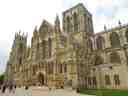
    If you’re hunting for York Minster, look up and ahead for an enormous, pale limestone cathedral soaring high above the city rooftops, crowned by its three towers and decorated with a forest of intricate stonework and pointed arches-trust me, you can’t miss it! Welcome to the mighty York Minster! Standing here, you’re about to meet not just a church, but the heart and soul of York itself-a building where kings, bishops, archbishops, rebels, and even a few accidental arsonists have all left their mark. So take a deep breath and imagine it’s the year 627; there’s no grand cathedral, just a wooden chapel put up in a hurry so a king could get baptized. That humble beginning set the stage for almost 1,400 years of drama, disaster, and splendor. As the centuries rolled by, the church on this spot changed its clothes more often than a royal at a medieval banquet. Stone buildings replaced timber, precious metals glimmered on altars, and a dazzling school and library sprang up, the envy of North Europe. But don’t get too cozy: fires, invaders, and even William the Conqueror’s wrath saw the Minster repeatedly battered and rebuilt-sometimes more “flaming cathedral” than “house of prayer.” In 1069, after a brutal rebellion, the place was torched again, earning it the sorry reputation of “St Peter’s Minster, a disgrace.” Makes you wonder if they offered a loyalty card for frequent builders! Eventually, the Normans stepped up, erecting a cathedral in dazzling white and red stone. It too tasted fire, but each time the ashes settled, York’s pride shone through-especially when, in the 13th century, a bishop named Walter de Gray decided York’s church should be just as fancy as Canterbury’s. He started a building campaign that lasted 250 years (now that’s project management!), mixing Early English, Decorated, and Perpendicular Gothic styles until this stone giant became the largest Gothic cathedral completed during the medieval period. Its heart? The Great East Window-the biggest patchwork of medieval stained glass anywhere, teeming with scenes of the Last Judgment. At sunrise, the colored light must look positively heavenly, and with over 300 panels and two million pieces of glass across the Minster, it’s a stained-glass feast for the eyes. Peek up at the north transept: you’ll see the Five Sisters Window, five towering lancets, each more than 53 feet high, casting a cool grey light. Above the grand altar, centuries ago, would have sparkled treasures and a chandelier, though sadly, those riches are gone-some lost to the English Reformation, when tombs and altars were smashed and York’s Catholic past scrubbed away. But if you’re hoping for drama, you’re in luck: during the English Civil War, Cromwell’s troops stormed the city, but Thomas Fairfax, in a rare act of kindness, saved the Minster from further ruin. The Minster suffered more trials-a notorious arson attack in 1829, then a lightning-induced fire in 1984 that sent firefighters pouring thousands of gallons onto the burning roof. Bits of glass melted, but the famous Rose Window survived, held together by stubborn lead. Restoration efforts followed, sometimes funded by TV competitions and children’s sketches, sometimes by painstaking craftspeople. In 2002, new sculptures were added round the West Door, carving Genesis stories for a modern age. Don’t forget to listen for the bells-York Minster houses Great Peter, a giant 10-ton bell, and a whole melodic troop that can ring out Beethoven or the Beatles before evensong. And, hidden in the undercroft below, you’ll find ancient stones from Roman Eboracum, a reminder that this site is layered with millennia of history. So, whether you’re marveling at mischievous gargoyles, basking in a choir’s song-or just feeling a little dizzy from all the stories-remember, York Minster isn’t just a church. It’s a living memory, full of mystery and resilience, rising skyward despite everything fate (and fire) has thrown at it. And if you listen closely as you leave, you might even catch the echo of its bells drifting out across the centuries. To expand your understanding of the architecture of the present building, consulting architects or the vaults, feel free to engage with me in the chat section below.

    Open dedicated page →

Frequently asked questions

How do I start the tour?

After purchase, download the AudaTours app and enter your redemption code. The tour will be ready to start immediately - just tap play and follow the GPS-guided route.

Do I need internet during the tour?

No! Download the tour before you start and enjoy it fully offline. Only the chat feature requires internet. We recommend downloading on WiFi to save mobile data.

Is this a guided group tour?

No - this is a self-guided audio tour. You explore independently at your own pace, with audio narration playing through your phone. No tour guide, no group, no schedule.

How long does the tour take?

Most tours take 60–90 minutes to complete, but you control the pace entirely. Pause, skip stops, or take breaks whenever you want.

What if I can't finish the tour today?

No problem! Tours have lifetime access. Pause and resume whenever you like - tomorrow, next week, or next year. Your progress is saved.

What languages are available?

All tours are available in 50+ languages. Select your preferred language when redeeming your code. Note: language cannot be changed after tour generation.

Where do I access the tour after purchase?

Download the free AudaTours app from the App Store or Google Play. Enter your redemption code (sent via email) and the tour will appear in your library, ready to download and start.

verified_user
Satisfaction guaranteed

If you don't enjoy the tour, we'll refund your purchase. Contact us at [email protected]

Checkout securely with

Apple PayGoogle PayVisaMastercardPayPal

AudaTours: Audio Tours

Entertaining, budget-friendly, self-guided walking tours

Try the app arrow_forward

Loved by travelers worldwide

format_quote This tour was such a great way to see the city. The stories were interesting without feeling too scripted, and I loved being able to explore at my own pace.
Jess
Jess
starstarstarstarstar
Tbilisi Tour arrow_forward
format_quote This was a solid way to get to know Brighton without feeling like a tourist. The narration had depth and context, but didn't overdo it.
Christoph
Christoph
starstarstarstarstar
Brighton Tour arrow_forward
format_quote Started this tour with a croissant in one hand and zero expectations. The app just vibes with you, no pressure, just you, your headphones, and some cool stories.
John
John
starstarstarstarstar
Marseille Tour arrow_forward

Unlimited Audio Tours

Unlock access to EVERY tour worldwide

0 tours·0 cities·0 countries
all_inclusive Explore Unlimited