
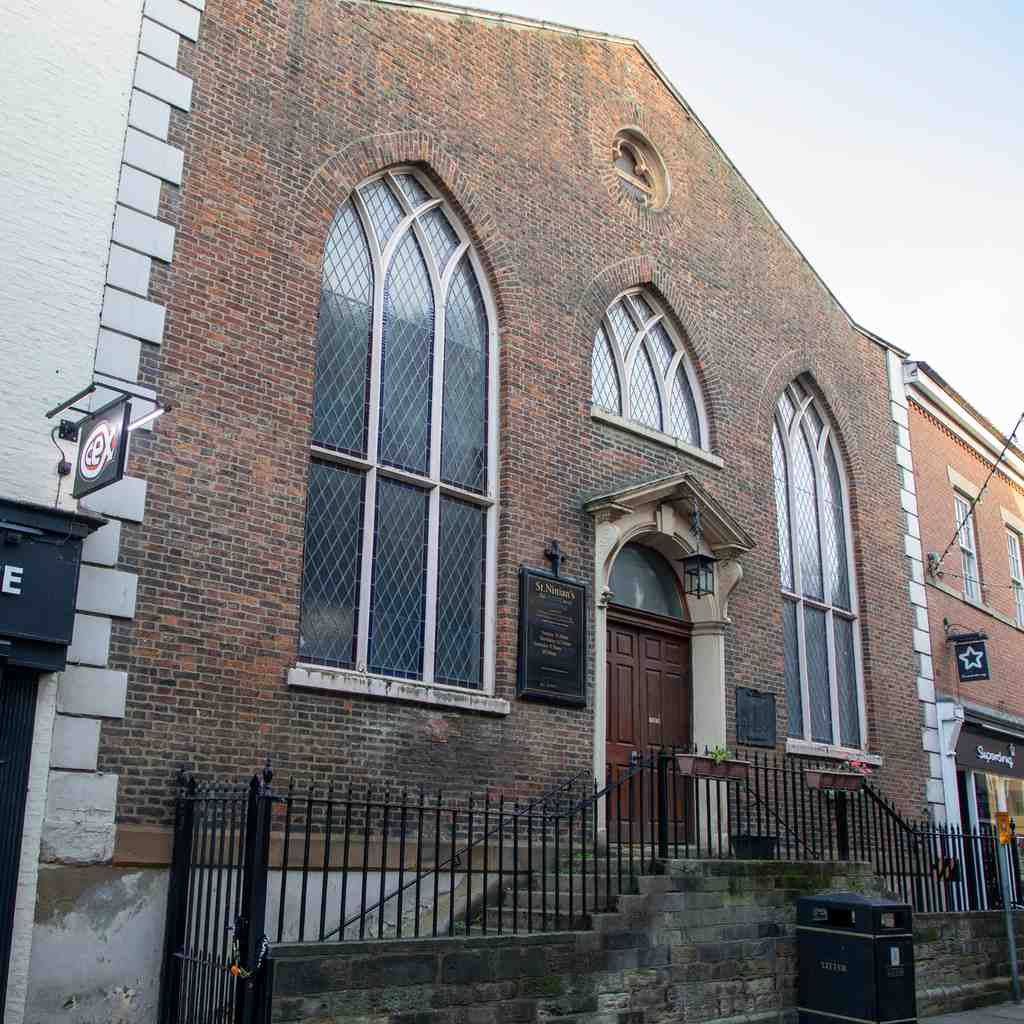
To spot St Ninian’s Church, just look to the side of Baxtergate for a grand, brown-bricked building with tall, arched windows and black wrought iron fencing up a short flight of stone steps.
Now, take a moment and let your imagination walk you back through time, right here in front of St Ninian’s Church. Picture the late 1700s, when Whitby’s shipbuilders were hammering away down by the harbor, sawdust swirling through the salty air. On days when the shipyards were quiet, these same men would haul their tools up here and lend a hand building this very chapel, using timbers as sturdy as those they shaped into Captain Cook’s world-famous ships. Just imagine the, echoing from inside as they crafted not only a church but a little slice of Whitby’s soul.
St Ninian’s isn’t your average church. It’s what they call a proprietary chapel-the only one in all of Yorkshire, and one of just a handful in England. What does that mean? Well, instead of the Church of England holding the deeds, it was the townsfolk themselves who pooled their money-thirty locals, to be exact, each shelling out £64 for their own pew, a princely sum back then. They didn’t just get a seat for Sunday service-they became part-owners! Everyone else pitched their pennies into the collection plate to pay the minister, who, by the way, wasn’t picked by the bishop, but by these original patrons. Local power-now that’s Yorkshire grit.
You wouldn’t have to trek up the famous 199 steps to St Mary’s on the cliff with cold rain blowing in off the North Sea; no sir! St Ninian’s stood right here, a true haven for those living on the west bank of the river. And though it’s not big on tradition-notice how the altar inside doesn’t even face east, which usually earns churches a few raised eyebrows-it was always bursting with practical charm. The church became the second oldest Anglican church in town, yet always a bit of an outsider, never quite fitting in with the big diocese.
Now let’s talk drama-because St Ninian’s had plenty! Even from the earliest days, its ties to the sea ran deep. Owners like Thomas Fishburn helped build ships for Captain Cook-yes, the very ships that sailed to find Terra Australis! In fact, Fishburn’s Yard crafted three of those legendary vessels, a fact that makes this church practically tremble with maritime secrets beneath your feet.
But St Ninian’s wasn’t stuck in the past, oh no. Skip ahead to the 1990s, and it became the first church in all of Britain to leave the established Church of England over the debate around women priests. The congregation didn’t go quietly-they broke away and joined the Anglican Catholic Church, and, just a few decades later, the church went independent altogether. Picture it: meetings of frustrated owners-descendants of those original thirty-trying to track each other down across centuries of inheritance, bankruptcies, and lost paperwork. You almost expect a treasure map to turn up among the pews!
Inside, the craftsmanship truly shines. The walls boast nearly 30,000 feet of sawn timber, and the three-sided galleries were assembled by handy shipbuilders under the direction of mast-maker Isaac Allanson. Even the cupboards in the vestry are made to look just like lockers you'd find on a sailing vessel. If you walked in during a quiet evening, you could almost smell the waxed wood and hear a faint.
Of course, time wasn’t always gentle. The church’s slate roof traveled all the way overland from Hull since shipping by sea was dangerous during the American War of Independence. There were renovations aplenty: from box pews being swapped for regular benches, reducing the number but certainly upping the comfort, to updates by architect Edward H Smailes in the 1890s. And yet, if you glanced up during a service, you’d still spot the original galleries-unchanged since the 1770s.
Though church bells were brought in the late 19th century, strangely, they never hung in the belfry-so you won’t hear them ringing out today. What you might hear, however, is the echo of voices from a time when William Scoresby, a famed Arctic explorer turned priest, was inspired here, or maybe Ernest Stroud preparing a passionate sermon in the ‘60s.
But in 2019, the doors closed for good as a house of worship. These days, a loyal group of supporters look after the place, opening it up for visitors. With its patchwork past, quirky ownership, and steadfast link to Whitby’s shipbuilders and adventurers, St Ninian’s is proof that you don’t have to be the biggest or the oldest to be unforgettable.
And let’s be honest-if you’ve ever wanted your own pew, or thought church ownership involved a bit more nautical drama, this is the story for you. Step back and take it all in… and if you listen closely, you might just catch the faint, a reminder of all the Whitby folk who walked this way before you.




