
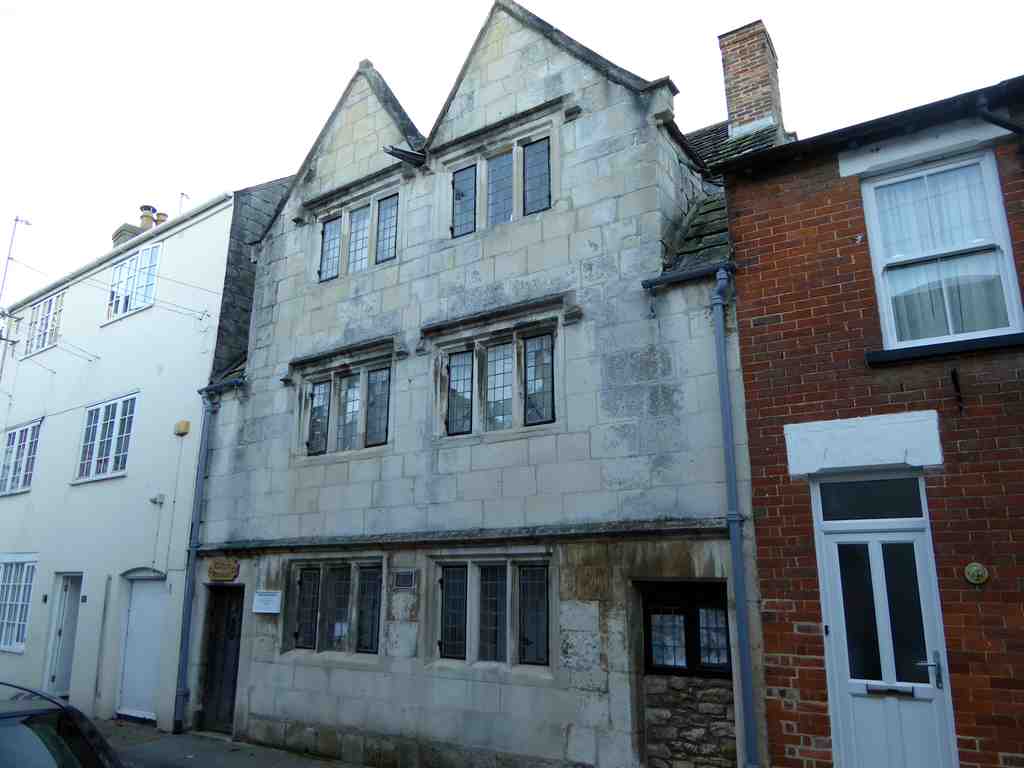
To spot the Tudor House Museum, look for a pale-grey, three-story stone house with two tall, pointy gables, small leaded windows, and a sturdy old wooden door squeezed between its neighboring buildings.
Welcome to the Tudor House Museum! Imagine yourself stepping back over four hundred years, when Weymouth’s harbor was bustling just outside this very building, and the salty smell of the sea drifted in through those small, leaded windows. Picture a busy Elizabethan merchant, pacing those stone floors, peeking through a window to see if his ship had just arrived with a fresh cargo of cloth, wine, or maybe even a stash of questionable cheese… I’m not judging his taste!
This house was built right around 1600, probably between 1603 and 1610, and at that time, the front door practically opened right onto the water’s edge. A small, sheltered inlet-known as ‘The Cove’-came straight from the harbor, so the merchant who built this place could tie up his boat just outside. Imagine unloading barrels of goods straight into your living room. That would certainly beat carrying shopping bags from the car, wouldn’t it?
The house itself is made of striking Portland stone-just run your hand across the cool, weathered surface and you’ll be touching history that’s survived fire, war, and even the odd enthusiastic local pigeon. The home’s original use faded away after the late 1700s, when The Cove was filled in and turned into a street. Over the years, the grand old house was split into smaller homes, then even threatened with demolition in the 1930s. It was bombed during the Second World War and stood empty, sad and battered, just waiting for someone to love it again.
Enter Walmsley Lewis, a passionate local architect, who couldn’t bear to see this piece of history crumble. He rescued the house, restored it into a single grand home, and scoured both the UK and Europe to fill it with genuine Tudor and Stuart treasures-everything from crackling old furniture to delightfully odd candle molds. It’s thanks to him that we can still walk beneath its beams and imagine life here in the hum and clatter of centuries gone by.
Today, run by the Weymouth Civic Society, this house lets you peek into the life of a well-to-do family at the height of Weymouth’s trading power. Listen close and you might just catch the clinking of tankards, the crackle of a candle, or the welcome thud of dinner being served after a long day’s trading. Now, that’s what I call a house with stories to tell-and if you hear mysterious creaks, just remember: it’s probably just history whispering, not a ghost looking for its lost cheese!


