Stafford Audio Tour: A Journey Through Time and Tides
A crooked timber house once whispered secrets to kings while prison walls held conspirators who dared challenge the crown. In Stafford every corner conceals drama far beyond the polite shopfronts. This self-guided audio tour invites you to trace hidden trails through centuries of scandal and intrigue, finding legends few visitors ever hear. Wander with purpose as extraordinary tales come alive right beneath your feet. Why did panic sweep the Ancient High House on a stormy night? Who passed forbidden messages through the shadows of HM Prison Stafford? Which bold claim shook the Shire Hall until judges turned pale? Glide past monuments and alleyways where rebels plotted and noble ambitions shattered. Move with anticipation from courtroom tension to secret passages as lost stories leap into vivid focus. Stafford’s most astonishing truths are waiting in plain sight. Listen closely. The city’s oldest secrets are finally ready to be revealed—start the adventure now.
Tour preview
About this tour
- scheduleDuration 40–60 minsGo at your own pace
- straighten4.0 km walking routeFollow the guided path
- location_onLocationStafford, United Kingdom
- wifi_offWorks offlineDownload once, use anywhere
- all_inclusiveLifetime accessReplay anytime, forever
- location_onStarts at Stafford Combined Court Centre
Stops on this tour
To spot the Stafford Combined Court Centre, look for a striking modern red-brick building with cream stone bands and three tall, glass-panelled entrances set back from the road;…Read moreShow less
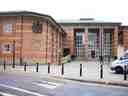
To spot the Stafford Combined Court Centre, look for a striking modern red-brick building with cream stone bands and three tall, glass-panelled entrances set back from the road; the Royal coat of arms and the nearby bronze war memorial soldier will help you know you're in the right place. You’ve arrived at the Stafford Combined Court Centre-where justice wears a wig and even the bricks look official. Imagine, instead of cows, you’re now standing on the site of an old cattle market, smack dab in Victoria Square. The air’s got that quiet anticipation, like before a verdict is read-except the only thing you’re guilty of is curiosity! In the early 1990s, Stafford needed a courtroom bigger than its old Shire Hall. Cases were piling up faster than lost umbrellas in an English rainstorm, so planners picked this spot to build a courthouse for both thrilling Crown Court dramas and the occasional neighborly dispute in County Court. The designers had big shoes to fill. The new building had to match the style of those grand county offices across the square, but also give pride of place to the bronze war memorial nearby-a statue of a soldier, standing tall since 1920, keeping a watchful eye over everyone who passes. Take a moment and listen:. That’s the sound of people heading inside, gripped with nerves or relief depending on why they're visiting. The architecture is modern but somehow regal, with walls that gently curve and three huge, curved windows on your left. Step closer and you'll spot the proud Royal coat of arms staring down at passersby-almost as if it’s daring you to jaywalk. The main entrance, all tall glass and sturdy brick, practically shouts “Official Business!” If you sneak a peek through those windows, you might imagine the buzz inside: seven courtrooms, each one a stage for real-life stories of tension, drama, and sometimes, a bit of courtroom comedy. Some cases have made headlines here, including those that shook local families and communities to their core. The trials held within these walls have been marked by powerful moments-anger, hope, even a bit of mystery. But don’t worry, the only judgment being passed on you today is for the excellent choice of joining this tour. As you stand here, let yourself feel the weight of history and the constant buzz of stories, both tragic and triumphant, that unfold just a few steps away. Ready for the next stop? There’s plenty more to discover just around the corner!
Open dedicated page →To spot St Mary's Church, look straight ahead for a grand stone building with tall arched windows, a sturdy square tower topped by battlements, and dark, dramatic stonework that…Read moreShow less
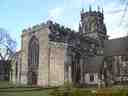
To spot St Mary's Church, look straight ahead for a grand stone building with tall arched windows, a sturdy square tower topped by battlements, and dark, dramatic stonework that looks like it’s been plucked right out of a castle or a medieval movie set. Now that you're standing before St Mary's Church, let’s imagine you’ve just stepped back in time some 800 years, when this place first began its story! The thick stone walls and those impressive windows are not just beautiful, they’ve watched centuries of excitement - and maybe more than a few disagreements. In the 1200s, this place wasn’t just a church, it was a collegiate church, filled with priests who would chant and sing their prayers daily. You’d hear their voices echoing right where you’re standing now. But make no mistake - it wasn’t all peaceful hymns and friendly handshakes! In the winter of 1258, things got a little heated. The church, being a Royal Peculiar, meant it answered straight to the king, not the bishop. The bishop at the time, Roger de Meyland, was having none of it. Picture this: one chilly December day, he storms up to the church with a gang of armed men! Doors slam, voices shout, and a skirmish breaks out right here. The bishop forces his way in and, let’s just say, those canons and clergy got more than they bargained for - definitely a day no one forgot in a hurry. Fast-forward a few hundred years, and the church became the favorite of the Aston family, who managed to stay on the nice list of both Catholics and Protestants - not an easy task back in the day. In fact, when Lord Aston died in 1678, locals of all faiths gathered here for his burial, turning a time of division into one of unity. That’s the kind of story that gives you chills - or maybe that’s just the draft through these ancient stones. Take a peek inside if you can, and you might spot some fascinating memorials to folks like Sir Edward Aston and even to Izaak Walton, a famous fisherman. Don’t forget to listen out for the mighty organ - it’s so grand, it actually earned a Grade I award all by itself! If you hear its deep, rolling notes, you’ll know why. So, as you stand here, remember: you’re sharing space with nearly a thousand years of drama, devotion, and a dash of intrigue - all watched over by these stony old walls. And trust me, they could tell a few stories if only they could talk!
Open dedicated page →Look straight ahead to spot the Shire Hall-its grand pale stone facade, tall iron railings, four impressive columns, and the clock perched high above make it hard to miss in the…Read moreShow less
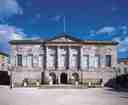
Look straight ahead to spot the Shire Hall-its grand pale stone facade, tall iron railings, four impressive columns, and the clock perched high above make it hard to miss in the middle of the square. As you stand here in Market Square, picture the Shire Hall rising before you-a building so eye-catching you can almost hear the hustle and bustle of public life echoing off the stone. This handsome Neoclassical hall, designed by John Harvey and finished in 1798, isn’t just a pretty face-it’s a stone-and-mortar storyteller that’s been right at the heart of Stafford’s biggest dramas for over 200 years. Believe it or not, Harvey’s masterpiece was actually his only major building. Seems he got it right on the first try! If these columns could talk, they’d start all the way back in 1176, when Stafford’s first county court gathered not far from this very spot. Back then, the law was strict, the wigs were itchy, and if you ended up facing justice, let’s just say you might have thought twice about not paying your cheese tax. By the 1280s, a shire hall for the county court was a fixture on this square, and though it was rebuilt in the 1600s, time and Stafford weather weren’t kind-by 1793, it was crumbling so badly that even the judges were probably worried the walls might sentence them to a surprise collapse! So along came the Shire Hall Act of 1794 and, three years later, this striking hall stood tall and proud. Gaze up at the pediment: Justice and Mercy, two stone figures by John Rossi and John Bingley, recline above the columns, forever holding court and (probably) judging our taste in shoes. Their planned companion, Britannia, never made it up there-she was swapped for a clock in 1799, perhaps so the judges wouldn’t accidentally run past lunchtime. Step closer and picture yourself entering the Great Hall, just behind this facade-72 feet long, lined with three galleries, and echoing with the murmurs of nervous voices and the creak of wood benches. Two courtrooms lie beyond: Court 1, home to the High Court, now displays crime and policing artifacts; Court 2, the magistrates’ court, still shows off many original fittings. Picture the building stretching further, the old Butter Market tucked underneath before it was moved to make room for the legal drama above. Heck, even the Mayor’s office and a guardroom-more ‘holding cell’ than ‘lounge’-were squeezed in down in the basement. History here is thick as the stone walls. Judge John Sparrow once ruled the roost, his painted portrait watching over proceedings in Court 2, while another judge, Thomas Noon Talfourd, literally worked himself to the grave, collapsing and dying in the courtroom-he’s remembered with a bust in Court 1. The courthouse saw some of Stafford’s most notorious criminals: William Booth, a forger hanged for his crimes in 1812, and the grim trial of Christina Collins’s murderers, which later inspired an Inspector Morse novel. Football, murder, and missed penalties-George Stagg was found guilty here of killing Aston Villa’s Tommy Ball in 1923. The Cannock Chase murders? Raymond Leslie Morris was convicted at Shire Hall, with the walls holding secrets from every chapter of Stafford’s darker past. But justice alone didn’t fill these halls forever. Once the Stafford Combined Court Centre opened in 1991, Shire Hall reinvented itself, becoming an art gallery filled with splashes of color, sparkle from the Staffordshire Hoard, and the buzz of school groups and eager art lovers-until the gallery doors closed in 2017. Now, it hosts special events and waits for its next chapter, proudly grade II* listed, one of Stafford’s finest public buildings. So look around, feel the weight of stories in the stones. Who knows? Maybe if you listen closely, you’ll hear the faint tick of that clock, the rustle of silk robes, or the thud of a judge’s gavel calling Stafford to order once more! Fascinated by the earlier buildings, architecture or the interior? Let's chat about it
Open dedicated page →
Show 10 more stopsShow fewer stopsexpand_moreexpand_less
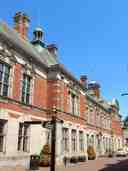
4County Buildings, Stafford
Buy tour to unlock all 17 tracksTo spot the County Buildings, look to your left for an impressive, long row of red brick and white stone with elegant arched windows, tall chimneys, and domed copper-topped…Read moreShow less
To spot the County Buildings, look to your left for an impressive, long row of red brick and white stone with elegant arched windows, tall chimneys, and domed copper-topped towers-it's the grandest building along the street. Alright, let’s dive into a story that’s been more dramatic than some council debates! Picture yourself in the 1890s-Martin Street is buzzing, and instead of the grand County Buildings you see before you, the area is lined with rows of bustling shops and the odd market stall, traders shouting prices over each other, horses clopping by. That all changed when the Local Government Act of 1888 gave every county its own council and Stafford went, “Hang on, where do we fit all these important folks?” At first, they squeezed meetings into the crowded Shire Hall next door, but soon realised they needed a bit more elbow room-and perhaps fewer echoes of gavel bangs ricocheting off market cheese wheels. Enter Henry Hare, an architect with a flair for the dramatic. He designed this splendid Baroque revival building-look at those windows with elegant columns, the grand doorway with its swooping stonework! I bet the councillors strutted through those doors feeling like royalty, or at least like contestants in a baking contest, ready to rise to the occasion. Inside, imagine the hush as you step into the council chamber, sunlight spilling through tall windows onto rich plasterwork by Frederick Schenck. There, monumental figures sculpted by William Aumonier keep watch, silently judging every long-winded speech and maybe-just maybe-nodding in approval when the tea trolley rattles through. Over the years, extra offices cropped up across the street-first in 1913, then 1925-until the council decided to go modern, building snazzy new headquarters in 2011. This left the extra 15 and 16 Martin Street buildings to be turned into “Martin Street Mansions.” Fancy living where council officers scurried about, dodging urgent memos? But the heart of council business is still right here in the original County Buildings. Full council meetings, stirring debates, and now even wedding vows are exchanged beneath the same carved ceilings! They say the ghosts of council meetings past linger, still whispering advice to new councillors-mainly about not leaving biscuits unattended. So, give this grand old building a nod. You’re standing where Stafford’s future was-and is still-being shaped. Not bad for a place that started life as a row of shops, eh?
Open dedicated page →
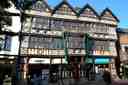
5The Ancient High House
Buy tour to unlock all 17 tracksTo spot the Ancient High House, look for a striking, three-story timber-framed building with black and white zigzag patterns and lots of tall windows-it’s right in front of you,…Read moreShow less
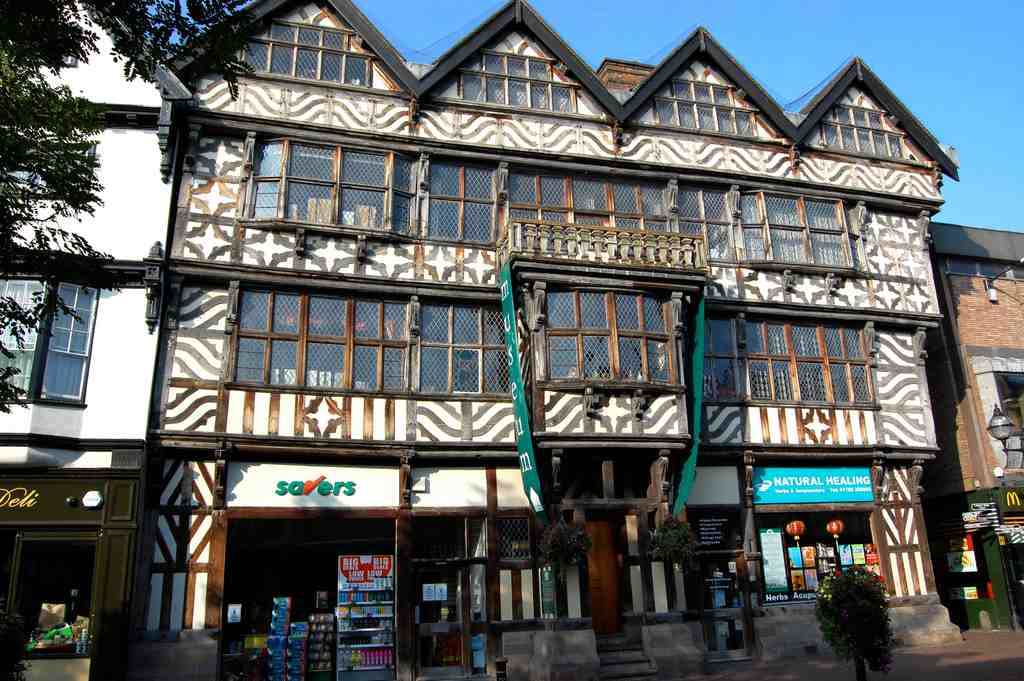
To spot the Ancient High House, look for a striking, three-story timber-framed building with black and white zigzag patterns and lots of tall windows-it’s right in front of you, standing proudly above the street, impossible to miss! Ah, welcome to the Ancient High House! You’re now standing before one of the grandest survivors of Elizabethan England-built in 1595, when ruffs and codpieces were all the rage, and the biggest local construction challenge was “How much oak can you carry from Doxey Wood in a wagon?” They say the Dorrington family didn’t settle for any ordinary wood-they gathered local timber, and if you look closely, you might spot little marks on the beams, the handiwork of carpenters who pieced the frame together on the ground before raising it up. Imagine a Renaissance-era IKEA, but with a lot more actual axes and none of those frustrating little wrenches! Some of these timbers were second-hand even back then-proof that “up-sticks” has very literal roots: folks would just dismantle their house and rebuild it wherever they fancied. Now, picture yourself in this bustling street during the 1600s. It’s the eve of the English Civil War, and in September 1643, this house gives shelter to none other than King Charles I himself. The King’s banners flutter outside, and the household is buzzing-military men clink their spurs on wooden floors, and the air is thick with the scent of burning candles and waxed wood. There’s the King, pacing in the main room, dictating letters, and giving orders for a looming battle. Some of those letters he dispatched are still treasured today in the nearby William Salt Library. It’s said that a local woman covered his route to St Mary’s Church with flowers, hoping maybe a sweet-smelling walk would lull him into peace talks. No such luck-history marched on. But, wait-the drama doesn’t end there! King Charles wasn’t alone; he brought with him his nephew, Prince Rupert of the Rhine, a military prodigy and owner of the most famous poodle in the country-“Boy,” who apparently had a nose for both biscuits and battle plans. Here in the garden, Prince Rupert allegedly whipped out his shiny Horse Pistol and, to impress, fired two shots straight through the tail of St Mary’s weather vane. Sadly, the weathervane is long gone, so we’ll never know if he was a sharpshooter or just showing off, but local legend died hard even when the metalwork didn’t survive. In the thick of the Civil War, the High House turned from royal residence to prisoner barracks. Parliamentarians took Stafford, and soon Royalist prisoners found themselves “secured” right here, their boots on the same ancient oak you’re standing beside. There’s a tale for every floorboard-stories of intrigue, betrayal, feasts, and perhaps a few desperate escape attempts! Fast-forward to the Victorian era, and the poor house nearly crumbled from the fashion of “modernizing” with corridors and heaters. Walls started leaning and everybody feared the house would topple like a stack of dominoes. Removing corner posts and big old chimneys wasn’t the soundest plan. Luckily, Stafford’s townsfolk rallied in true British style-weekends became a flurry of souvenir stalls and fundraisers, and the Climax Blues Band played their hearts out in nightclubs to save the building! They almost got a blue plaque for it, but hey, not all heroes get their wall badges. Today, beneath these zigzag timbers, you’ll find a museum filled with period rooms-walk from the age of muskets to the click-clack of Edwardian shoes to the bustle of Victorian hoop skirts. Plus, if you scale to the attic, you’ll discover the Staffordshire Yeomanry’s treasures: uniforms and artifacts whispering stories of local soldiers. So, take a moment. Stand beneath the largest timber-framed townhouse in England. Listen to the echo of hoofbeats, the crack of a pistol, the distant chatter of rebels, and maybe-if you’re lucky-the soulful strum of a blues guitar saving history one note at a time.
Open dedicated page →- location_on6
St Chad's Church, Stafford
Buy tour to unlock all 17 tracksTo spot St Chad’s Church, look straight ahead for a sturdy stone building with an archway door, rounded windows above, and a tall square tower popping up behind the roof-it’s…Read moreShow less
To spot St Chad’s Church, look straight ahead for a sturdy stone building with an archway door, rounded windows above, and a tall square tower popping up behind the roof-it’s nestled right along Greengate Street and set slightly back from the pavement behind low stone walls. Now, take a moment and imagine you’ve just stepped back almost a thousand years-because you’re standing in front of the oldest building in all of Stafford! St Chad’s Church has been through more ups and downs than a soap opera. The story begins in the 12th century, at a time when knights and peasants walked these very streets, and a fellow named Orm-possibly Orm le Guidon, a local VIP from long ago-decided Stafford needed something a little more impressive than the local tavern and built this very church. If you look closely, somewhere inside, there’s even an old Latin inscription that brags about it: “He who built me is called Orm.” Not exactly subtle, but hey, who wouldn’t want credit for this masterpiece? The church was built in the shape of a cross, with a tower at its center-imagine flickering torches lighting up the massive stone columns and scallop-shaped decorations that still line the nave. These chunky columns and zigzag, or chevron, arches are pure Norman style. And for a little spooky detail, look up at the crossing arch: you’ll spot “beak-heads” on the columns, as if ancient stone creatures are forever peeking down at visitors. There’s even more hidden magic-some intersecting arches and window frames that were buried for centuries only to be rediscovered during a big 19th-century cleanup. Talk about a hidden treasure! Over the centuries, the poor old church took a beating. By the 17th and 18th centuries, it suffered from a dire condition that even medieval medicine couldn’t cure: sheer neglect. Parts collapsed, some features were bricked up, and everyone just sort of ignored it for a while-very British, if you ask me. But then, in the 19th century, along came a superhero of the bricks and mortar world: George Gilbert Scott. He and a few other passionate restorers brought life back to St Chad’s, uncovering architectural secrets, rebuilding parts in glorious Romanesque stone, and giving the tower the dignity it deserved. Inside, you’ll find an organ that’s been echoing hymns since Victorian times and a Norman-style font perfect for particularly dramatic christenings. The interior decorations read like a who’s who of famous designers, with special touches from Sir Walter Tapper and Sir Charles Nicholson. So, while you stand here, picture all the centuries of footsteps-riotous medieval crowds, Victorian workmen, and even today’s visitors-all drawn here by Orm’s ancient dream. And if you listen carefully… well, you won’t hear Orm, but you might just hear the whispers of a thousand years of stories swirling through these old stone walls.
Open dedicated page → - location_on7
Picture House, Stafford
Buy tour to unlock all 17 tracksLook ahead for a striking white building with black timber framing and an old-fashioned gable right in the center, making it look a bit like a Tudor house that auditioned for a…Read moreShow less
Look ahead for a striking white building with black timber framing and an old-fashioned gable right in the center, making it look a bit like a Tudor house that auditioned for a Hollywood movie! Now, as you stand outside The Picture House, imagine stepping back to 1913. The street would be full of excited chatter as people queued up in their Sunday best, ready for a magical night out at one of Stafford’s earliest cinemas. Picture the flicker of the gas lamps, the buzz of anticipation, and perhaps, if you listen closely, you can almost hear the distant sound of someone dropping a penny in the original ticket booth-which, believe it or not, is still there to this day. When it opened, the very first film was “The House of Temperley,” lighting up the auditorium with its seven-bay barrel-vaulted ceiling and grand plasterwork. In 1917, a mighty cinema organ was brought in, and by 1930, the place was electrified-literally and figuratively-when the first ‘talkie’ crackled through the speakers, leaving silent movies behind. Generations of the Everston family ran this place with the flair of a showman, until the curtains finally fell in 1995. But in true movie style, there was a twist ending: in 1997, the Picture House was reborn as a Wetherspoons pub. Now, instead of popcorn, you get pints! Every time you walk in, you’re not just entering a pub-you’re stepping onto the set of Stafford’s living history. Quite a blockbuster spot for a drink, wouldn’t you say?
Open dedicated page → - location_on8
Chetwynd Centre
Buy tour to unlock all 17 tracksYou’re standing in front of the Chetwynd Centre, with its grand, sturdy walls and iron gates that feel as if they’ve been watching over Stafford for generations-probably because,…Read moreShow less
You’re standing in front of the Chetwynd Centre, with its grand, sturdy walls and iron gates that feel as if they’ve been watching over Stafford for generations-probably because, in a way, they have! Imagine it a few years back: the place was alive with students from all over Stafford, coming here for classes you couldn’t find anywhere else in town. It was a bit like Hogwarts for sixth formers-minus the moving staircases and talking hats, of course. Now, this building didn’t always go by its current name. Once upon a time, it was the King Edward VI Grammar School, echoing with the noise of students dashing between lessons. Right here, on Newport Road, it made learning easy-not just because of passionate teachers, but also because of its perfect location. Step outside and you’d be close to libraries for cramming before exams or businesses where students dreamed up their future careers. And talk about history! Not only is the Centre itself Grade II listed, but so are its dignified gates and war memorial-silent witnesses to so many stories. These days, things are quieter. The Chetwynd Centre stands closed, waiting patiently for its own next chapter. But if you listen closely, and maybe squint a little, you might just hear a ghostly school bell and the faint shuffling of papers from students long gone. Or maybe I’m just imagining things again… Let’s hope the next owners bring back some of that old magic!
Open dedicated page → - location_on9
Stafford Castle
Buy tour to unlock all 17 tracksTo spot the Friars' Walk drill hall, look for the long red-brick building on your right with a solid presence along a narrow lane-it's right beside you as the alley opens…Read moreShow less
To spot the Friars' Walk drill hall, look for the long red-brick building on your right with a solid presence along a narrow lane-it's right beside you as the alley opens up. Now, let’s step back in time-imagine it’s 1913 and Stafford feels anything but sleepy. The air is sharp with urgency. Right where you’re standing, the Friars' Walk drill hall opened its sturdy doors, welcoming in the clatter of boots and the jingle of harnesses. Designed by Hanley, this building was the beating heart of the Staffordshire Yeomanry-think uniforms, horses, and a constant chorus of commands echoing off the walls. The Royal Field Artillery’s 6th Staffordshire Battery joined the party too, wheeling their big guns straight through doors in Bailey Street, the ground rumbling beneath them. Picture the parade ground alive with color and noise: soldiers drilling under watchful eyes, horses snorting, and somewhere, a sergeant barking out orders louder than an old pub bell. In August 1914, these walls saw the Yeomanry gather for mobilization as the world changed forever-imagine last-minute jokes, nervous smiles, all heading off to distant Salonika. Meanwhile, the RFA battery’s guns were destined for the Western Front, the echo of their rollouts still whispering in the stone. By the late 1960s, things quieted down. The yeomanry moved on and, like a retired general who takes up gardening, the drill hall found a new, quieter life with the county council’s maintenance crew. But if you listen closely, maybe you’ll still hear the distant clip-clop of horses or a ghostly parade ground shout!
Open dedicated page → - location_on10
St Austin's Church, Stafford
Buy tour to unlock all 17 tracksTo spot St Austin’s Church, look straight ahead for a striking red-brick building with a tall, silvery spire on the left, a large pointed window filled with intricate black…Read moreShow less
To spot St Austin’s Church, look straight ahead for a striking red-brick building with a tall, silvery spire on the left, a large pointed window filled with intricate black tracery, and two smaller arched doorways at the base. Welcome to St Austin’s Church, a truly dramatic spot for any visitor-whether you’re here for the history, the architecture, or just to stretch your legs! The church was built in the 1860s, when fashion for Gothic Revival style was all the rage. Imagine crowds gathering as the foundation stone was laid, the sound of hammers and saws filling the air as the building began to take shape. But let’s rewind a bit further-back to the days after the Reformation, when being Catholic in England was a risky business. Stafford’s Catholic barons, descended from the mighty Viscount Stafford, kept the faith alive by holding secret masses in dusty attics and hidden upper rooms. Just picture Father Thomas Barnaby tiptoeing up the stairs to celebrate mass above a quiet house on the Green. Don’t sneeze, Father-someone might be listening! Fast forward to the 1780s, where Father John Corne had an upgrade-he rented a house and even built a chapel in the back garden. A sign of progress! Then comes 1791 and, thanks to the Roman Catholic Relief Act, Catholics could breathe a little easier and build a real, permanent chapel nearby. So, by 1851, with over 250 locals trying to fit inside for mass, they realized squeezing in was a bit like trying to stuff a loaf of bread back into a wheat field. Enter E.W. Pugin, superstar church architect, who whipped up this grand design. The church opened in 1862 after a brisk year of building-talk about working miracles! Over the years, the story doesn’t end. Peter Paul Pugin came along, adding chapels, altars, and a bit of stylish flair. In the 1900s, the church got new confessionals-handy, because apparently secrets always need somewhere to hide. The tower only appeared in the 1960s, with the spire topping it off in the 1990s. Today, step inside and you’ll smell the faint tang of incense, see glinting stained glass donated by generous families, and maybe catch the gentle echo of choir voices. Through centuries of changes, service, and survival, St Austin’s has stayed at the very heart of Stafford’s Catholic life-solid, welcoming, and full of stories just waiting for you to listen.
Open dedicated page → - location_on11
Kingsmead Marsh
Buy tour to unlock all 17 tracksTake a deep breath of that fresh, marshy air-welcome to Kingsmead Marsh! It might look peaceful now, but you’re actually standing in the middle of a spot that has seen all sorts…Read moreShow less
Take a deep breath of that fresh, marshy air-welcome to Kingsmead Marsh! It might look peaceful now, but you’re actually standing in the middle of a spot that has seen all sorts of action over the centuries. Picture this land centuries ago, wild and squelchy underfoot, stretched out much further than today. Back then, the marshes and the River Sow made Stafford a tough nut to crack-good luck to any invaders trying to slog through here in muddy boots. In fact, legend has it a Mercian prince named Beorhthelm, or Bertelin for those of us who don’t have all day, thought it was such a great hiding spot that he set up a hermitage right here around the year 700. But wait, Stafford wasn’t just a hideout for hermits. By 913, it became a fortified ‘burh,’ or stronghold. Fast forward a bit, and you’ll have heard the hum of a royal mill-owned by the king himself-churning away, while water glistened in what they called King’s Pool. Not a bad backdrop for royal bread-making, if you ask me. Over the years, the mill faded, the land got marshy again, and farmers probably tiptoed through for summer grazing-watching their step and trying not to lose a boot. Today, Kingsmead Marsh is a natural reserve, teeming with rare plants like purple loosestrife and brown sedge. And don’t worry: staff keep that pesky willow in line so the wildflowers can breathe easy. Enjoy the peaceful wildness-a marsh has never looked so regal!
Open dedicated page → - location_on12
Stafford power station
Buy tour to unlock all 17 tracksHere you are, standing in front of what used to be the beating heart of Stafford’s light and energy - the Stafford power station. It might look like an ordinary spot now, perhaps…Read moreShow less
Here you are, standing in front of what used to be the beating heart of Stafford’s light and energy - the Stafford power station. It might look like an ordinary spot now, perhaps with a new building or just open space, but imagine casting yourself back to 1895. Try to picture the towering brick chimneys, hulking engines inside, and the tang of coal smoke faintly drifting on the breeze. On a chilly October night, the station sent out its very first current-flooding Stafford with electric light, a moment that must’ve seemed straight out of science fiction to Victorian eyes. At the very start, this was Stafford Corporation’s proud new venture-and what a thing it was! They’d secured official permission in 1890 to light up the night, thanks to the Electric Lighting Acts. The very first cables were pulled right here, close to the River Sow, not far from the old gas works. A mix of whirring Marshall compound engines and spinning Elwell-Parker dynamos worked tirelessly, ropes jerking and wheels spinning, to power no fewer than 6,200 lamps in homes, shops, and on the streets. Imagine a town suddenly able to see just as well at night as they could in the day. It must have felt a little bit magical-and maybe a little bit spooky, too, when a lamp would flicker unexpectedly. By 1923, the place had grown bolder, louder, hotter. Huge coal-fired boilers chugged out clouds of steam-enough to make even the River Sow run warm as it cooled the engines. Step inside (in your mind’s eye, of course) and you’d find the floor shaking as reciprocating engines boomed out 150, 220, even 500 kilowatts at a time, the air thick with heat and the metallic scent of steam. The generators spun and crackled, pumping out alternating current at up to 2,600 kilowatts-or direct current if that’s what your radio or lightbulb needed. You could choose: 3-phase AC at 6,000 volts (hope your hair was already standing up!), or classic DC at 420 volts. This was Stafford’s kitchen, its control room, its very nerve center. In the mid-1920s, new Stirling boilers went in, belching even more steam at nearly 600 degrees. The plant’s lungs expanded, now capable of steaming 107,000 pounds of water an hour-and the turbo-alternators that spun to life sounded almost like something from an early science fiction radio play. English Electric machines, newly installed, generated a mighty 6.6 kilovolts. The frenzy of noise and power-wheels clattering, water hissing, engineers shouting over the din-marked the closest thing to a living beast Stafford ever had. But technology, as it always does, kept marching. By 1935, Stafford power station was less the city’s hero and more its trusty sidekick-no longer running day and night, but coming alive for brief, critical moments when demand spiked, like a retired firefighter still keeping his boots by the door. Nationalisation in 1948 swept through, and with it, the old Stafford electricity undertaking vanished into history, as new authorities took charge and the station’s time in the spotlight faded. Even in the years after, Stafford power station stood ready-a sleeping giant, called upon only when the national grid needed an energy boost. Its final bow came in 1958, when the plant was decommissioned, its machines falling silent for good. The buildings soon made way for redevelopment. But if you stand here now, and listen very closely, you might just imagine a faint thrum in the ground-the old echo of Stafford’s electric age, still humming beneath your feet. Who knew that one day, this spot would go from the center of Stafford’s technological future…to a place where you might just find yourself charging a mobile phone, instead of lighting a whole town? Don’t be shocked! The story of power always continues…
Open dedicated page → - location_on13
HM Prison Stafford
Buy tour to unlock all 17 tracksTo spot HM Prison Stafford, look for a long, imposing red-brick building with small barred windows, looming above a tall brick wall just across the road-its solid structure and…Read moreShow less
To spot HM Prison Stafford, look for a long, imposing red-brick building with small barred windows, looming above a tall brick wall just across the road-its solid structure and central square tower make it stand out from its surroundings. Welcome to your thirteenth and final stop! Go ahead, take a good look at that solid brick fortress in front of you-the very same walls and watchtower that have seen over 200 years of secrets, struggles, and some rather wild twists of fate. Picture the wind swirling around you as we step back to 1793, when these red bricks were first stacked high to form the brand new Staffordshire County Gaol. Imagine the clang of iron gates closing behind prisoners brought here under the shadow of justice, all thanks to the Stafford Gaol Act of 1787. Times have changed, but the air of seriousness around this building is still hard to ignore-it’s now a Category C men’s prison, with a reputation for being a sex offender-only facility since 2014. But trust me, this place has seen much more than just modern dramas. Let’s jump to 1812. Can you hear the bustling crowd gathering on the street outside those very walls? Forger William Booth is about to be executed by hanging, but in a bizarre turn of events, the knot is tied so badly that Booth actually drops to the ground completely unharmed! Now, you’d think he’d fooled death itself, but-spoiler alert-he gets hauled up and hanged again, successfully, a little later that afternoon. If ever there was a day for dark comedy, that was it. Inside these walls, George Smith once paced his cell. He was no ordinary prisoner-he later turned executioner, honing his skills with the legendary William Calcraft. Smith ended up officiating several executions at Stafford, including the notorious case of Dr. William Palmer. Palmer, a local physician-turned-poisoner, met his own end right here in 1866-his grave is just a stone’s throw away from where you’re standing. Now, brush off the cobwebs of that grim past, because in April of 1916 another chapter was written: Irish rebels captured in the Easter Rising were marched through these gates as prisoners of war. The sound of boots echoed down these stone corridors as men like Michael Collins, who would later become a giant in Irish history, were kept within. There was a separate building for British conscientious objectors-men who refused to fight in World War I for religious or moral reasons. These men faced all sorts of cruelty and indignities, imprisoned for the crime of wanting peace. Yet soon after, the building went quiet. Closed in 1916, the prison stood silent for twenty years until war clouds gathered again. In 1939, just as the world braced for chaos, Stafford’s great doors swung open once more. Fast-forward to the 1990s and you’d find a new kind of drama. Imagine prisoners, determined to outsmart the system, folding paper into little airplanes, tying lines to them, and launching them over the massive 19-foot wall to reel in contraband. It may sound like a madcap adventure, but it was no laughing matter at the time! The prison faced harsh criticism for overcrowding, drugs, and poor rehabilitation preparation. By the early 2000s things were looking up-a new governor every year seemed to keep things interesting, and new security gateways and strict controls tried to keep bad things out. The prison earned praise for specializing in helping vulnerable inmates, improving treatment for addiction, and working with sex offenders, though some issues, like exercise facilities or help for foreign prisoners, stuck around almost as stubbornly as the walls themselves. Today, Stafford Prison is still a formidable sight, home mostly to double-occupancy cells, except for the lone G Wing where privacy reigns. Over the years, it’s housed everyone from infamous criminals and prisoners of war to TV presenters and entertainers gone astray. As you stand here now, try to feel the echoes of all those stories held tight behind bars-layers of history, gritty, wild, and unbearably human. And with that, you’ve completed your Stafford adventure! If these walls could talk, I imagine they’d say, “Thanks for visiting… now go and enjoy a strong cup of tea!” Interested in a deeper dive into the prisoner of war facility 1916, closure or the security concerns in the 1990s? Join me in the chat section for an insightful conversation.
Open dedicated page →
Frequently asked questions
How do I start the tour?
After purchase, download the AudaTours app and enter your redemption code. The tour will be ready to start immediately - just tap play and follow the GPS-guided route.
Do I need internet during the tour?
No! Download the tour before you start and enjoy it fully offline. Only the chat feature requires internet. We recommend downloading on WiFi to save mobile data.
Is this a guided group tour?
No - this is a self-guided audio tour. You explore independently at your own pace, with audio narration playing through your phone. No tour guide, no group, no schedule.
How long does the tour take?
Most tours take 60–90 minutes to complete, but you control the pace entirely. Pause, skip stops, or take breaks whenever you want.
What if I can't finish the tour today?
No problem! Tours have lifetime access. Pause and resume whenever you like - tomorrow, next week, or next year. Your progress is saved.
What languages are available?
All tours are available in 50+ languages. Select your preferred language when redeeming your code. Note: language cannot be changed after tour generation.
Where do I access the tour after purchase?
Download the free AudaTours app from the App Store or Google Play. Enter your redemption code (sent via email) and the tour will appear in your library, ready to download and start.
If you don't enjoy the tour, we'll refund your purchase. Contact us at [email protected]
Checkout securely with