
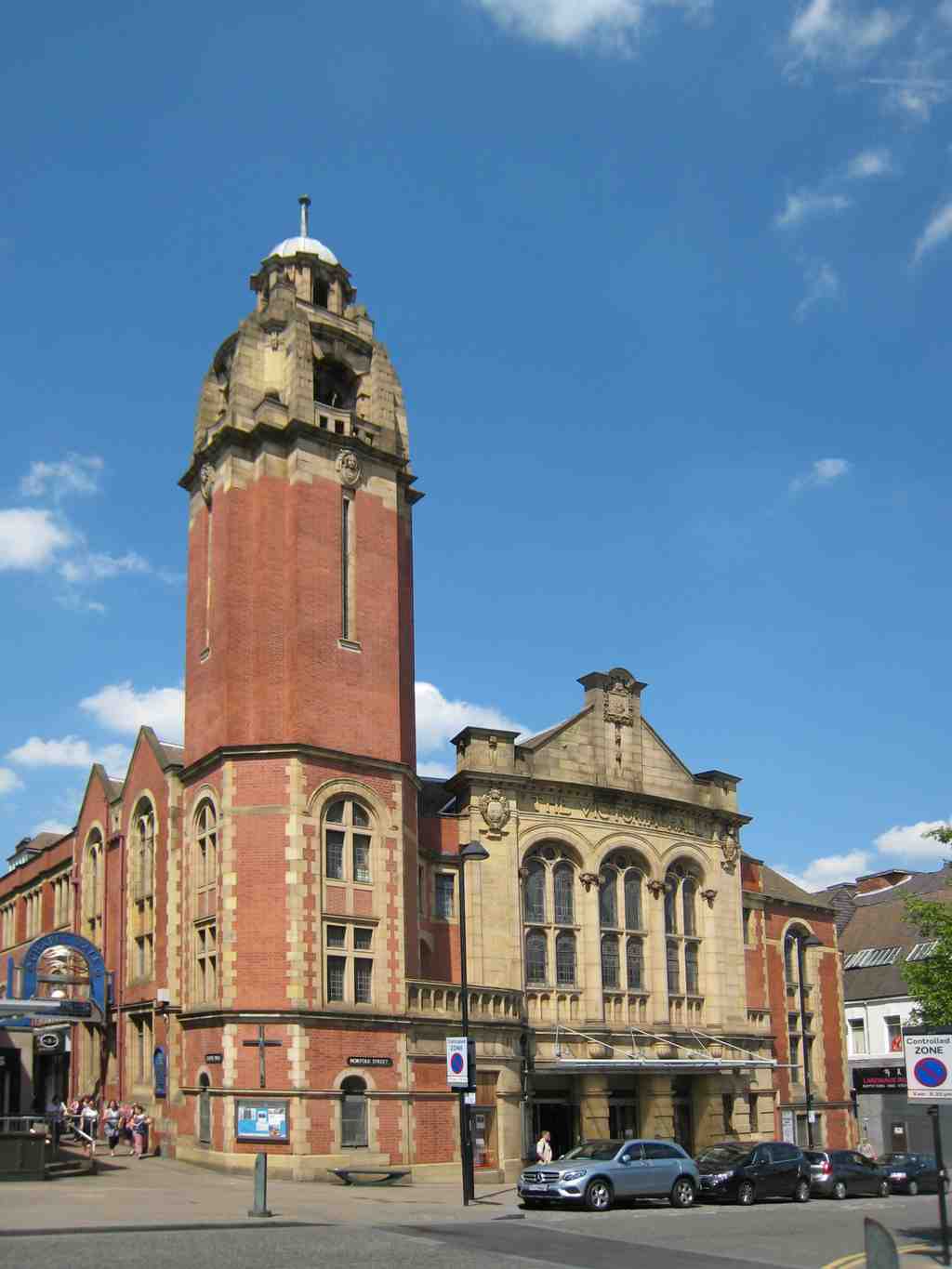
To find Victoria Hall, just take a look ahead and spot the building with that tall, striking brick tower topped by a pale dome. Its impressive entrance is lined with big, arched windows and fine stonework, with "Victoria Hall" written above the doors. The mix of reddish brick and lighter stone detailing on its corners really make it stand out from the more modern surrounding buildings. If you’re on Norfolk Street, you’re in the perfect place to see its main entrance-just look for the grand windows and those detailed carvings above them.
Now that you’re standing here, imagine it’s the early 1900s. There’s a real buzz in the air. You might hear the clatter of horses and carts, kids laughing nearby, and the distant whistle of a train. And right in front of you is the Victoria Hall-Sheffield’s most important Methodist building. Picture people in fine hats and heavy coats, streaming up the steps for a bustling service, or a packed concert night, with streetlamps casting warm glows on the pavement.
But the story of Methodists in Sheffield actually goes way back, almost 300 years! John Wesley himself-think of him as the rock star of the Methodist world-made a grand entrance in 1742 to spread his message. It wasn’t all peace and hymns though. The very first meeting house here ended up being attacked in a riot. Imagine churchgoers running for cover as Charles Wesley, John’s brother, tries to keep everyone calm. Local officials had to pay to build the next chapel, almost as an apology for that wild day.
The Victoria Hall you see now rose in 1908, replacing an older chapel and making a bold new statement. The architect, William John Hale, blended styles on purpose-Gothic drama with some fancy Arts and Crafts touches. Look up at the tower: that’s a classic bit of Baroque flair. Even the walls have stories to tell-there are carvings of the Wesley brothers hidden in the details, so keep your eyes peeled!
But here’s a twist-a secret behind all this beauty is a history of hard work and compassion. When people were out of jobs in the early 1900s, the Hall wasn’t just a place to pray; it was a place to get work, find breakfast for your kids, or hear a union activist speak up for your rights. During the First World War, soldiers and even a king and queen passed through these doors. King George V himself handed out medals right inside this very Hall!
If these walls could talk, they’d probably need a drink of water first-because they’d have thousands of stories to tell about hope, music, laughter, and the never-ending Sheffield spirit. So, take a moment to imagine being part of it all, right here on Norfolk Street. And if you hear some ghostly organ music, don’t worry-it’s probably just an enthusiastic memory echoing through time. Shall we see what’s next?


