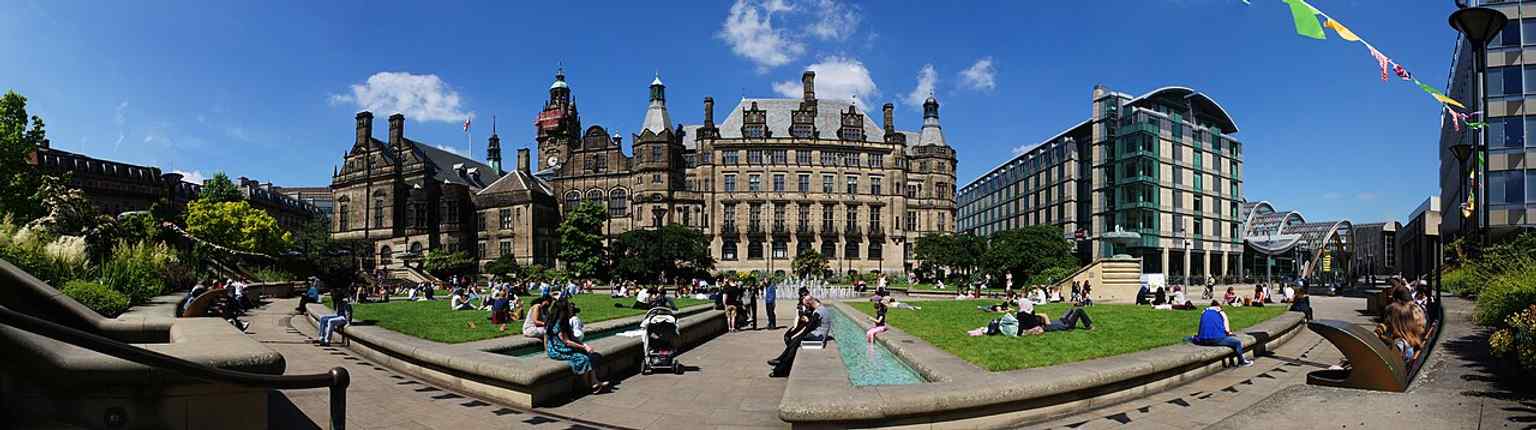
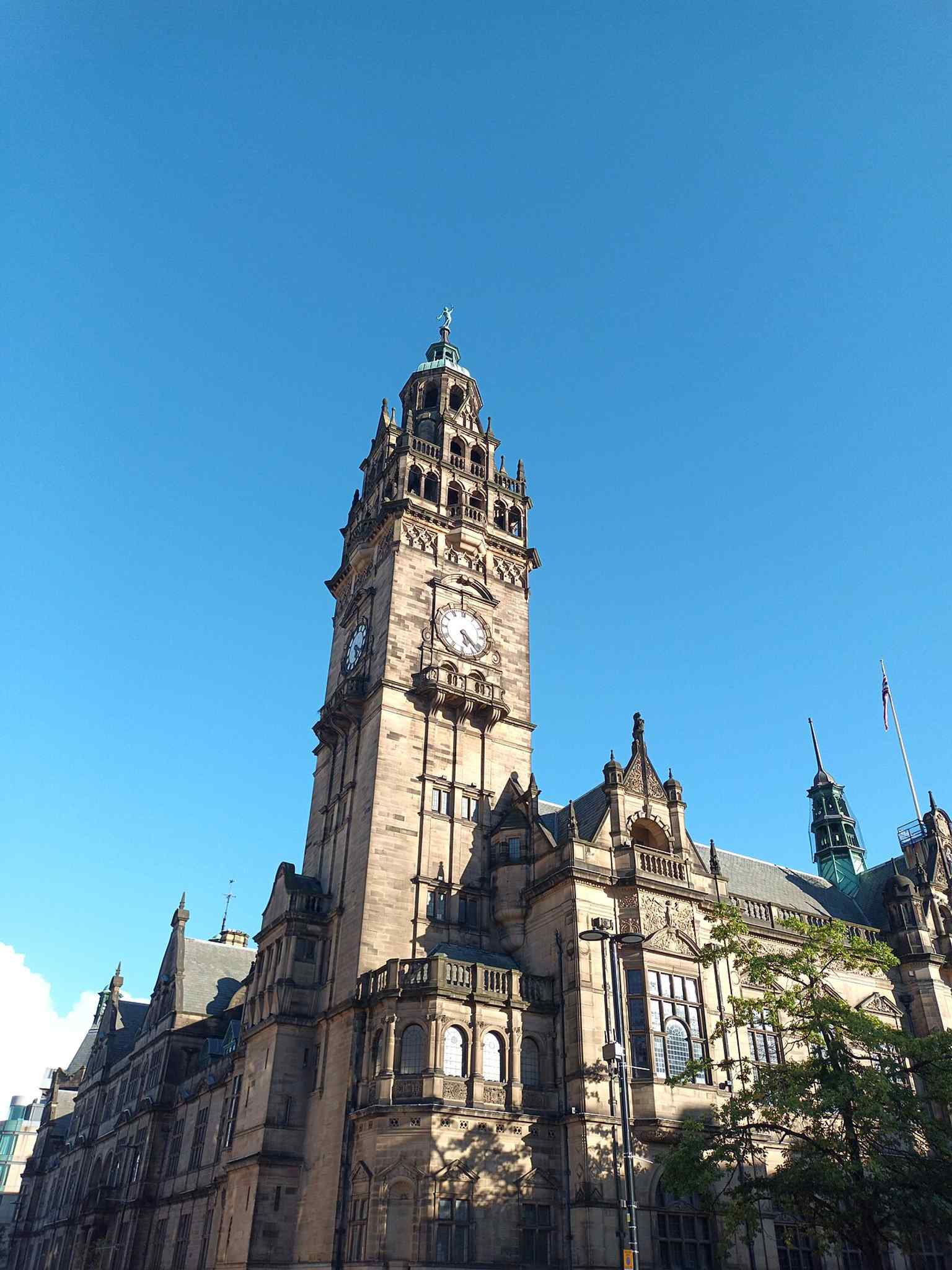
This pale sandstone façade rises in a long Renaissance block, with a tall clock tower and a bronze Vulcan poised high on the spire above.
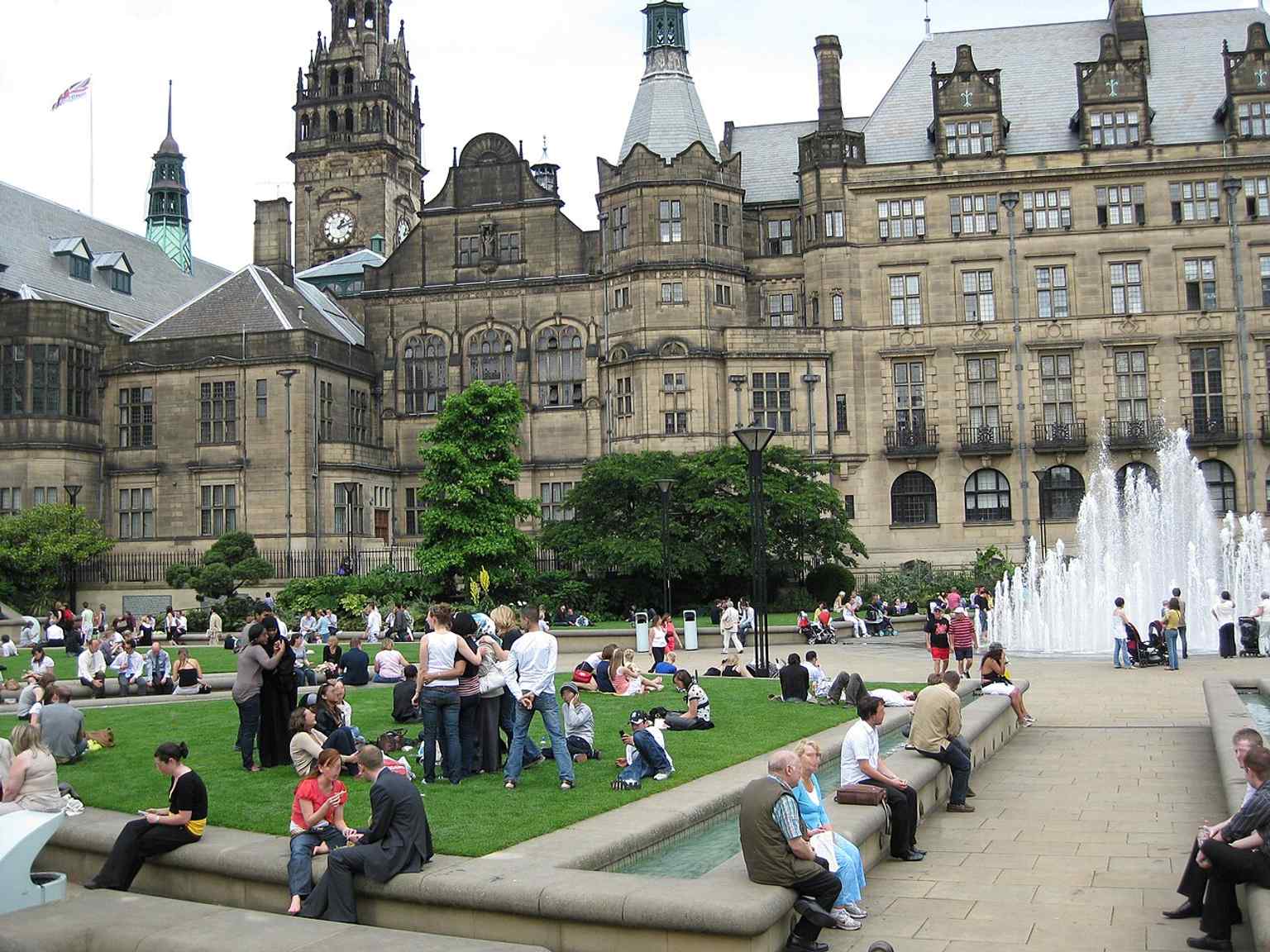
Here, on Pinstone Street, Sheffield introduces itself in stone. E. W. Mountford designed this Town Hall in the Renaissance Revival style, and Queen Victoria opened it on the twenty-first of May, eighteen ninety-seven by remote control from her carriage... which is a wonderfully imperial way of attending without actually going in. Look up at the friezes by F. W. Pomeroy over the entrance: they show the city’s real working cast, “electroplaters, buffer girls, ivory turners and cutlers,” led by the goddess of light and knowledge.
This is Sheffield, the steel and cutlery city. The earliest recorded Sheffield cutler, Robertus le Coteler, appears in twelve ninety-seven, and by the seventeenth century Parliament gave the Company of Cutlers in Hallamshire a charter to regulate the trade. Every knife passed through a chain of hands: the forger shaped the blade, the grinder gave it an edge on a wet sandstone wheel, the hafter fixed the handle, the buffer polished it, and the cutler, strictly speaking, put it all together.
If you glance at your screen, Vulcan is clearer there... Mario Raggi’s bronze god of the forge stands on the sixty-four-metre tower with hammer, anvil, and three arrows, Sheffield’s metal life made literal.
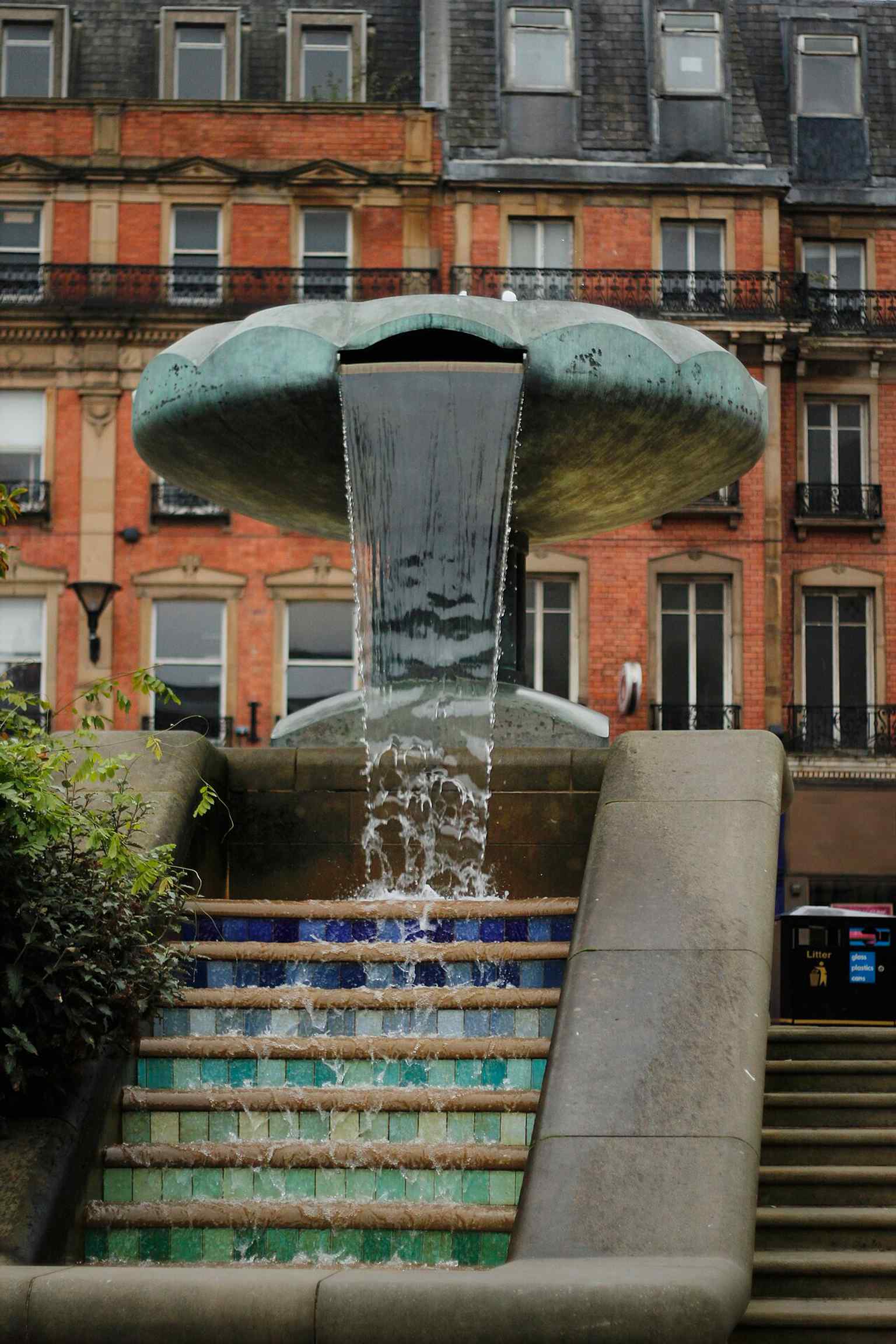
And beside the Town Hall, in Peace Gardens, the eight Holberry Cascades remember Chartist Samuel Holberry, who planned the failed eighteen forty rising, was jailed, sent to York Castle, and died of consumption at twenty-seven. Tens of thousands of Sheffielders followed his coffin.
Cross over and walk up toward the cathedral; next stop, Upper Chapel, the polite face of the trade. If you want to go inside later, check the current opening hours online.