
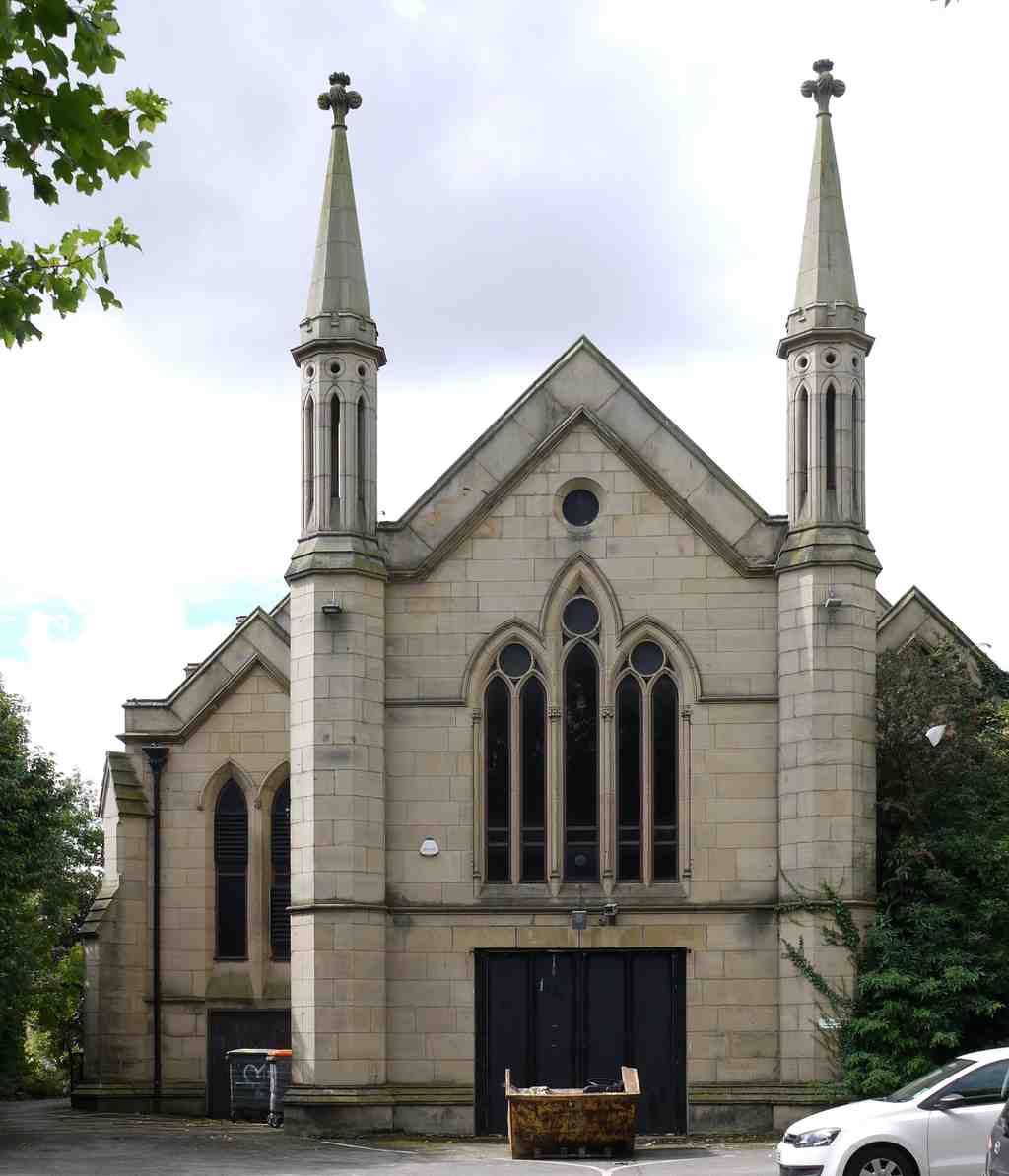
To spot St Paul’s Church, just look for a grand sandstone building with twin, pointy spires standing tall on either side of a gabled front, with three slim, arched windows above a dark main entrance-right ahead of you!
Now, as you stand here in St Paul’s Square, let’s turn back the clock to the roaring 1820s. Imagine clouds floating overhead, fresh-cut sandstone dust drifting through the air, as you listen to the ringing of mason’s hammers against stone. This church, designed by the dynamic duo of Thomas Rickman and Henry Hutchinson, was built thanks to a cool grant of £6,221-worth about £640,000 nowadays-from the Church Building Commission. That’s a lot of pocket change just to keep up with the neighbors!
Picture the first parishioners climbing these steps in 1825, glancing up at those octagonal turrets and tall pinnacles that reach for the sky. The church was growing with Preston itself, and by 1882, it needed more space-so a chancel and a shiny new baptistery were added, courtesy of Mr. T. H. Myers. But just when the story seems simple, there’s a twist: in 1979, St Paul’s was declared ‘redundant,’ which sounds rather dramatic, but it simply meant the building was ready for the next chapter of its life.
And what a chapter it was! A few years later in 1981, instead of hymns echoing off these old stones, the pulsing beat of 80s pop music filled the air as Red Rose Radio moved in. Imagine the crew chuckling as they rolled big sound equipment over the flagstones, wires coiling like spaghetti, getting ready for Lancashire to tune in. The old nave became a hive of radio activity; presenters behind microphones, engineers hunched over crackling soundboards, records spinning. If you listen closely, maybe you can almost hear a burst of radio static or the cheerful patter of a DJ introducing the next big hit.
Over time, St Paul’s transformed yet again as Rock FM and Greatest Hits Radio Lancashire sent their signals from here all over the county. Downstairs were the studios, upstairs the offices-no doubt filled with mugs of coffee, stacks of CDs, and the occasional frantic dash to meet the news deadline. But like all good tunes, the radio chapter came to an end in 2020, with the stations moving out and the grand old building turning into office space.
Before you wander off, look to the northern corner outside. There stands the parish war memorial, like a silent sentinel. It’s a slim hexagonal column, also carved from sandstone, crowned by a Celtic-style cross. Once, metal plates with the names of local men lost in war were fixed to it, but they’ve since vanished, their memory woven into the very fabric of this remarkable place.
So here stands St Paul’s: a church built on ambition, filled with music, stories, and memories, always quietly waiting for its next adventure. And as I always say-if these walls could talk, make sure you’re on the right frequency!




