
If you look ahead, you’ll see a solid, classic brick building with a slightly institutional feel-think plain, functional, and unmistakably military, blending into its surroundings but full of hidden stories; to spot it, look for a compact, no-nonsense structure likely set back a bit from the main road, with sturdy walls and a weathered, purpose-built look.
Alright, sailor-welcome to HMS Vernon! You’re standing in front of what was once the very brain of Britain’s naval fireworks: the Royal Navy’s famous “stone frigate,” a landlocked base bustling with science, secrets, and some seriously explosive history. Picture this: it’s 1876, and rather than bouncing across the channel on a ship, Portsmouth’s navy men step onto solid ground to study a different kind of sea monster… the torpedo! The Royal Navy wanted a home for the Torpedo Branch, so they squished not one but several hulking old ships together-HMS Vernon, Vesuvius, Ariadne, and even Florence Nightingale. These floating legends were soon lashed side by side and packed with cots, eager young recruits, and enough gadgets to make James Bond jealous.
Here’s where the action kicked off: life aboard HMS Vernon was a swirling mix of invention and danger. Men crawled over torpedoes, tried new explosives, and held their ears tight against the echo of test detonations. Every corridor might echo with “mind your feet!”-or was that “mind the mines?” In 1904, HMS Warrior floated in to add its muscle as a workshop and wireless school, and before you know it, even the names of the ships were handed to the buildings: Vernon I, II, III… like Hogwarts, but with less magic and more boom.
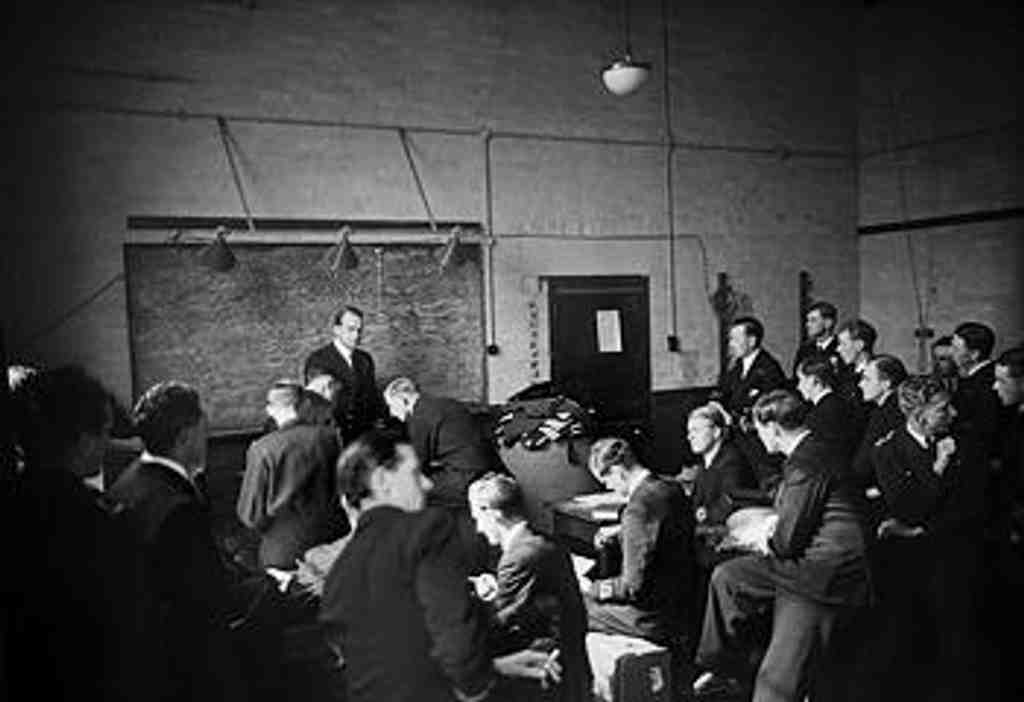
Now, step into the First World War. The air crackled with urgency. The staff of Vernon weren’t just gearing up for routine-they were inventing things nobody had seen before! They delved deep into torpedo trials, cooked up new anti-submarine gadgets, and invented electrics that set ships humming. You could almost hear chalk squeaking on the blackboard as Professor Edward Philip Harrison-he sounds serious because he was-led a team developing the infamous magnetic mine. Imagine the tension as sailors faced not just enemy ships, but invisible threats lurking below.
Then came the nightmarish clatter of the Second World War. Suddenly, mine disposal wasn’t just an afterthought-it was life or death. Here at Vernon, men learned how to defuse the nastiest German mines. One officer, Lieutenant Commander John Ouvry, defused the first intact German magnetic mine… imagine steady hands, sweat beading on his forehead, maybe even holding his breath as he clipped that last wire. Of course, the enemy fought dirty, hiding booby traps inside some mines; tragically, one such trap exploded at Vernon in 1940, shaking the whole establishment and costing precious lives. In response, they moved the scariest jobs out to a disused quarry called, rather cheerily, HMS Mirtle.
As Portsmouth shuddered under heavy air raids, Vernon didn’t escape the chaos. One bomb leveled the Dido Building and ended a hundred lives, ensuring the base would always carry memories of courage under fire. Even then, the work never stopped-departments scattered to quieter bits of the coast but kept fighting the silent, undersea battle.
You might notice, too, a quiet pride in Vernon's later years. This was where the navy’s bravest divers trained, facing “The Dunker”-a terrifying swimming-pool device that dunked airmen in the dark, upside-down, so they could escape a crashed helicopter. Vernon also became home to the slickest clearance divers in the Royal Navy, ready to cut through murky waters and deactivate deadly mines. Just picture the splash and adrenaline as another recruit plunges into the icy water during a training drill.
HMS Vernon’s last hurrah came in the 1990s, when the site gradually passed its torch-first to the Royal Marines, then to civilian hands as part of the modern Gunwharf Quays. But if you listen carefully, maybe just maybe, you’ll hear the distant clang of hammers, the murmur of young sailors learning their craft, and the quiet, enduring hum of legacy. The figurehead of the original HMS Vernon still stands proud in Portsmouth today-an old sailor watching over a city that never really stopped inventing, adventuring, and daring the impossible. And think, just behind these unassuming walls, Portsmouth changed the very shape of naval history-one electric spark, clattering mine, and sweaty-palmed dive at a time.
Ready for the next adventure? Let’s march onward-just remember to keep an ear out for any unexpected explosions!
Interested in knowing more about the in wartime and onshore, postwar devolution and decommissioning or the captains of the torpedo school




