
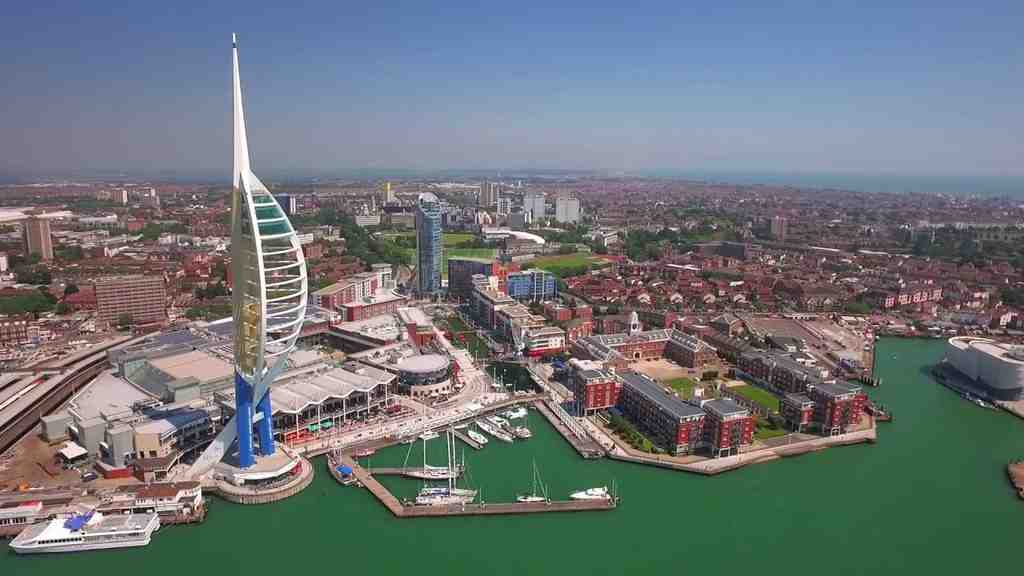
Gunwharf Quays is right in front of you-a vast, modern, semi-circular glass and brick building with a tall archway sculpture on top, bustling with shops and restaurants; just walk towards the large open square crowded with people and you'll spot it!
Welcome to Gunwharf Quays! Now, I know it looks like a shopper’s paradise (and, let’s be honest, it is), but let’s peel back history’s layers for a moment. Imagine you’re standing here over 300 years ago-there’s no Starbucks, no restaurants, just the sharp smell of gunpowder in the air and the clang of cannonballs being stacked. This land was nothing but reclaimed mud and ambition, made solid in 1706 to create what was known as the Old Gun Wharf. Portsmouth’s salty wind would blow across the site, carrying the shouts of dock workers as they offloaded cannons and stored deadly cargo for the British Navy.
Back then, ships arriving in port would unload their cannons, lining them up in neat rows, each one labeled with its ship’s name, while cannonballs were stacked in pyramid-shaped piles on the wharf. Can you picture it? A field of iron and oak, noise, and organized chaos. Everything had its place: gun carriages protected from weather, but cannons and cannonballs braving the sea air, their names boldly painted on their side.
In 1814, a grand storehouse-the Vulcan Building-rose up nearby, built strong enough to last through centuries. Little did those 19th-century builders know that their trusty bricks would dodge enemy bombs and the Blitz, and would one day echo laughter from today’s shoppers. Even after so many years, bits of those old fortress walls and historic buildings can still be found, peeking out among designer stores and buzzing restaurants.
And oh, what a parade of uniforms this spot has seen! The Royal Marine Artillery, the Royal Artillery, and the Army Ordnance Corps all called Gunwharf home over the years, each group marching across the paving stones right where you’re standing. Just think: behind the Vulcan building still stands the old 19th-century gateway, and not far away, the original Main Gate from the 1870s presses its memories into the landscape. Back then, barracks bustled with the sounds of soldiers, and hospital wards waited for those unlucky enough to cross the wrong end of a musket.
The Gunwharf fell quiet as naval warfare moved forward-no more piles of cannonballs, no more offloaded guns-so the site took on a new identity as HMS Vernon in 1923, a Royal Navy shore establishment. The echoes of drills and discipline continued until finally, in 1995, the last officers hung up their caps for good, and the great gates swung open for something new.
And what a transformation! The old yards and barracks, battered but brave after the Blitz, were smartened up and reborn as Gunwharf Quays in 2001, reopening after years of careful restoration. Even now, if you know where to look, you’ll spot the Regency charms of the Old Customs House pub, which once oversaw militia schedules and military paperwork, now serving pints and pub chips. While you grab some lunch or browse the shops, you’re strolling over hidden tunnels and barrack rooms that sheltered centuries of Portsmouth’s defenders.
Just above the horizon, you can see the Spinnaker Tower rising like a modern-day sail, and the old storehouses and sea walls around you still whisper stories to those curious enough to listen. Footsteps echo through time here, from powder-stained marines to after-work shoppers.
So next time you buy a new pair of shoes here, remember: you’re shopping where cannons slept and sailors dreamed of home. There’s always more than meets the eye-especially in a place where, if you stand still for a moment, you just might hear a distant cannon’s boom.




