
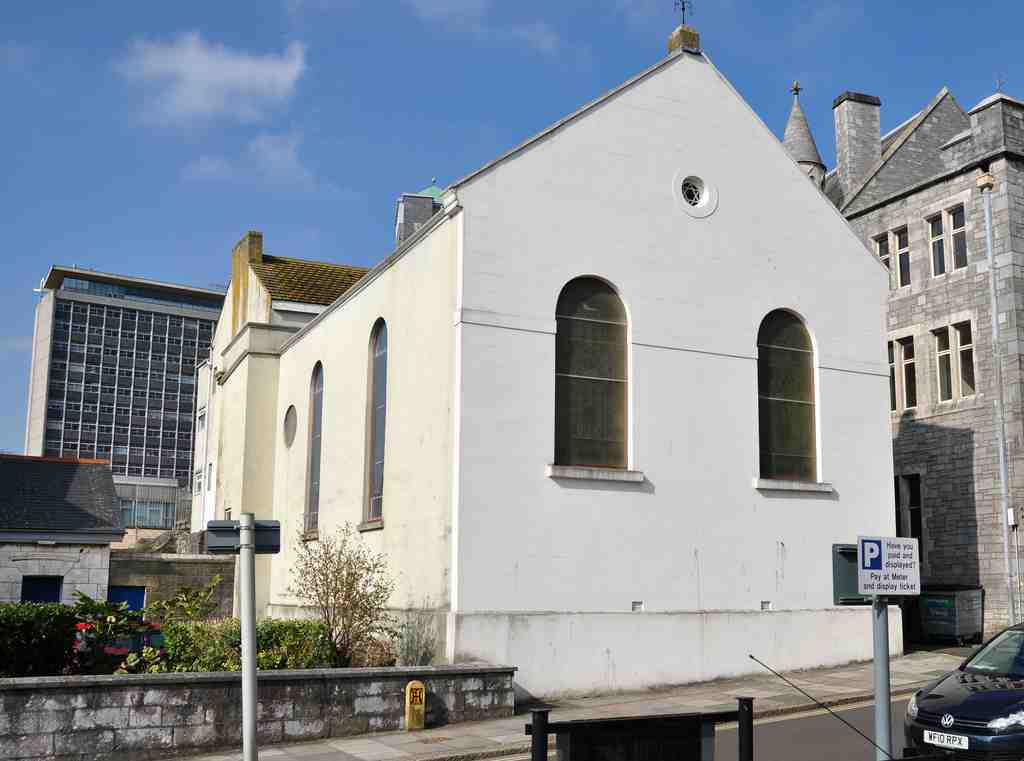
Look for a simple, whitewashed rectangular building with a pitched roof and tall arched windows set quietly back from the street-that’s the Plymouth Synagogue, tucked just off the main road like a secret waiting to be told.
Well done, explorer! You’ve found one of Plymouth’s most extraordinary treasures, though it likes to keep a low profile. The Plymouth Synagogue, or as the locals used to say in Yiddish sighs, “the shul,” may not look like much from the outside-just a plain building made of white brick and Cornish slate. But let me tell you: behind these simple walls lies a tale older than the sandwich (and possibly twice as layered).
Journey back with me to the mid-1700s. The city is bustling with shipbuilders, traders, and new arrivals. Among them is a small band of Jewish immigrants, mainly from the German lands and the Netherlands. Most of these newcomers, curiously enough, share the surname Emden-so, if you were called to dinner in Plymouth in those days, you’d better specify which Emden you meant! At first, they gather secretly in private homes, praying together, likely keeping an ear out for knocking at the door or a sneeze betraying their presence. In 1745, these secret services become a regular thing, and soon after, the congregation begins to dream of a real synagogue.
But here’s the tricky part: in those days, the laws weren’t exactly welcoming to non-Anglicans. Renting land for a synagogue? Not easily done! The land for this building had to be leased under the name of Samuel Champion-the ultimate team player, and not even Jewish-because it wasn’t clear if a Jewish person could even legally sign the papers. Picture the congregation holding its breath, fingers crossed, as the deal is done in 1762. Finally, in 1764, they have a new home-making this the oldest Ashkenazi synagogue still standing in the English-speaking world!
The building itself was quietly designed, most likely by an uncredited local builder. See how it blends in? That wasn’t just a design choice-it was self-preservation. Back then, standing out as a different religion could get your building a brick-or worse-through the window. Notice the lack of grand symbols or domes; from the outside, you’d be forgiven for mistaking it for a nonconformist Protestant chapel. Discretion was the word of the day.
In fact, the main entrance is hidden away at the back, a design meant to keep the congregation safe from the tensions of the time. There’s just one detail for the keen-eyed: a corniced entrance, and-if you spot it-a Hebrew verse above the door, added in the Victorian era, inviting worshippers to bow down and kneel before the Lord.
Step inside in your mind’s eye. Imagine Minton terracotta tiles under your feet, Victorian staircases spiraling up to the women’s galleries (which were once even reached by external stairs, just like a secret treehouse). The clear glass of the original windows has since been swapped for a splash of color, thanks to stained glass added in the 20th century. And if you squint, you might notice a prayer board dating all the way back to 1762, with the names of English monarchs carefully painted over the old ones-Ghosts of Kings Past, if you will!
But the real showstopper is the Torah Ark. Stretching up two stories, dazzling with fluted columns, gold leaf, and even a touch of royal blue, it’s said to have arrived from the Netherlands flat-packed. Imagine the original Dutch or German cabinetmakers assembling it right here, probably muttering about missing screws or leftover pieces!
Behind all this is the spirit of resilience, ingenuity, and hope. Even the mikveh-a white-tiled ritual bath just off the vestry, now dry but still open to curious eyes-tells of the ages when every drop of the building’s design was essential for the life of the community.
To this day, the Plymouth Synagogue stands quietly on its side street, a little mysterious, a little subdued, but absolutely bursting with stories, laughter, tension, faith, and the stubborn determination to belong. Not bad for a building that doesn’t like to call attention to itself, don’t you think? Now, onward-adventure awaits at our next stop!




