
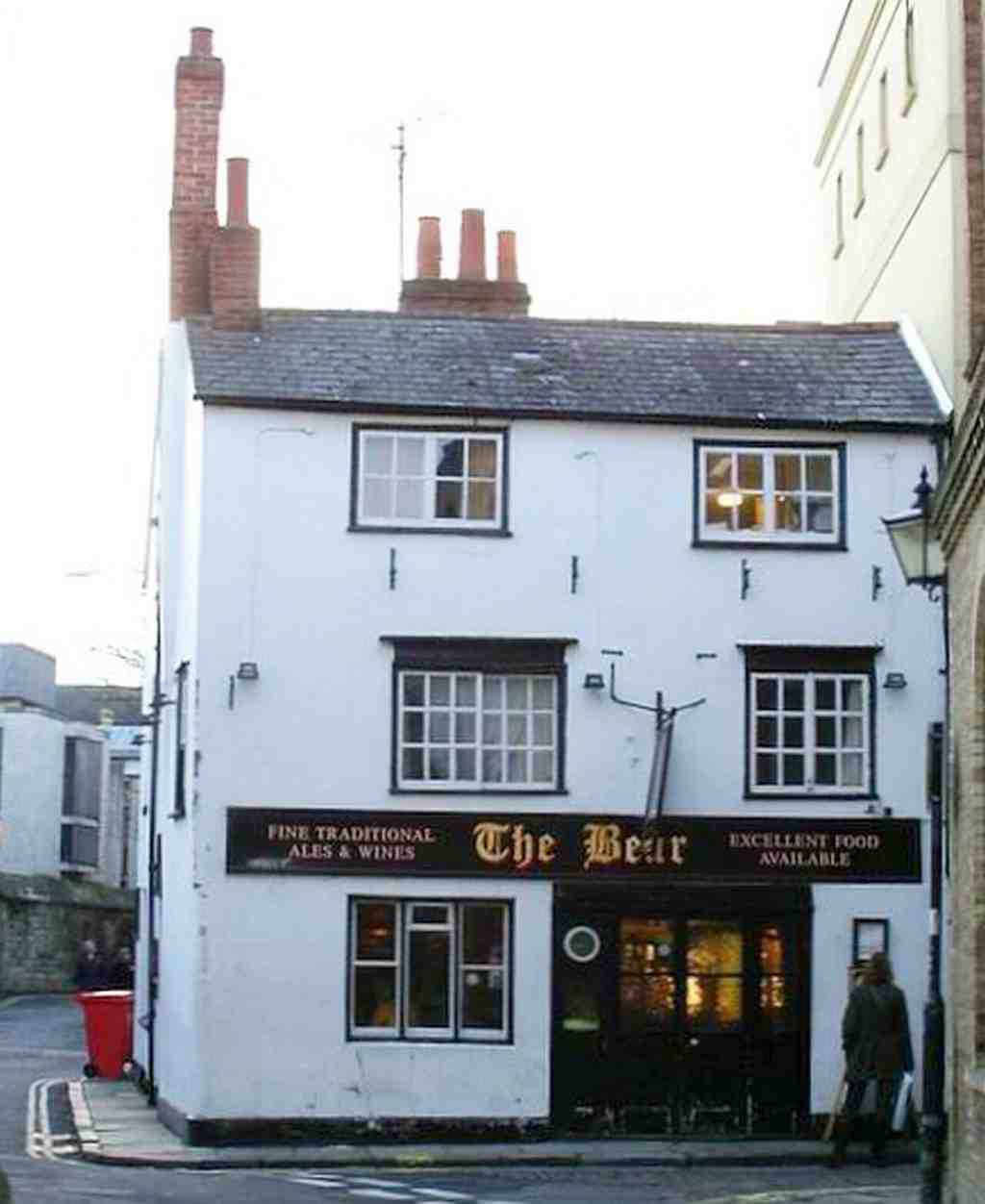
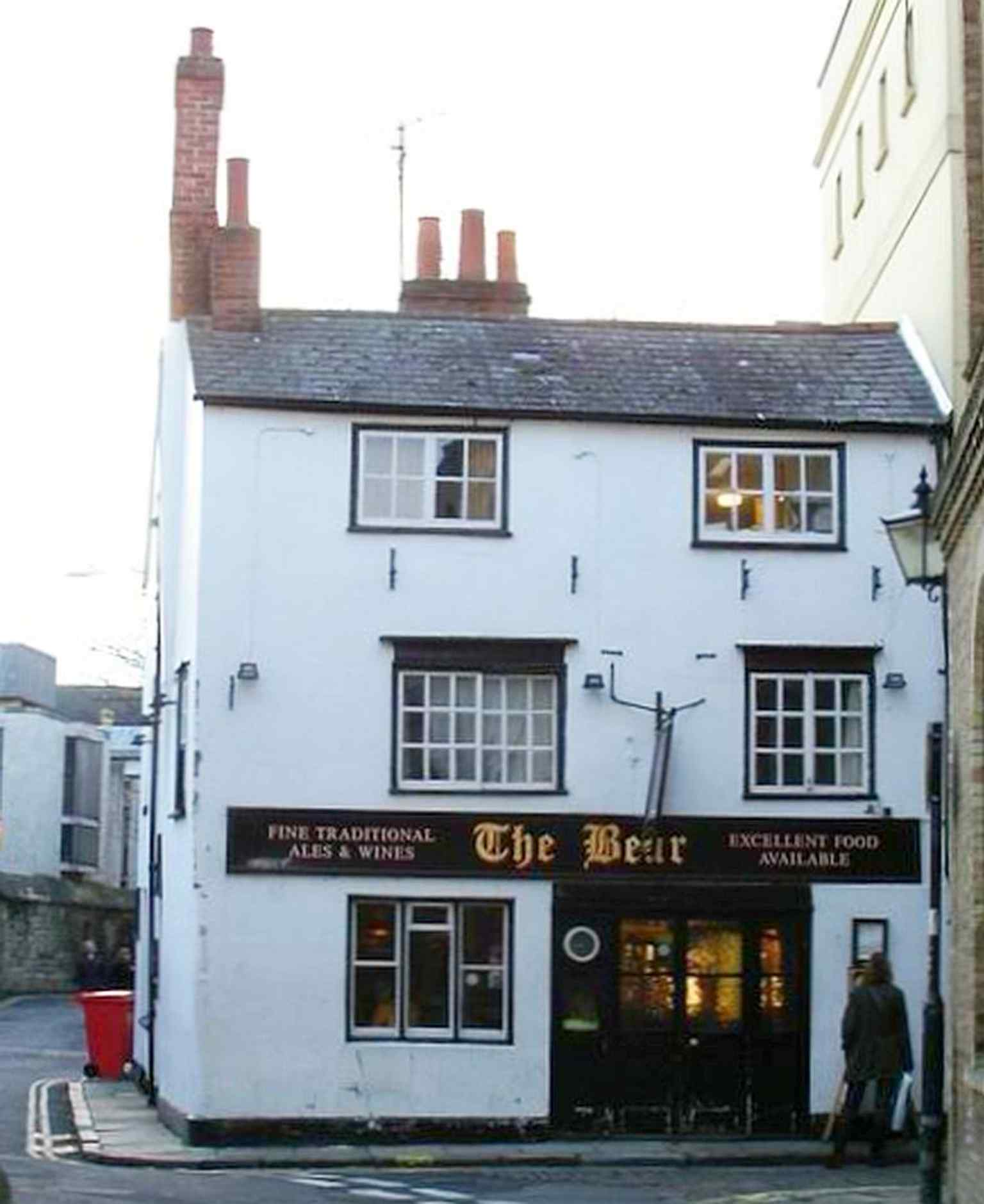
This is a compact corner pub with pale stucco walls, a simple pitched roof, and a projecting hanging sign marking the old timber-framed building at Alfred Street and Blue Boar Street.
First, the honest bit: this is not the medieval Bear Inn. The original Bear stood on the High Street, and when that older inn was rebuilt as private housing in eighteen oh one, the name moved here... to a pub already trading as the Jolly Trooper since seventeen seventy-four. Oxford, like many old cities, is perfectly capable of giving a building a borrowed ancestry and then acting as if nothing odd happened.
What you’re looking at began life in the early seventeenth century as the home of the ostler for the coaching inn. An ostler was the man who met your horse at the gate, watered it, rubbed it down, and found it a stall for the night. Not glamorous, not famous, absolutely essential. If the inn ran smoothly, some tired traveler praised the landlord... while the ostler did the muddy work out back. That feels very Oxford, really: the polished front, and the labor that made it possible tucked just out of sight.
If you check the exterior photo in the app, you can see how modest the place still looks from the street. It was never the grand frontage on the High. It was the working end of the operation. And behind that stucco skin, the old timber frame still survives. You can’t see it from out here, but inside, some original timber framing remains visible near the top of the staircase. That hidden structure helped earn the building formal protection when it received Grade II listed status in January of nineteen fifty-four.
There’s another layer to the ground under this pub. This corner stood on the site of Saint Edward’s churchyard, and evidence from the cellar has confirmed that rather directly. Human bones turned up there in recent years. So yes... even the basement has a longer memory than the sign outside.
But The Bear’s most famous story belongs to a named publican, Alan Course. In nineteen fifty-two, he started collecting the cut-off ends of club ties. The deal was wonderfully specific: surrender the end of your tie, and you got half a pint of beer in return. Over time, that became more than a gimmick. It became nightly work. Staff with scissors in apron pockets, a pencil for labeling, and one more snippet pinned up before the next round. Not one grand gesture, just repetition... shift after shift, year after year.
If you look at the interior image on your screen, you’ll see the result: thousands of tie ends crowding the walls and even the low ceiling. More than four thousand five hundred of them now, from schools, colleges, clubs, sports teams. Colin Dexter even used the collection in an Inspector Morse novel, where a tie becomes a clue. Naturally, in Oxford, even the pub decor can end up doing detective work.
So this corner tells a very working story: the ostler with the horses, the landlord with the scissors, the bar staff who kept the ritual alive across decades. Not the people who usually get statues.
When you’re ready, head on to eighty-four High Street, about a two-minute walk away. If you fancy returning later, The Bear opens from noon every day, closes between around ten-thirty and eleven, and prices are moderate.





.jpg)