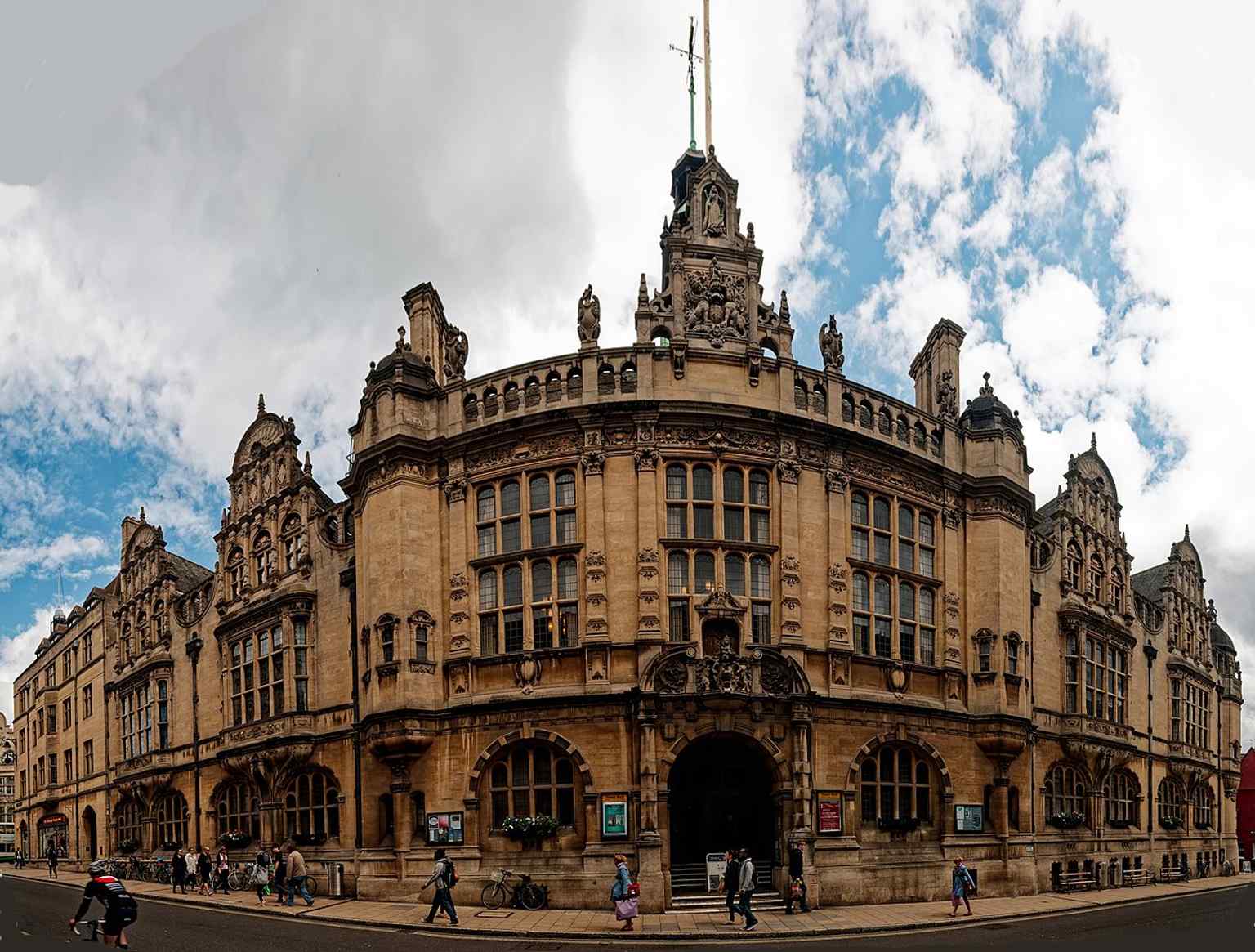
On your right, Oxford Town Hall is a broad pale-stone frontage with stepped gables, tall mullioned windows, and the city’s coat of arms set above the main entrance.
This plot has held Oxford’s civic headquarters three times over, which is a very municipal way of saying the city kept rebuilding its own desk. First came the medieval guildhall in about twelve ninety-two. Then Isaac Ware designed an Italianate replacement in seventeen fifty-two, opened in seventeen fifty-three with a Venison Feast - because apparently civic administration went down better with deer. When costs ran over, the younger Thomas Rowney covered roughly one thousand pounds, something like two hundred thousand pounds in today’s money. Then, after that hall grew hopelessly cramped, Henry Hare gave Oxford the building in front of you, a swaggering Jacobethan design that the Prince of Wales opened on the twelfth of May, eighteen ninety-seven.
If you glance at the image on your screen, you can see Hare’s façade in full: busy, proud, and determined to look like a city taking itself seriously.
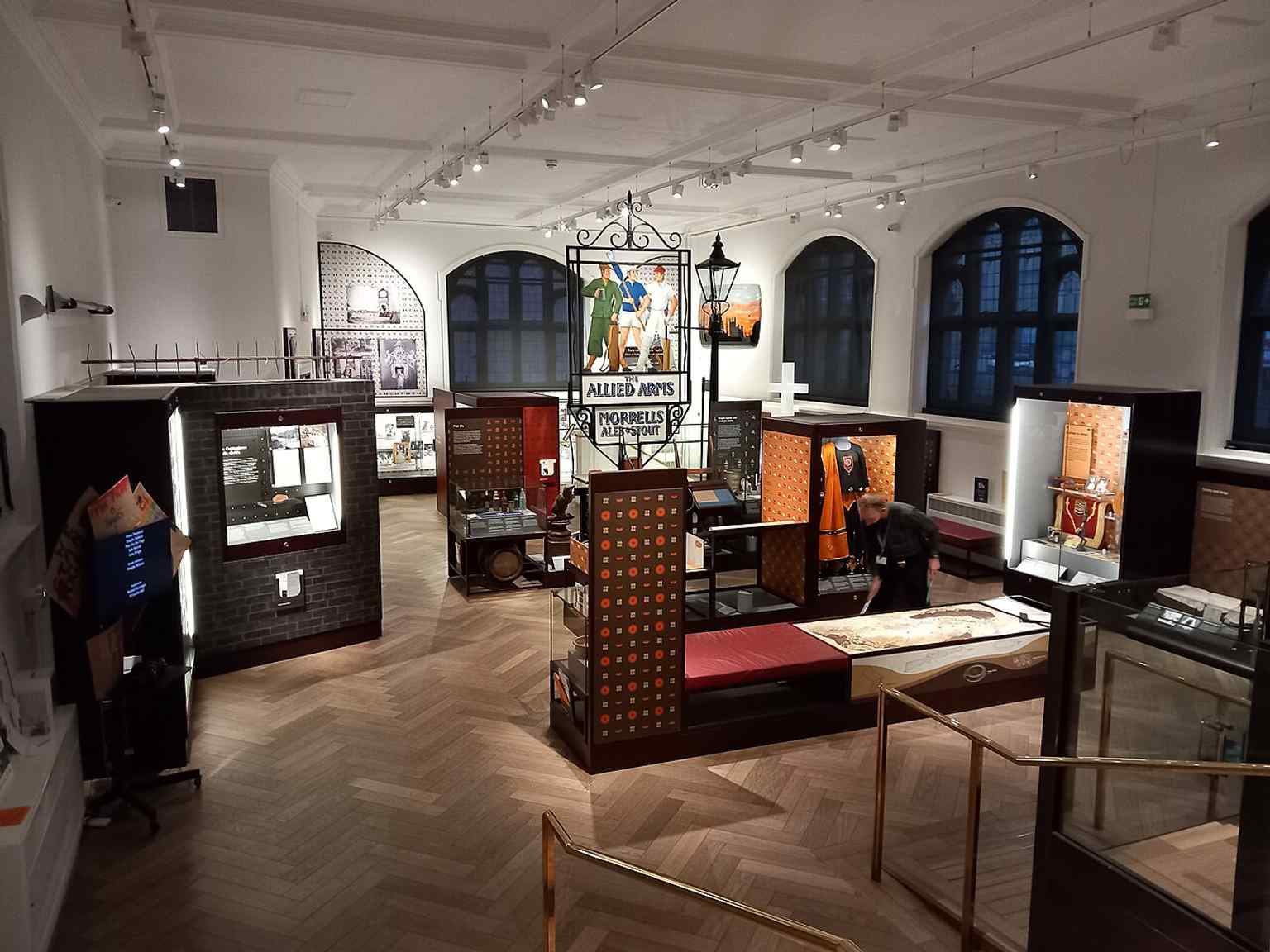
What matters here, though, is not just the architecture. It is the workforce this place gathered under one roof. Hare packed in the council, public rooms, courts, library, and police. Down in the basement sat a working police station, and the design included a stairway leading straight from the cells up into the courtroom dock - that small enclosed space where defendants stood during trial. Efficient, certainly. Cheerful, less so. Under the great hall, police officers even had their own parade hall for drills and muster.
And in the south-west corner, something rather different: Oxford’s first central public library. The lending library opened in December of eighteen ninety-five, before the grand opening ceremony, and generations of readers used it until the library moved in nineteen seventy-three. Long before the Museum of Oxford took over those rooms, librarians here issued tickets, fetched volumes, answered questions, and quietly kept the city’s mind in working order.
If you look at the interior image, the main hall gives you the grand public face of the place. But grand rooms always rely on people whose names rarely make the stonework. Clerks kept minutes. Porters carried messages. Charwomen - women hired to scrub, clean, and keep order - tackled the unglamorous part. The university may have supplied the gowns and the reputation, but the host city paid an army of practical people to make daily life function.
That still shows in the ceremonial side of the building. On Sundays and holidays, councillors and freemen gathered here to accompany the mayor to the City Church. Mace-bearers carried the city’s ceremonial staff, sword-bearers carried the civic sword, and robe-keepers managed the layers of official finery without letting Oxford descend into comic opera. Those are the people I like to remember here: the mace-bearers and the librarians, the porters and cleaners, the invisible municipal staff who kept the ritual, and the paperwork, running.
From here, The Bear is about a two-minute walk away. If you plan to come back inside later, the Town Hall generally opens from nine to seven on weekdays, ten to five on Saturday, and closes on Sunday.