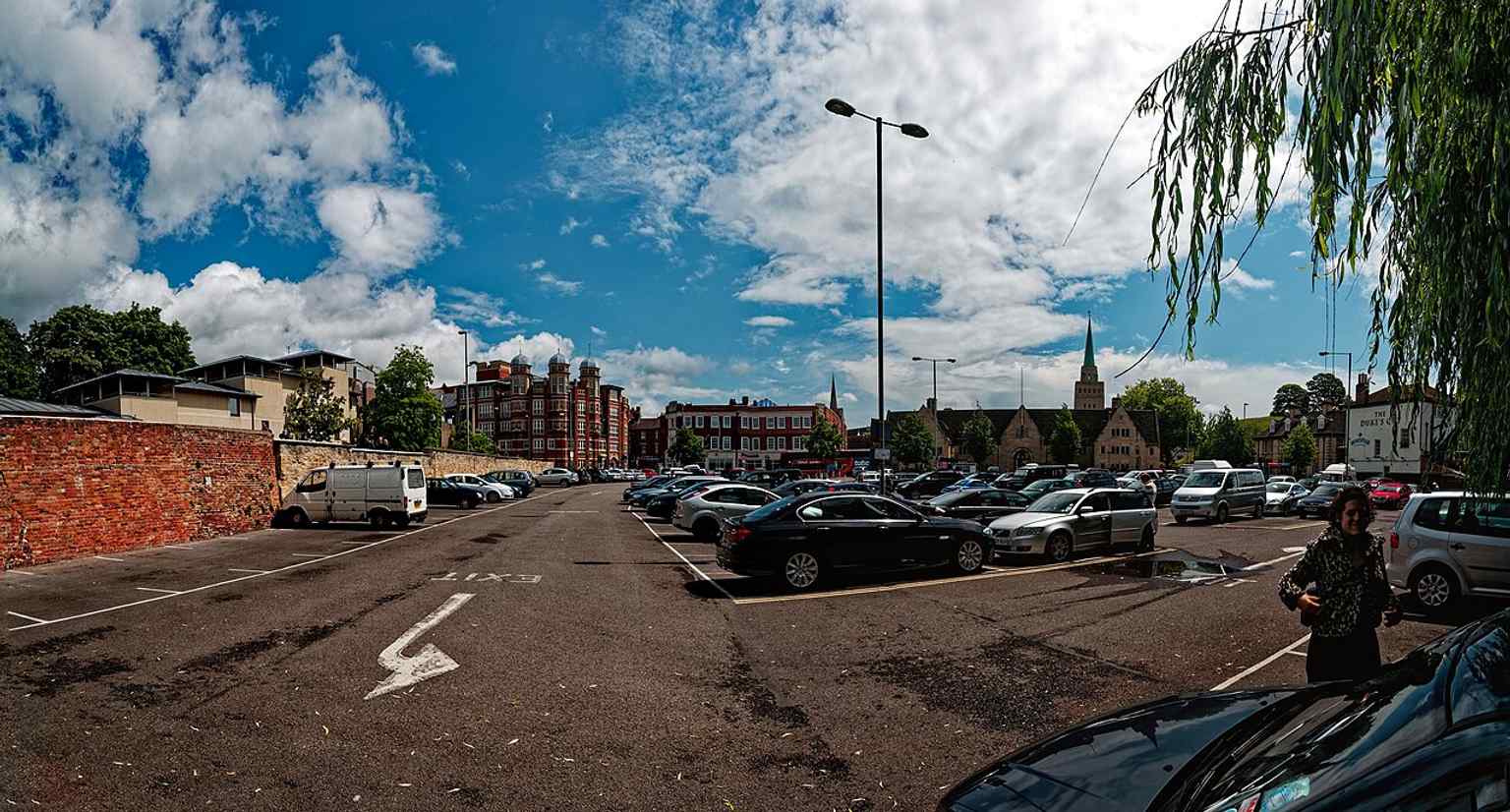
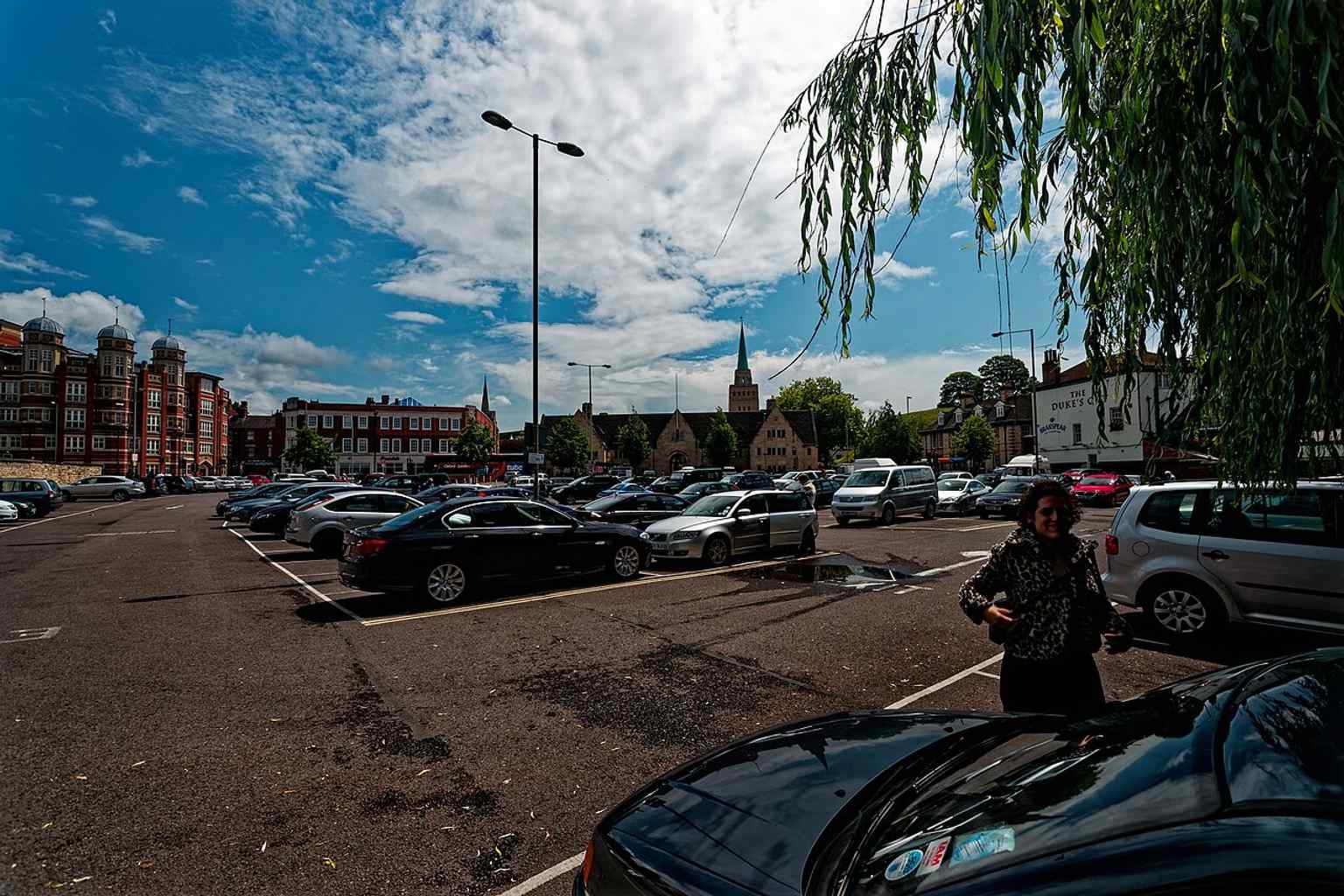
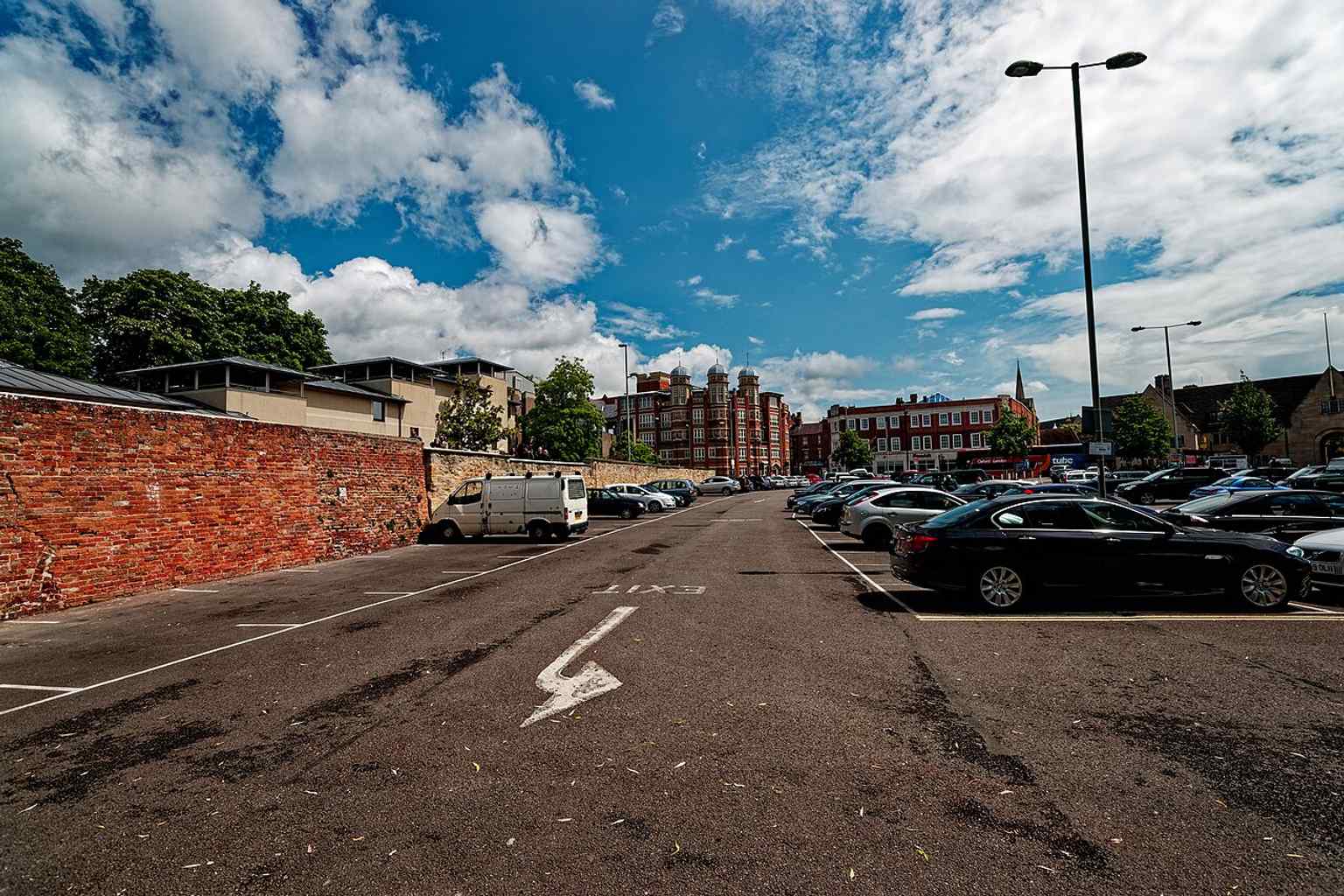
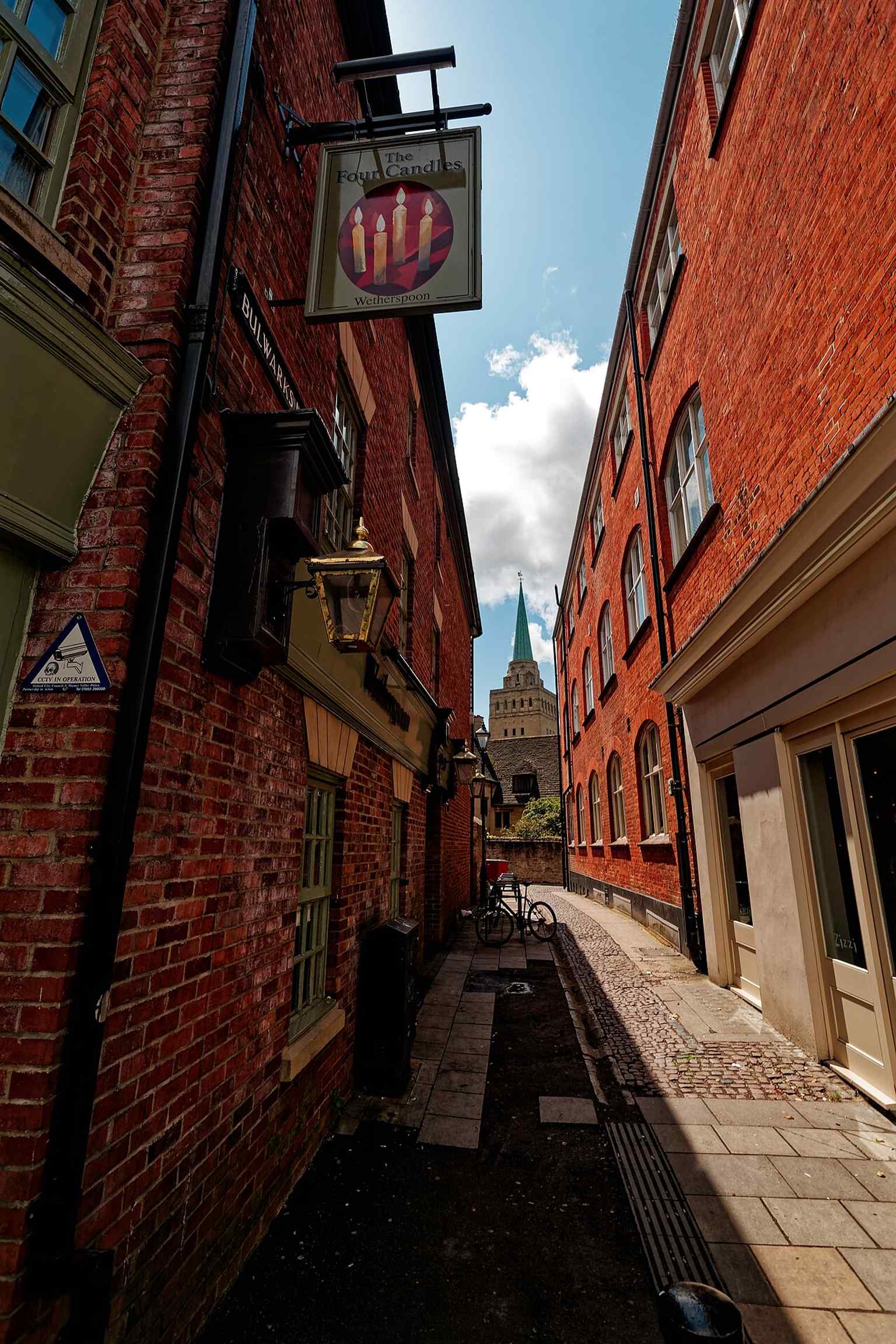
On your right, pale Cotswold stone rises in steep gabled blocks, crowned by a tall square library tower. The final section of the Oxford Canal into central Oxford opened on the first of January, seventeen ninety, then ran under Worcester Street to a coal wharf beside New Road. For a century and a half, bargees and coal-heavers worked here while dons walked past. Then William Morris returned in another form: the Longwall bicycle apprentice, starting work at fifteen, later Baron Nuffield in nineteen thirty-four and Viscount in nineteen thirty-eight. In nineteen thirty-seven he bought this basin for one hundred and thirty-three thousand, three hundred and seventy-three pounds, filled it in by nineteen fifty-one, and built his college on part of the old wharf. On your screen, the tower marks the first new Oxford tower in two hundred years. Austen Harrison first drew it Mediterranean; Nuffield called that "un-English," so Harrison redrew it in Cotswold style and builders worked from nineteen forty-nine to nineteen sixty. An apprentice's success bought him a wharf, then buried it. Oxford Castle is two minutes away; the college usually opens weekdays and shuts on weekends.