
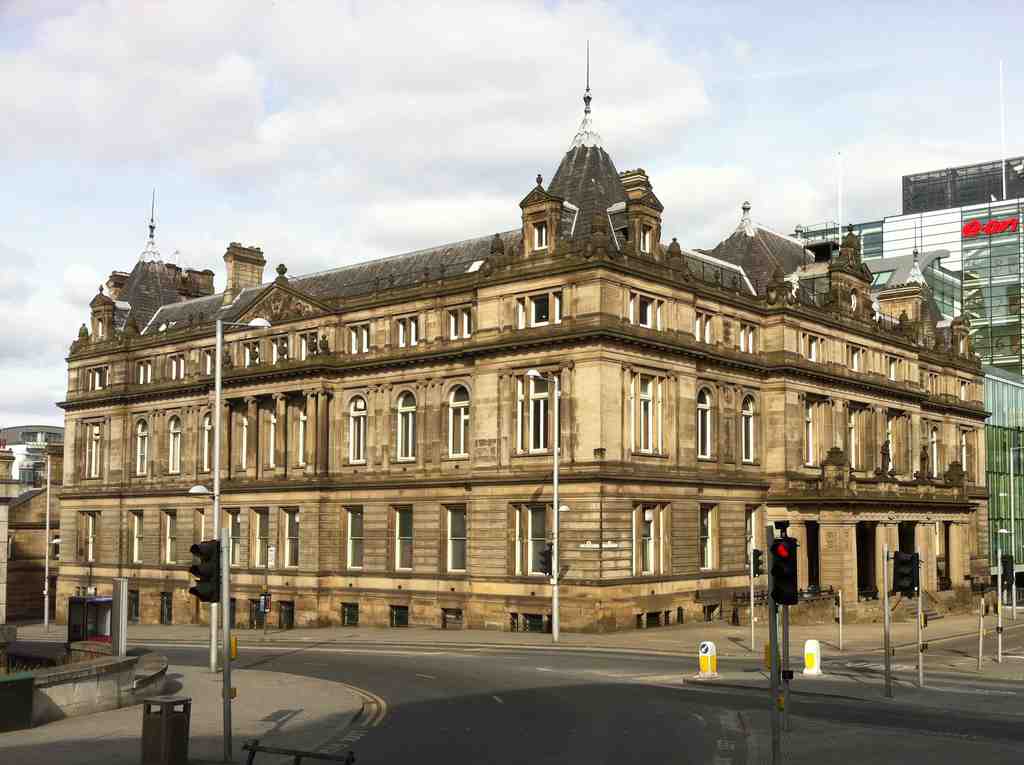
Ah, I see you’ve reached Nottingham Guildhall! Look to your right and there it stands, a grand Victorian edifice that commands attention with its stately presence. You can’t miss the French Renaissance Revival architectural style-complete with intricate stone windows and slate roofs adorning its Darley Dale ashlar facade.
Nottingham Guildhall, built between 1887 and 1888, replaced the former Guild Hall on Weekday Cross. This impressive structure was chosen through a competition judged by Alfred Waterhouse, favoring the design by Thomas Verity and George Henry Hunt. The construction, carried out by Gabbutts of Liverpool-a decision that ruffled the feathers of local companies-originally budgeted at £128,416, ended up costing £65,000 due to simplified designs.
This exquisite landmark once buzzed with activity as a magistrates' court. Imagine the drama that unfolded within these walls as justice was served! In the 1990s, the Nottingham City Council repurposed it as office space before moving to modern digs in 2010, leaving the Guildhall relatively unused and awaiting its next chapter.
But let's not forget the subterranean secrets beneath this grand structure! The Guildhall boasts a two-level cave system with brick-lined passages and cells. These were adapted during World War II as emergency headquarters and air raid shelters-imagine the echoes of history reverberating through those dimly lit corridors.
In recent times, the Guildhall faced a series of woes with vandals setting fire multiple times during 2024, necessitating increased security. Yet, with all its stories and struggles, Nottingham Guildhall remains a testament to the city’s rich history and resilience.
Now, as you stand before this storied structure, take a moment to envision the bustling legal proceedings or the echoes of wartime urgency emanating from its underground passages. Ready to move on to our next stop? Let's continue our journey through Nottingham's vibrant history!




